
Vandaag of morgen in huis

Kwaliteit gegarandeerd

Welkomstaanbiedingen ontgrendelen: GRATIS bezorging | Tot 80% korting | Gratis 30 dagen JoyPlus-proefperiode
Download de app
A pair of Chicco boys’ sandals may seem easy to choose, but small differences in size, material and fastening determine whether a pair works well in everyday use. Parents often buy based on age or colour, even though foot length and fit are more important. An appealing product claim may also promise more than the specifications can support.
This buying guide helps you compare Chicco sandals for boys without relying on marketing language. You’ll find verifiable product information, practical points to consider for everyday use and a selection for different situations.
Age indications are a guideline, not a substitute for checking the size. In the range, for example, the indications run from 00M-01M for size 150 to 8 YEARS for size 310 or 320. However, children of the same age can have different foot lengths.
Therefore, measure both feet and compare the result with the size guide on the product page. Also check that the sandal offers enough room for movement without allowing the foot to slide forwards.
The models in this selection use different materials:
A material alone does not tell you everything about breathability, softness or durability. Also look at the lining, construction and care instructions. According to the product information, these models are intended for everyday use and easy care; always follow the washing and care label.
Grey boys’ sandals are easy to combine with everyday clothing. Dark blue boys’ sandals also work well with a range of outfits and can be practical for regular use. Fuchsia is more eye-catching and may suit your child’s preference.
Colour has no direct effect on fit or material. So compare the size and design first, then choose the colour that suits how you plan to use the sandals.
The product sizes are shown in the information as 150, 160, 170 and so on. This corresponds to the range often described as boys’ sandals sizes 15 to 32. Note that the age indications may vary between models:
Use this information as an initial guide. Then measure the foot and check the current size information for the product. A sandal that is too loose may feel less stable, while a model that is too tight can quickly become uncomfortable.
For parents who want low-maintenance footwear, it’s important to look beyond appearance. The materials listed each have a different composition. Cotton may feel different from polyurethane-coated support, while polyester is often used in the construction or finish.
The product information states for all selected models: follow the instructions on the washing and care label. Don’t automatically wash children’s sandals in the same way. Allow them to dry thoroughly after cleaning and regularly check the seams, straps and fastenings.
Check the product images and product page to see how the sandal fastens. For younger children, an easy-to-adjust fastening can be practical. For older children, the main consideration is whether they can put the sandals on and fasten them securely by themselves.
Also check:
The available information describes the models as boys’ sandals and does not claim any medical or orthopaedic function. Use them as everyday footwear, not as a substitute for personalised foot advice.
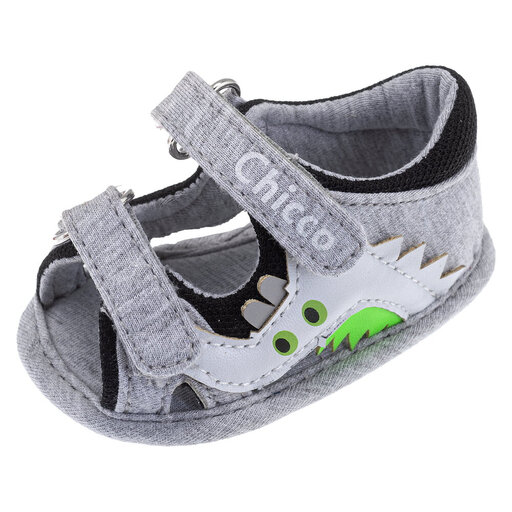
Why it suits this profile: The grey design is a straightforward choice for everyday use and is listed for 06M-09M.
The size and age indication are clearly stated, so you can first check whether this pair suits the child’s foot length.
Grey colour; material consisting of 70% polyester and 30% polyurethane-coated support.
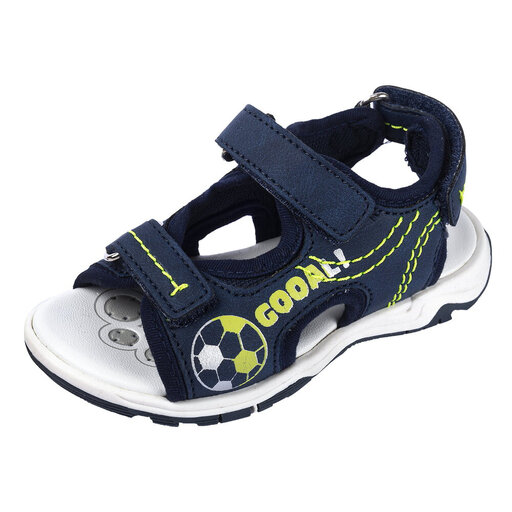
Why it suits this profile: This dark blue model is listed for 3 YEARS and has a material composition of 100% polyurethane-coated support.
The product specification names the material clearly. This allows you to compare the sandals without focusing only on colour or general comfort claims.
Dark blue colour; size 250; care according to the label.
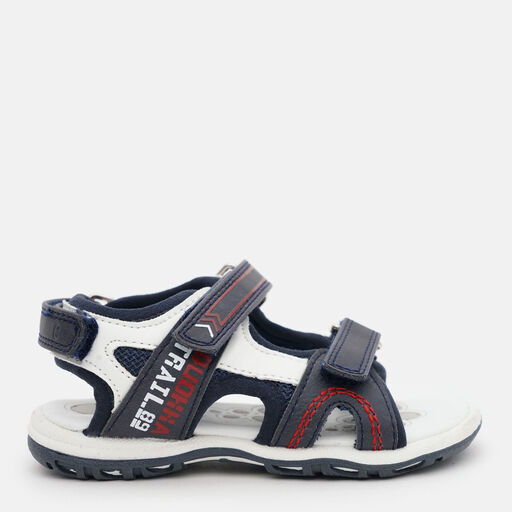
Why it suits this profile: The Chicco Conner sandals are listed for 8 YEARS and are intended for an older child who wears sandals every day.
The Conner model name and size 320 are listed separately. This makes it easier to avoid confusing this pair with smaller Chicco models.
Chicco Conner model; dark blue; composition of 80% polyurethane-coated support and 20% polyester.
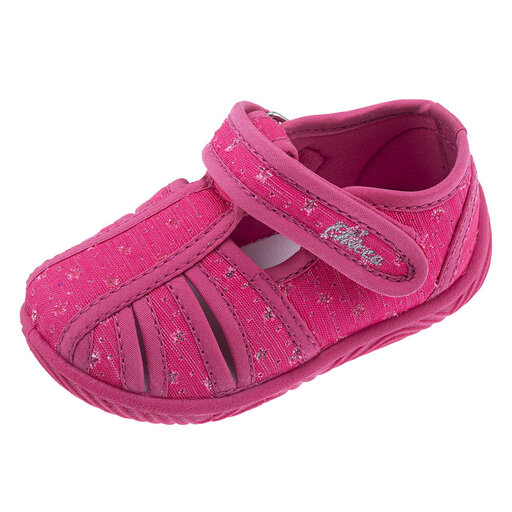
Why it suits this profile: The fuchsia design is suitable when your child wants a distinctive colour and size 240 matches their measured foot.
The colour is not presented as proof of quality; the relevant choice remains the combination of size 240 and the stated material.
Fuchsia colour; size 240; 100% cotton according to the product information.
We’ve put together a complete, up-to-date list of products that fully meet these strict selection criteria and the applicable European safety regulations.
Measure the length of both feet while your child is standing. Use the longer measurement and compare it with the size guide for the chosen model. The stated ages, such as 24M or 3 YEARS, can help as a guide but do not determine the correct size on their own.
Follow the care label on the product page or on the pair itself. The models in this selection have different material combinations, including cotton, polyester and polyurethane-coated support. So don’t automatically use the same cleaning product for every pair.
How long they last depends on growth, frequency of wear, the surfaces they are worn on and care. Regularly check that the toes are not touching the front, the straps are intact and the sole shows no visible damage. During a growth spurt, a pair may still look in good condition but be too small. That’s a good time to measure again and look for Chicco boys’ sandals in a suitable size.
