
Vandaag of morgen in huis

Kwaliteit gegarandeerd

Welkomstaanbiedingen ontgrendelen: GRATIS bezorging | Tot 80% korting | Gratis 30 dagen JoyPlus-proefperiode
Download de app
Finding the right Chicco boys’ sandals seems simple, until you have to choose between different sizes, materials and colours. A style may look appealing, but still be less practical for everyday wear. Babies’ and toddlers’ feet grow quickly, and their sandals get plenty of use: at the beach, in the garden, at nursery and on days out.
So don’t focus only on the colour or brand. Check the size, material, fastening and care instructions too. Read on to find out which pitfalls to avoid and which boys’ sandals suit different situations.
Age labels such as 06M-09M, 18M-24M or 3 YEARS are only a guide. Children don’t all grow at the same rate, and the fit can vary from one style to another.
Use the age as a starting point, but also check:
Chicco product details include sizes from 150 to 300. Don’t automatically interpret these codes as centimetres. Always check the product page before ordering.
A little room for growth can be useful, but a sandal that is clearly too big may slip around. This can make walking more difficult and mean your child loses the sandal more easily. So don’t choose based only on future growth.
For babies and toddlers, a good fit is more important than leaving plenty of extra room. Compare your child’s foot size with the size chart, then check that the heel stays in place once the sandal is on.
Not all materials feel the same, and different styles may need different care. The range includes:
This composition tells you something about how the sandals are made, but it doesn’t guarantee a particular experience when wearing them. Always check the washing and care label too. The product information for these styles says to follow the label instructions.
The Chicco sandals in the selection provided range from size 150 to size 300. They include different age indications, from 00M-01M to 7 YEARS. Use these details to narrow down your options, but base your final choice on your child’s current foot size.
Check three things when trying the sandals on:
A light, simple style may be enough for young children who are not yet walking much. For active toddlers, a sturdy construction and reliable fastening are more important.
Cotton may appeal if you’re mainly looking at the composition. For example, the fuchsia Chicco sandals in the selection are listed as 100% cotton. The dark blue and grey styles use some or all synthetic materials.
A synthetic composition may be practical for everyday care, but always check the specific product description. Don’t assume properties such as water resistance, breathability or quick-drying performance unless they’re explicitly stated.
Dark blue sandals are easy to match with clothes and less likely to show signs of everyday wear. Grey sandals have a similarly neutral look. Fuchsia stands out more and may be a good choice if your child likes a bright, easy-to-spot colour.
Colour doesn’t affect the size or construction. Compare the specifications first, then choose the colour that suits how you’ll use the sandals.
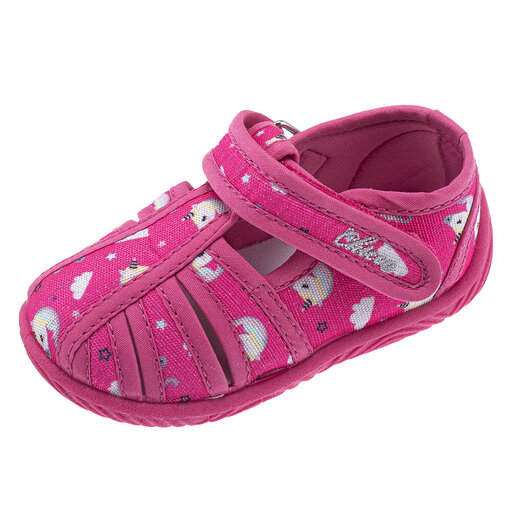
Why it suits this profile: This style is listed for 09M-12M and is made from 100% cotton. It’s a straightforward choice if you’re looking for comfortable baby sandals for the first time.
The age indication and size 200 are clearly listed. Be sure to check the current size chart rather than ordering based on age alone.
Fuchsia colour; listed as 100% cotton in the product details; care according to the label instructions.
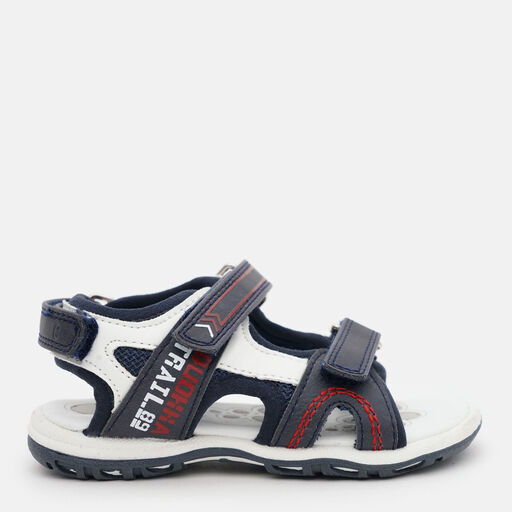
Why it suits this profile: The Conner sandal is listed for boys up to 3 years old and combines 80% polyurethane-coated support with 20% polyester.
The material proportions are clearly stated, making it easier to compare this sandal with cotton or polyester styles.
Dark blue colour; Conner style; size 250; listed as 80% polyurethane-coated support and 20% polyester.
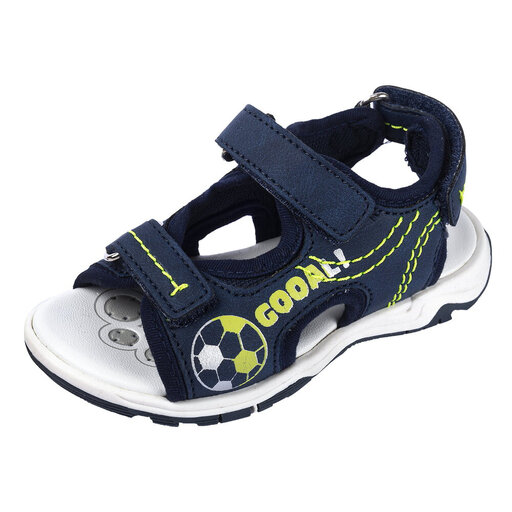
Why it suits this profile: This dark blue style is listed for 4-year-olds and uses 100% polyurethane-coated support. It’s suited to parents looking for a larger size for an active child.
Size 270 and the age indication are listed specifically. Before buying, check that your child’s foot length and width are suitable for this size.
Dark blue; size 270; listed as 100% polyurethane-coated support in the product details.
Before checking out, compare at least two styles using the same criteria:
Also bear in mind that the same colour doesn’t always mean it’s the same style. For example, there are dark blue Chicco sandals called Conner, as well as other dark blue styles with a different product code. Their composition and origin may differ too.
We’ve put together a complete, up-to-date list of products that fully meet these strict selection criteria and the applicable European safety regulations.
Start by checking your child’s foot length against the size chart for the style you’ve chosen. The age indication, such as 18M-24M or 3 YEARS, can help you narrow down your options, but it doesn’t replace checking the size.
The product descriptions say that the styles are designed for everyday wear. How practical they are will depend on the fit, material, care and how your child uses the sandals.
Always follow the washing and care label for the specific style. Don’t use the same cleaning method for every material, as cotton, polyester and polyurethane-coated materials may react differently.
