
Vandaag of morgen in huis

Kwaliteit gegarandeerd

Welkomstaanbiedingen ontgrendelen: GRATIS bezorging | Tot 80% korting | Gratis 30 dagen JoyPlus-proefperiode
Download de app
A pair of Chicco boys’ sandals may seem like a straightforward purchase, but small differences in size, material and fastening can determine whether your child wants to wear them every day. This is particularly important for fast-growing feet, where the wrong choice can result in sandals that become too small after a short time, are difficult to clean or do not fit securely enough.
So watch out for these common pitfalls:
The Chicco baby sandals and Chicco children’s sandals range includes sizes such as 150, 160, 180, 220, 230, 240, 250, 260, 270, 280, 290, 300, 310 and 320. The product information links these sizes to different age indications, from approximately 0 to 8 years.
Therefore, use age only as an initial filter. Measure your child’s foot while they are standing upright and compare it with the size chart for the specific model. Also look for:
Check the size again when the sandals are used frequently. Feet do not grow according to a fixed schedule.
According to the product information, the navy boys’ sandals in this selection are made from 100% polyurethane-coated support. According to the specifications, the grey baby sandals consist of 70% polyester and 30% polyurethane-coated support.
These are verifiable material descriptions, but they do not tell you everything about how the sandals feel to wear. Also check the finish and care instructions. For these Chicco models, the instructions on the washing and care label should be followed. Do not automatically put them in the washing machine or use an aggressive cleaning product.
For sandals intended for everyday use, a material that is easy to care for by hand is often practical. Allow the pair to dry thoroughly after use and do not leave them damp in a bag for extended periods.
For relaxed everyday use, nursery and short walks, a simple model may be enough. For more active play, the fit, a reliable fastening and a sturdy construction are particularly important. The product details state that the Chicco Conner Sandals are made from 80% polyurethane-coated support and 20% polyester.
A navy model will generally make everyday dirt less noticeable than a light colour, while grey is easy to pair with baby clothes. This makes colour a practical consideration, but it is no substitute for a good fit.
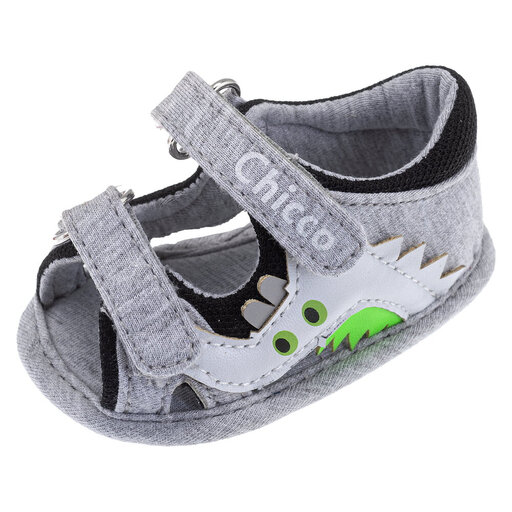
Why this suits the profile: This grey model is intended for the smallest size in the selection, with an age indication of 00M–01M. This makes it a logical option for carers comparing baby sandals for the first time.
The product page lists the size, age indication and material composition separately. Check these details together rather than ordering based solely on an age label.
Grey colour; 70% polyester and 30% polyurethane-coated support according to the product information; care as stated on the label.
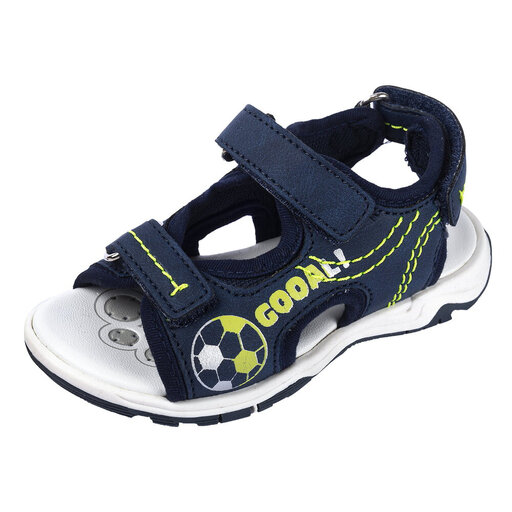
Why this suits the profile: For parents looking for a neutral colour and clear material information. According to the product information, size 240 has an age indication of 24 months.
The navy colour is practical for everyday use, but the size must still be compared with the child’s foot length.
Navy design; 100% polyurethane-coated support according to the product specification; available in multiple sizes within the same product range.
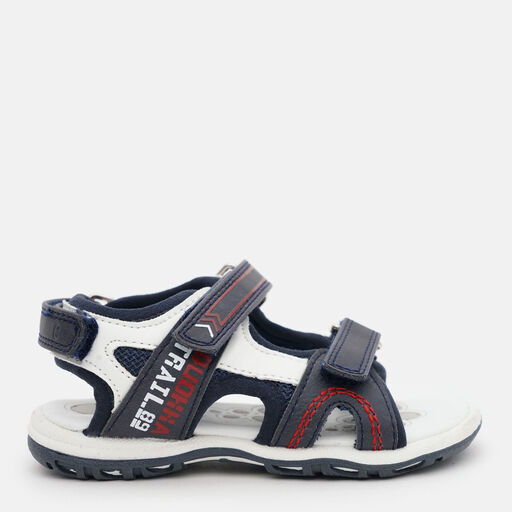
Why this suits the profile: According to the product information, this Conner model is aimed at boys around 5 years old and suits families looking for sandals for everyday use and active outdoor play.
The material ratio is clearly stated. This allows you to compare the model without relying solely on general comfort claims.
Conner model; navy colour; 80% polyurethane-coated support and 20% polyester according to the product specification.
We have compiled a complete, up-to-date list of products that fully meet these strict selection criteria and the applicable European safety regulations.
Use the age shown on the product page as a guide, but always measure your child’s foot. Then check the size chart for the chosen model. A size 220, 240 or 280 does not automatically correspond to the same foot length for every brand or model.
The selected product information describes the models as suitable for comfortable everyday use. Whether a pair is right for your child also depends on the fit, fastening and activities. Check the sandals regularly for signs of wear and replace them when they have become too small or damaged.
Follow the care label on the product page and on the item itself. Where the care instructions allow, use a soft cloth and leave the sandals to air-dry. Do not wash, bleach or heat them unless this is expressly permitted.
