
Vandaag of morgen in huis

Kwaliteit gegarandeerd

Welkomstaanbiedingen ontgrendelen: GRATIS bezorging | Tot 80% korting | Gratis 30 dagen JoyPlus-proefperiode
Download de app
Buying a pushchair seems simple, until you have to choose between a pushchair, buggy, double pushchair or cycle trailer. Products can vary significantly in age range, weight capacity, dimensions and intended use. A model that’s handy for short trips around town won’t necessarily suit long walks or everyday cycling.
Look out for these three common pitfalls:
Taking stock of your day-to-day needs first will usually help you avoid an expensive mistake.
Before comparing models, think about where you’ll use the pushchair.
A ride-on toy or baby walker for children aged 12 to 36 months is not a substitute for a pushchair. This type of product is designed for play and independent movement under supervision, not for transporting a sleeping baby.
Don’t just look at “from birth” or “up to four years”. Also check the maximum weight per seat, the recline positions and how the baby is supported. On a double or twin pushchair, the maximum weight may vary between seats.
A five-point harness helps keep your child in place, but it must be adjusted correctly. A harness is no substitute for supervision. Stop using the pushchair when your child exceeds the stated weight limit or tries to climb out of the seat unaided.
Measure the width of your doorways, lift and boot in advance. Then compare:
A foldable pushchair with one-handed operation can be practical, but check that the mechanism locks fully before placing your child in it.
For everyday use in the Netherlands, brakes, grip and maintenance matter more than appearance alone. EVA or rubber wheels need little maintenance, while air-filled tyres can offer a comfortable ride but need their pressure checked.
Also look for:
According to the product description, the Track Seven baby walker complies with the EN71 safety standard. This refers to a toy safety standard for this specific product type and shouldn’t automatically be taken to apply to every pushchair. Always check the manual, warnings and EU product information.
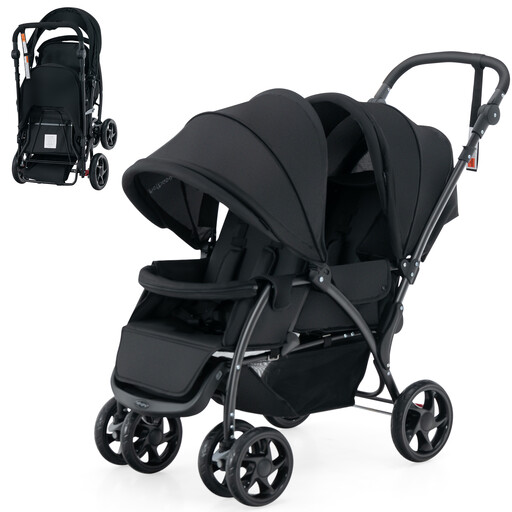
Why it suits this profile: This double buggy has room for two children and features adjustable backrests, an adjustable handlebar and a foldable frame for everyday use.
The age limits are listed separately for each seat: from birth for the rear seat and from 6 months for the front seat. This makes it clear that the two seats aren’t intended for the same use.
Two seats, each with a maximum capacity of 15 kg, five-point harnesses, rear brakes and a compact folded size.
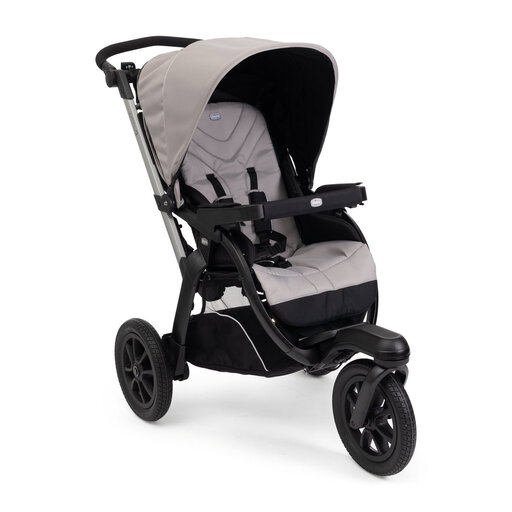
Why it suits this profile: A three-wheel pushchair for families who walk on a variety of surfaces and want a model they can use for longer.
The product information states that it has a fully adjustable backrest, a five-point harness and a weight capacity of up to 22 kg. Check the manual before using it with a newborn.
Puncture-proof XL wheels, two-stage adjustable suspension, one-handed folding and compatibility with the listed carrycot and car seat accessories.
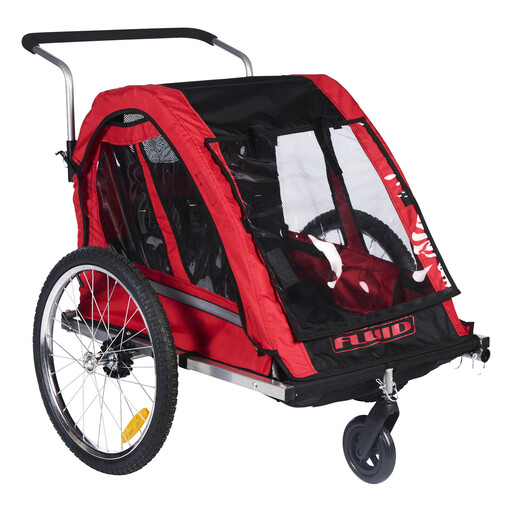
Why it suits this profile: This cycle trailer is designed for families who combine cycling and walking and want a model with two modes of use.
The description lists separate cycling and walking modes, a five-point harness and a foldable frame. Check the coupling and permitted load before use.
Maximum load according to the product information: 40 kg. Features include large air-filled tyres, ventilation panels, rain protection and a safety flag.
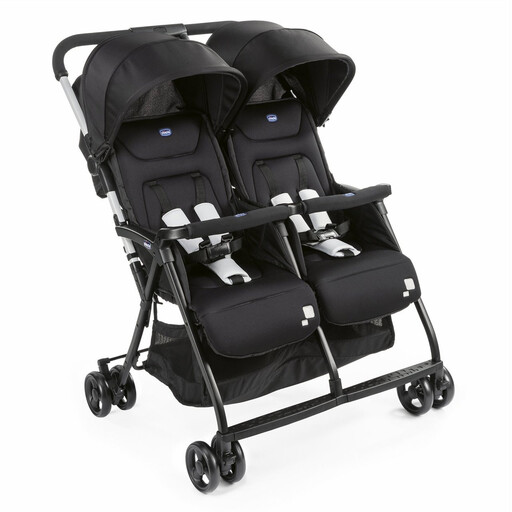
Why it suits this profile: A lightweight double pushchair for twins from birth, with separately adjustable backrests and a narrow width of 78 cm.
The specifications state a maximum of 15 kg per seat, a five-point harness and independent adjustment for each seat. This makes the limits clearer than broad age claims.
Weighs 8 kg, folds like an umbrella with one hand, and comes with UV50+ sun canopies and a rain cover according to the product information.
We’ve put together a complete, up-to-date list of products that meet these strict selection criteria and the applicable European safety requirements.
Choose a model with a fully flat recline, a suitable carrycot or an approved car seat combination. Check the official age and usage instructions. A buggy with only a semi-reclined position isn’t automatically suitable for a newborn.
It depends on the maximum weight, your child’s height and how stable they are in the seat. According to their product information, some models are suitable up to 22 kg or around four years of age. Stop using the pushchair sooner if your child can climb out of the harness, isn’t properly supported any more or the pushchair is damaged.
Day-to-day maintenance usually involves removing sand and dirt, checking the brakes, wheels, harnesses and folding locks, and storing the fabric parts somewhere dry. Air-filled tyres on a cycle trailer may need extra checks. Only use parts and accessories that are compatible with the model, and follow the manufacturer’s instructions.
