
Vandaag of morgen in huis

Kwaliteit gegarandeerd

Welkomstaanbiedingen ontgrendelen: GRATIS bezorging | Tot 80% korting | Gratis 30 dagen JoyPlus-proefperiode
Download de app
A lovely colour or low price says little about how practical clothing is in everyday life. For babies and children, what matters most is whether a garment fits well, feels comfortable and can withstand frequent washing. Anyone looking for Chicco baby and children’s clothing will also come across different size codes, styles and material combinations.
So watch out for these three common pitfalls:
Chicco uses sizes including 56, 62, 68, 74, 80, 92 and 122. These generally refer to the child’s height in centimetres. For example, the size charts provided state:
Age is only an indication. If in doubt, measure your child’s height and compare it with the size chart on the product page. Also check chest, waist and hip measurements if these details are available. A size that is too loose may be less practical for a bodysuit, while a T-shirt with a little extra room may be wearable for longer.
Several Chicco garments in this range are made from 95% cotton and 5% elastane. This combination can allow freedom of movement and help the garment retain its shape. Other styles are made from 100% cotton, such as the sleeveless bodysuit in white and red.
One skirt style states 80% cotton, 16% polyester and 4% elastane. This is a different composition from cotton baby clothing with a high cotton content. So do not look only at the name of the material; check the complete percentages on the label or in the product information.
Under the European Textile Regulation, fibre compositions must be clearly stated. Check this information before buying, especially if you want to combine several garments.
A Chicco long-sleeved T-shirt is practical for cooler days or as an extra layer. A Chicco short-sleeved T-shirt is better suited to warmer conditions or wearing under a cardigan. For young babies, a Chicco bodysuit can be useful because it stays in place. Check, however, that the fastening is easy to open when changing your baby.
For children’s clothing, also look out for cords, loose parts and protruding decorations. European safety standards for children’s clothing address risks associated with cords and drawstrings. You should check the exact design for each product rather than relying on the brand name alone.
Washing instructions vary according to the material and product. Washing and drying temperatures, ironing and professional cleaning can affect the fit and colour. Always follow the label, even when two garments appear to have the same composition at first glance.
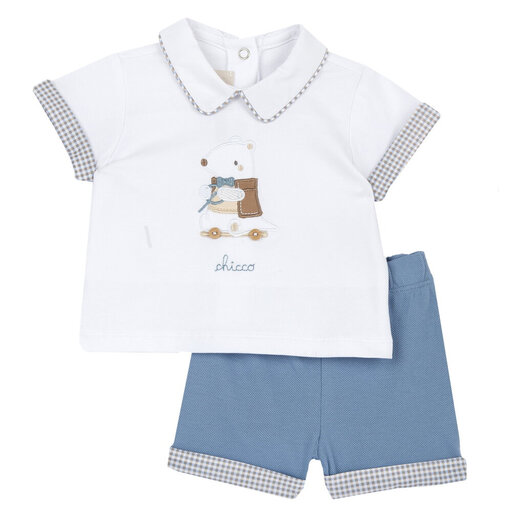
Why it suits this profile: This two-piece set consists of a T-shirt and shorts and is listed in size 056, with an age indication of approximately 3 months. Handy if you are looking for several basic items in a single purchase.
The product information clearly states the number of pieces, colour, size and material: 95% cotton and 5% elastane.
Two-piece set; cotton-elastane blend; size 056 for young babies.
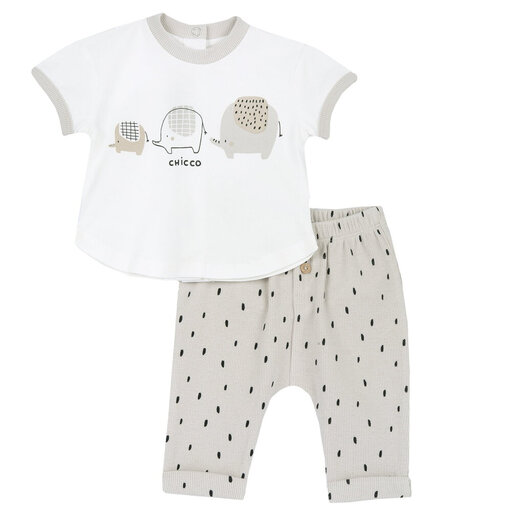
Why it suits this profile: The combination of a T-shirt and trousers in a unisex design is ideal for parents who want neutral clothing that is easy to mix and match.
The composition is clearly stated as 95% cotton and 5% elastane. This makes it easier to compare this style with other sets.
Unisex design; two-piece combination; size 080, corresponding to approximately 15 months.
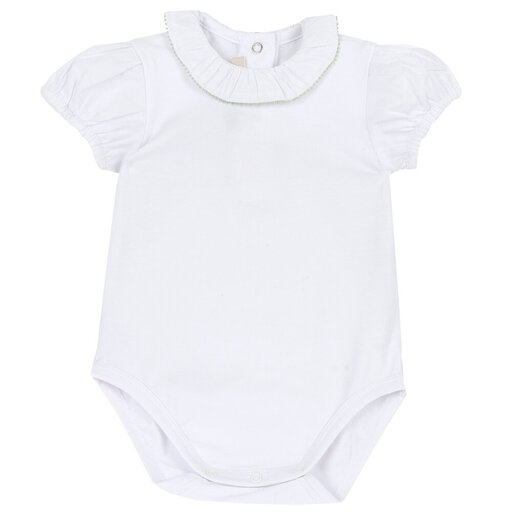
Why it suits this profile: This white short-sleeved bodysuit is designed for everyday use by a baby of approximately 9 months and can be worn under trousers or a skirt.
The product page states size 068, short sleeves and a composition of 95% cotton and 5% elastane. Before buying, however, check the fastening and care label.
Short sleeves; white colour; cotton-elastane blend; size 068.
We have put together a complete, up-to-date list of products that fully meet these strict selection criteria and the applicable European safety regulations.
In the product information, size 68 is often associated with approximately 9 months. However, the right choice depends on the child’s height and body shape. Measure your child and compare the result with the size chart. For a baby who is growing quickly, a slightly looser fit may be practical, provided the garment does not restrict movement.
Many styles list cotton as the main material, for example 95% cotton with 5% elastane or 100% cotton. This makes the fabric composition clear, but it does not tell you everything about comfort or care. Also check the seams, fastenings, fit and washing instructions. Wash the garment according to the label to minimise unnecessary wear.
That varies from child to child and depends on the style and growth rate. A size 74 T-shirt may fit for a shorter or longer period than trousers in the same size. Check regularly that the shoulders, sleeves, waist and leg length still offer enough room. For intensive use, it is practical to buy basics such as bodysuits or T-shirts in multiples.
