
Vandaag of morgen in huis

Kwaliteit gegarandeerd

Welkomstaanbiedingen ontgrendelen: GRATIS bezorging | Tot 80% korting | Gratis 30 dagen JoyPlus-proefperiode
Download de app
Chicco baby clothes are available in a wide range of styles, colours and sizes. That makes choosing enjoyable, but it can also make the decision more difficult. A cute photo tells you little about the fit, fabric or how practical the item will remain after repeated washing. This is particularly important for babies and young children, where small details can make a big difference.
So don’t focus only on colour or price. Always check the size, fabric composition, fastenings and recommended care instructions. The points below will help you compare Chicco children’s clothing more effectively for boys and girls, from baby clothes in size 56 through to size 140.
An age indication such as “6 months” is useful, but it is no substitute for the clothing size. Children do not all grow at the same rate. Chicco often displays sizes in centimetres, for example 056, 068, 098 or 140.
Therefore, check:
For example, a size 056 bodysuit is designed for a different body length than a size 068 model, even if the age difference appears small.
Not all cotton baby clothes have the same composition. Some Chicco bodysuits and sets consist of 95% cotton and 5% elastane, while other garments are made from 100% cotton. A blend with elastane can provide extra stretch. A fully cotton model has a different fabric composition and different properties.
Always check the full materials label. Also look at the lining and any additional layers. According to the product information, the Chicco dress-style dungaree skirt consists of 80% cotton, 16% polyester and 4% elastane. That is different from a cotton T-shirt or vest top.
A baby set may appear complete at first glance, but check exactly what is included. A 2-piece T-shirt and shorts set contains a top and a pair of shorts; a 2-pack consists of two similar garments. That is practical for everyday use, but it is not the same as a complete outfit including, for example, a cardigan or base layer.
Therefore, check:
The Chicco baby and children’s clothing in this selection ranges from size 056 to 140, corresponding to approximately 0 to 10 years, depending on the model. Use your child’s height as your first point of reference. A neckline that is too tight or a short body can make a garment less practical, even when the age indication appears correct on paper.
For babies, bodysuits with enough room around the nappy are useful. For older children, T-shirts, shorts, skirts and pyjamas can have a slightly looser fit, but too much extra room may become inconvenient during play.
Look at the proportions of cotton, polyester and elastane. 100% cotton appears in the product information for items including a tank top and a sleeveless bodysuit. Other models contain 5% elastane, which the product specifications state provides a stretchy composition.
Use the material information as a comparison point, not as a guarantee of a particular feel. How a fabric feels also depends on its weave, thickness and finish. Wash the garment according to the label to help minimise shrinkage or loss of shape.
For baby clothes intended for everyday use, clear washing instructions are important. White bodysuits and T-shirts are easy to combine with other light-coloured clothing, while navy, pink or light blue items add more colour to the wardrobe.
For warmer days, you could look for:
For night-time, Chicco short-sleeved pyjamas are a practical choice. Check the care label for each model and follow the manufacturer’s instructions.
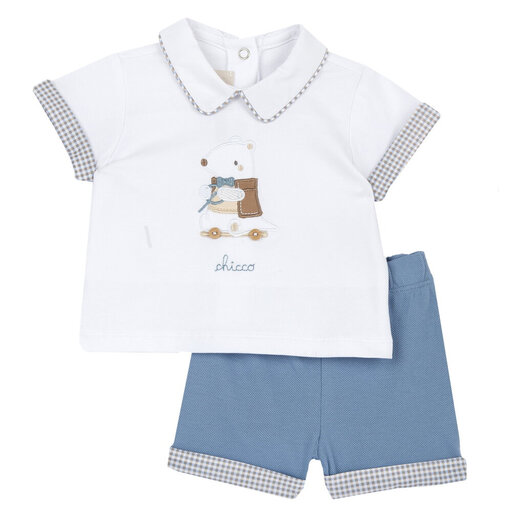
Why it suits this profile: This 2-piece set combines a T-shirt and shorts in one purchase. According to the product information, size 056 is intended for 0 to 3 months, making it a straightforward starting point for a basic wardrobe.
The product states both the size and the composition: 95% cotton and 5% elastane. This means you do not have to rely solely on the photo or age label.
2-piece set; medium light blue colour; size 056; cotton and elastane fabric.
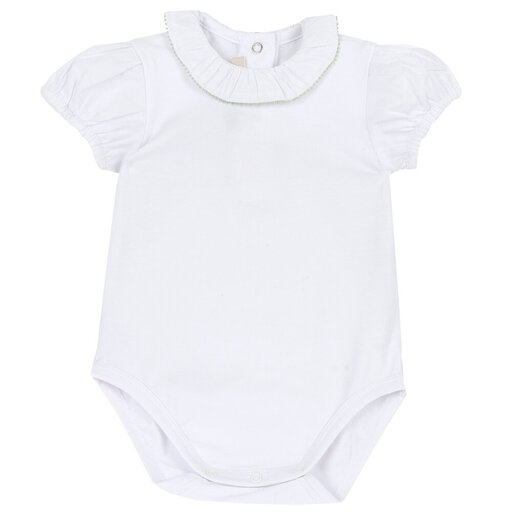
Why it suits this profile: A white Chicco short-sleeved bodysuit is a useful base layer for a variety of outfits. In the product information, size 068 is associated with approximately 6 to 9 months.
The product information clearly states the type, size, colour and fabric composition: 95% cotton and 5% elastane.
Short sleeves; white colour; size 068; cotton-elastane blend.
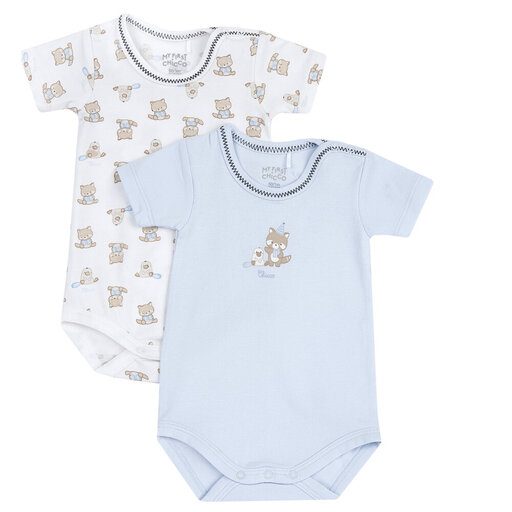
Why it suits this profile: This short-sleeved 2-pack is aimed at parents who need several similar basic garments. Size 092 is listed for approximately 24 months.
The number of pieces is stated in the product name and description. You therefore do not buy a single bodysuit assuming it is a set.
2-pack; short sleeves; light blue colour; 95% cotton and 5% elastane.
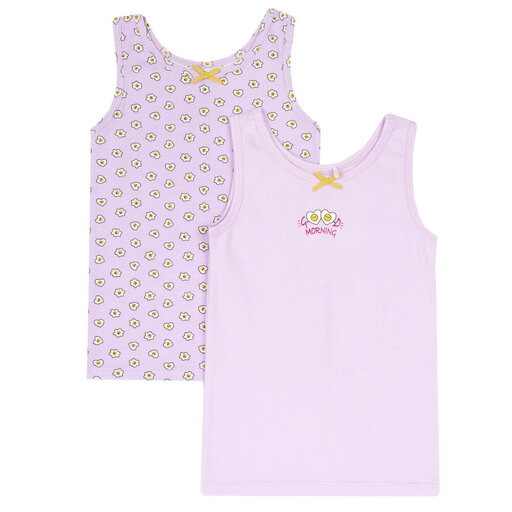
Why it suits this profile: These tank tops are available in size 140, which the product information associates with approximately 9 to 10 years. This model therefore falls within the larger sizes of Chicco children’s clothing.
The size is given as a numerical size, not only as an age. Check your child’s height before ordering.
2-pack; size 140; light pink colour; 95% cotton and 5% elastane.
We have put together a complete, up-to-date list of products that fully meet these strict selection criteria and the applicable European safety regulations.
Use your child’s height as your starting point. Size 056 generally refers to approximately 56 centimetres, while size 068 corresponds to around 68 centimetres. The age on the label is only an indication. Always check the size chart and take the fit of the specific garment into account.
That depends on the model and fabric composition. The product selection includes bodysuits, T-shirts, sets, shorts, skirts, pyjamas and vest tops. For everyday use, the number of pieces, washing instructions, sleeve length and size are important points of comparison. According to Chicco’s own information, the items mentioned are intended for everyday use; check the product page and care label for practical details.
Always follow the washing and care label. Separate white and coloured clothing, choose a suitable programme and avoid using a higher temperature than indicated. Garments containing elastane may have different care instructions from a 100% cotton model. This allows you to take the garment’s exact composition into account rather than relying solely on the term “cotton”.
