
Vandaag of morgen in huis

Kwaliteit gegarandeerd

Welkomstaanbiedingen ontgrendelen: GRATIS bezorging | Tot 80% korting | Gratis 30 dagen JoyPlus-proefperiode
Download de app
Buying a Chicco boys’ outfit or a pair of sandals seems simple, until you compare size labels, materials and different product variations. The wrong size can quickly mean clothes that are uncomfortable or sandals that barely get worn. Colour and material names don’t always tell the whole story either.
Look out for these common pitfalls:
For baby and toddler sizes, the number often refers to body length in centimetres. For example, size 050 is listed as suitable for 50 cm for the Chicco 2-Piece T-Shirt and Shorts Set, and the product information gives an age range of 00M. Size 056 is linked to 56 cm and up to around 3 months, while size 062 is listed for 62 cm and up to around 6 months.
So, use age only as an additional guide. For clothes, measure your child’s height and compare it with the size chart. For sandals, measure your child’s foot from heel to longest toe while they’re standing. Compare the result with the product’s size information. Size numbers such as 230, 240, 250 or 270 shouldn’t automatically be interpreted as ages.
Cotton baby clothes are popular because they’re practical and easy to care for. However, there are differences:
Elastane can add stretch, while 100% cotton may have a different texture and fit. Neither composition is automatically right for every child; consider the intended use, fit and washing instructions. Always follow the care label to help prevent shrinkage or damage.
The material information for sandals varies between product listings. The dark blue Chicco sandals in various sizes are listed as having 100% polyurethane-coated support. The fuchsia versions are listed as 100% cotton. As this information may affect what you expect from the product, it’s a good idea to check the current product page and images before buying.
Sandals are most practical for young children when they’re easy to put on and take off. Check whether the fastening is adjustable and whether your child’s foot slides forwards or sideways. Also look for:
You can also compare other brands of children’s shoes with Chicco. Geox children’s shoes, for example, often come with more detailed product specifications. The Geox B Kiddartah A Collection lists an upper made from 93% cow leather and 7% coated polyester, a rubber outsole and a removable insole. According to the product description, Geox recommends measuring the foot and allowing around 0.5 to 1 cm of extra room. This is a brand recommendation, not a universal rule; always check the fit on your child.
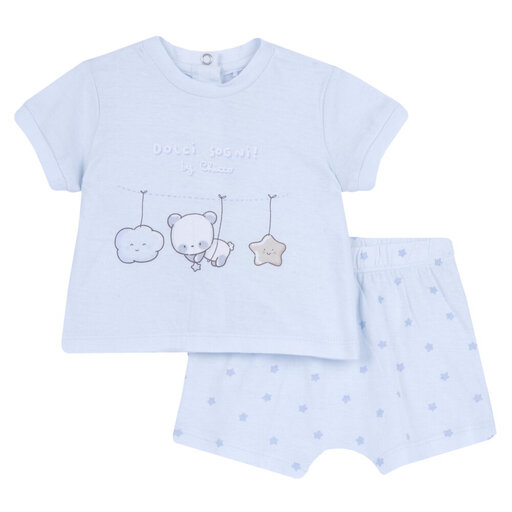
Why it suits this profile: This baby T-shirt and shorts set is a straightforward choice if you’re looking for a simple outfit for everyday wear. The product information lists size 050, light blue and 100% cotton.
The composition and size are clearly listed, so you don’t have to rely solely on a general age recommendation.
100% cotton; two-piece set; light blue; size 050, the smallest baby size in this selection.
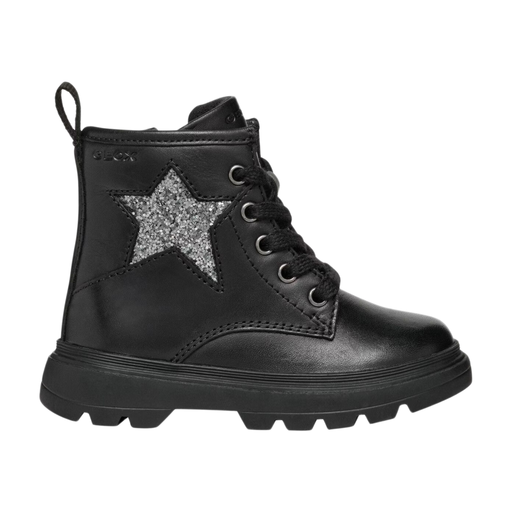
Why it suits this profile: A good option for parents who want to compare a more fully specified children’s shoe with Chicco. The product page lists several material components and care instructions.
The composition, sizing advice and care instructions are described in detail, making it easier to assess the material and fit.
Nappa leather upper; rubber outsole; removable insole; size 27.
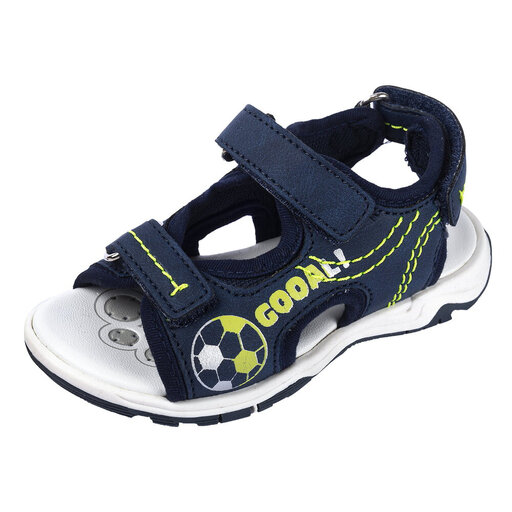
Why it suits this profile: These dark blue sandals are an option for an older child within the listed size range. The product details list size 270, dark blue and polyurethane-coated support.
This version is listed with a specific shoe size. Measure your child’s foot before ordering rather than relying only on the age recommendation.
Dark blue; size 270; material listed as 100% polyurethane-coated support.
We’ve put together a complete, up-to-date list of products that meet these strict selection criteria and current European safety requirements.
Measure your child’s height and compare it with the product size. The selection includes sizes 044 for 44 cm, 050 for 50 cm, 056 for 56 cm and 062 for 62 cm. The age shown on the product page is a guide and may vary from child to child.
Ask your child to stand up straight and measure both feet from heel to longest toe. Use the longer measurement and compare it with the size chart. Also check the width, fastening and room around the toes. Sandals shouldn’t pinch, but they shouldn’t fit loosely around the foot either.
How long they last depends on growth, how often they’re worn, washing and care. Babies often grow out of clothes before the material wears out. With sandals, the fit may become an issue sooner. Check regularly that your child’s toes aren’t touching the front and that the fastening still fits securely.
