
Vandaag of morgen in huis

Kwaliteit gegarandeerd
Download de app
Categorieën

A chest of drawers might seem like a simple purchase—until it's sitting in your room. You're stuck with drawers that jam, a wobbly frame, or a finish that starts to wear off after just a few months. It's easy to make the wrong choice, leading to daily frustration. Finding the right storage cabinet with drawers requires looking at the specifications, not just the photos. This guide will help you make a functional and suitable choice based on facts.
Before you choose a model, it's wise to consider a few objective criteria. This will help you find a piece of furniture that not only matches your style but also meets your practical needs.
Measure the available space accurately: width, depth, and height. Consider swinging doors, walkways, and the height of skirting boards or windowsills. A dresser that's too deep can block a walkway, while a model that's too low can be awkward to use. The top of a chest of drawers is often used for decoration or as an extra surface; check if the height is practical for this purpose.
The material determines both durability and appearance.
Always check the maximum load capacity and the inclusion of safety features, such as an anti-tip kit for wall mounting. This is a crucial safety standard.
The number and layout of the drawers determine its functionality. Do you need to store many small items or a few large ones? A combination of small and large drawers can be practical. The style should complement your interior. A Scandinavian chest of drawers is characterized by clean lines and natural materials, while a modern dresser often features smooth surfaces and minimalist handles.
Below is a selection of chests of drawers, analysed based on their specifications and intended use.
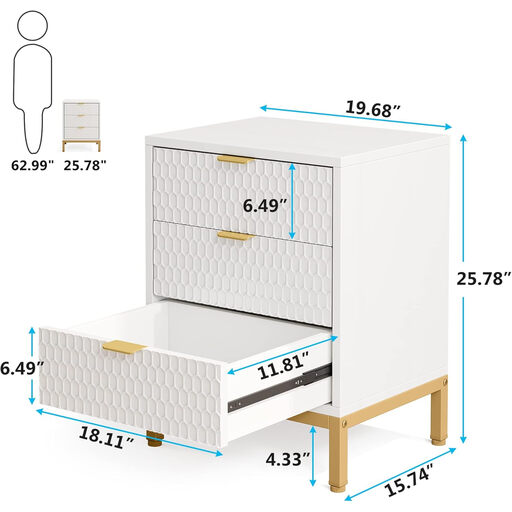
Why We Chose It This model combines the function of a bedroom nightstand with the aesthetic of a designer side table. The combination of a white lacquer finish, a gold-coloured metal base, and a 3D honeycomb pattern on the drawers gives it a distinctly modern look.
Pros
Who Is It For? For those seeking a functional piece with a luxurious, contemporary look. It fits well in a modern or art-deco interior, either beside the bed or next to a sofa in the living room. Note: the primary material is engineered wood, not solid wood.
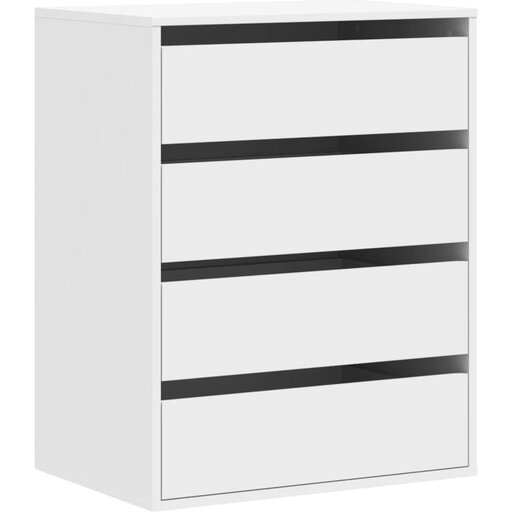
Why We Chose It A classic, straightforward white chest of drawers that focuses on pure functionality. Its timeless and clean design makes it a versatile addition to almost any bedroom or hallway.
Pros
Who Is It For? Ideal for anyone looking for an affordable and practical storage solution without stylistic frills. Its neutral appearance makes it easy to combine with existing furniture. Assembly is required.
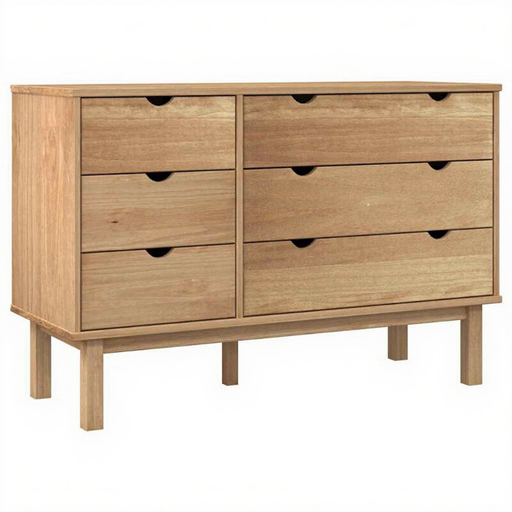
Why We Chose It This wide wooden chest of drawers from the OTTA series brings a Scandinavian vibe to your home. The use of solid pine wood gives the furniture a natural and robust appearance, including the characteristic grains and knots of the wood.
Pros
Who Is It For? Perfect for fans of natural materials and the Scandinavian interior design style. Its generous dimensions make it a suitable dresser for the bedroom or as a storage unit in the living room. Please note that assembly is required.
If a chest of drawers doesn't meet your storage needs—for example, if you also require hanging space or have limited floor space—a different type of cabinet might be a better option. A sliding door wardrobe often provides more vertical storage and doesn't take up extra room when opened.
Check out our range of sliding door wardrobes for spacious and efficient storage solutions.
What is the difference between a dresser and a chest of drawers? The terms are often used interchangeably. Traditionally, a dresser is a lower, wider chest of drawers, often used in the bedroom for clothing. 'Chest of drawers' is a more general term for any piece of furniture consisting primarily of drawers and can vary in height and width.
How do I prevent a chest of drawers from tipping over? Taller or heavily loaded chests can pose a tipping hazard, especially in households with children. In compliance with EU safety guidelines, most manufacturers include hardware to anchor the unit to the wall. It is strongly recommended to always use it. Place the heaviest items in the bottom drawers for added stability.
Which material is better: solid wood or engineered wood? There is no single 'better' material; the choice depends on your budget and preferences. Solid wood is durable, unique, and can be sanded down, but it is often more expensive and sensitive to fluctuations in humidity. Engineered wood (like particle board or MDF) is budget-friendly, dimensionally stable, and offers a sleek, uniform finish, but it is more difficult to repair if damaged.
Written by: Joybuy Product Recommendation Officer