
Cook with limited worktop space
You want extra freezer space without giving up worktop space. The available floor space and clearance above the lid are important considerations.


A compact chest freezer could suit you if you have a suitable spot on the floor, the lid can open freely and you want to store other food as well as cheese. If you mainly freeze small portions and want to find them quickly, an under-counter freezer with drawers may be more practical. Whichever you choose, measure the space and check the model’s annual energy consumption and installation requirements.
You want extra freezer space without giving up worktop space. The available floor space and clearance above the lid are important considerations.
You regularly freeze small amounts of grated cheese and want to store them neatly and reach them easily.
You’re considering an extra freezer for cheese and other food, and want to weigh up the capacity you need against its annual electricity consumption.
Suitable if: you have a clear space with enough room above the lid and want to freeze other food too.
The trade-off: small packs can get buried beneath other food; a basket can keep them within easier reach.
Suitable if: you mainly store small portions and want to find them easily behind a door and in drawers.
The trade-off: drawers offer a different layout from the open space of a chest freezer, and may not accommodate large or irregularly shaped packs.
Suitable if: your current freezer has enough suitable space for the amount of cheese you store.
The trade-off: you won’t gain extra capacity, but you also won’t need to run a separate appliance all the time.
| Consideration | What to look for when buying | Who is this important for? |
|---|---|---|
| Space and opening | Measure the width, depth and height, including the clearance needed to open the lid or door. | If I have little space around the worktop, I want to know in advance whether the appliance and its lid or door will fit. Around 33% of consumers give available space top priority. |
| Amount of cheese | Decide how much cheese you want to freeze at once; if you’re freezing a larger fresh batch, compare the stated freezing capacity in kg per 24 hours. | If I mainly want to store grated cheese in portions, I’ll choose a capacity that suits the amount I actually keep. Around 27% of consumers prioritise freezing portions of cheese. |
| Layout and accessibility | Check whether the model has a basket or drawers, and whether the layout suits your portions. | If I want to find small bags quickly, I’ll check how easy they are to reach inside the appliance. Around 20% of consumers make organisation and access their top buying priority. |
| Energy consumption | Compare the annual consumption in kWh for a capacity that meets your needs; use your own electricity tariff to work out the cost. | If I’m considering an extra freezer, I want to factor in its energy consumption before choosing more capacity than I need. Around 20% of consumers prioritise running costs. |
Just because the width fits doesn’t mean the lid will open properly in that spot or that you’ll be able to reach the contents.
Measure the depth too, and check the model’s manual for the required clearance.
Small portions can be harder to find in an open freezer compartment than in drawers.
Compare a model with a basket against an under-counter freezer if you want to grab small packs quickly.
A larger freezer doesn’t change the storage advice for grated cheese.
Choose a capacity that suits the amount you store and follow the Netherlands Nutrition Centre’s storage advice.
Inventum lists the VK562W as a compact 99-litre chest freezer, measuring 54.7 cm wide.
Tomado offers the 99-litre TCF0991W chest freezer, among other models, as well as smaller upright freezers with a door.
Beko lists the freestanding CF100EWN chest freezer as having a capacity of 98 litres, a width of 54.5 cm and a depth of 54.5 cm.
This selection includes chest freezers for extra food storage and under-counter freezers with drawers to keep small portions separate and easy to find.
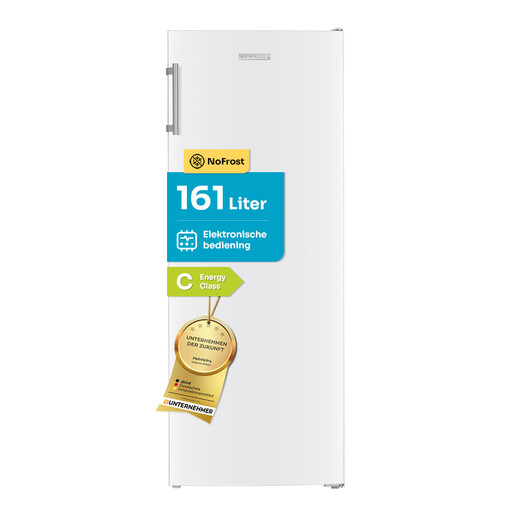 No image available
The product information lists drawers and trays for organising frozen portions.
Capacity: 161 litres. Energy rating: C.
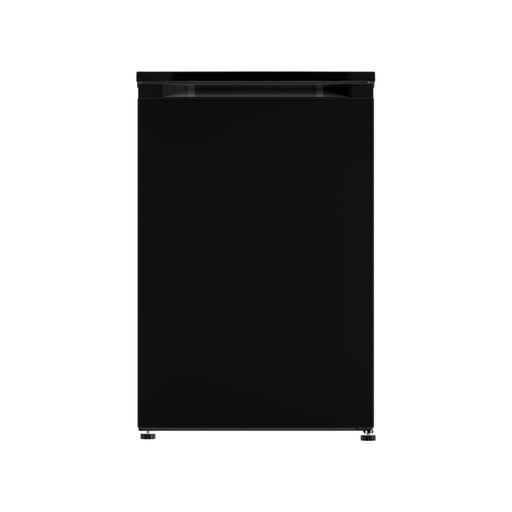 No image available
An under-counter model with drawers could suit you if you want to store small portions separately and find them easily.
Capacity: 85 litres. Energy rating: C. The product information lists three transparent drawers and a freezing capacity of 4.5 kg per 24 hours. Manual defrosting is required.
 No image available
The drawer layout of this under-counter model is an option for storing small portions separately.
Capacity: 87 litres. Energy rating: B. The product information lists three transparent drawers and a freezing capacity of 4.4 kg per 24 hours.
 No image available
The chest freezer has a storage basket for small packs; bear in mind that you access it from above.
Capacity: 98 litres. Energy rating: E. The product name specifies a counterbalanced lid.
 No image available
The chest freezer has a storage basket for small packs; check that there’s enough clearance above the lid.
Capacity: 140 litres. Energy rating: E. The product name specifies a counterbalanced lid.
The Netherlands Nutrition Centre recommends keeping it for three days in the fridge or two to four months in the freezer; after that, its quality may deteriorate. For an unopened pack, follow the storage advice and date on the label.
It depends on the model and the ambient temperature. Inventum says the VK562W is suitable for use in a room with a temperature as low as −15 °C. Don’t assume the same applies to other models: check the manual for guidance on where to install your freezer.
The EU energy label for household freezers uses a scale from A to G and lists details including annual consumption in kWh, capacity and noise. Compare energy consumption for a capacity that suits your needs; you’ll also need your own electricity tariff to work out the cost.
According to the Dutch Government, the retailer must supply a product that works properly. If your product is faulty, contact the retailer to discuss a solution, such as a free repair or replacement; you don’t have to contact the manufacturer directly.
According to the Dutch Government, when you buy a new, similar appliance in the Netherlands, the retailer must take your old one free of charge under the ‘old-for-new’ scheme. This also applies to online purchases; the Dutch Government explains what you can do if the delivery driver doesn’t take the appliance away straight away.