What should you look for when choosing one?
First check the free space in your existing freezer and measure the area for a potential chest freezer. The Netherlands Nutrition Centre recommends setting a freezer to at least −18 °C and freezing food in small portions; Milieu Centraal highlights energy consumption as something to consider when adding another appliance.
| What to consider |
What to look for |
Who should consider this? |
| Capacity and size |
Count your usual portions and measure the available floor space, including room to open the lid. First check how much free space there is in your current freezer. |
If I mainly want to store my usual supply of soup, I need enough space without an unnecessarily large chest freezer; around 33% of consumers say capacity and storage space are their main consideration. |
| Freezing capacity |
Compare the weight of your usual cooled batch with the stated freezing capacity in kg per 24 hours. Treat this figure as the manufacturer’s specification, not an independent test result. |
If I freeze several portions at once, I want to know whether the model can handle my usual batch; around 27% of consumers prioritise freezing a whole batch at once. |
| Energy consumption |
Compare the energy labels and stated annual kWh consumption of the exact models. To calculate running costs, you’ll also need your own price per kWh. |
If I’m running an additional appliance, I want to factor in its annual energy consumption; around 20% of consumers see energy consumption as their main priority when choosing. |
| Positioning and layout |
Measure the space, including clearance above the lid, check the permitted ambient temperature and see whether a removable basket suits your portions. |
If I have limited space or want to find portions easily, the location and layout are key; around 20% of consumers prioritise these factors. |
Chest freezers at Joybuy
This selection focuses mainly on compact freestanding chest freezers for extra portions of soup. The larger 196-litre Candy is best suited to anyone who wants to store other frozen food as well as soup.
 No image available
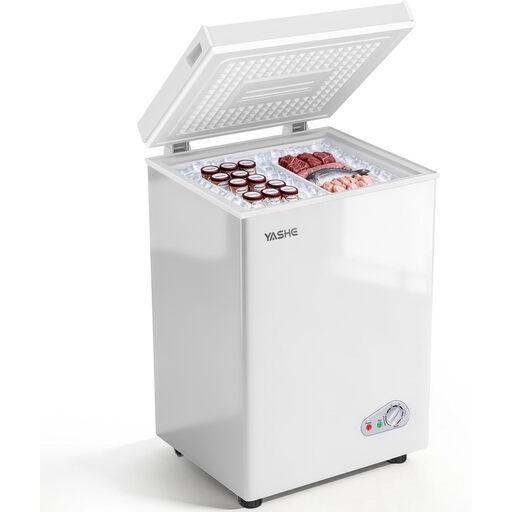
YASHE BC-100Q-EU chest freezer
A compact option for extra space for soup portions, with a 100-litre capacity, two removable baskets and six temperature settings.
Energy class E; stated consumption of 185 kWh per year.
View at Joybuy
 No image available
TCL CF126EWE0NL chest freezer
A compact chest freezer for extra storage, with a capacity of 98 litres and a storage basket for smaller items.
Energy class E; features adjustable temperature control and a counterbalanced lid.
View at Joybuy
 No image available
Comfee RCC143WH2EU(E) chest freezer
With a 99-litre capacity and a removable basket, this model offers compact extra space. Its stated freezing capacity is 4,5 kg per 24 hours.
Energy class E and stated consumption of 169 kWh per year. The product specifications give a minimum ambient temperature of 10 °C; check this before placing it in a cold space.
View at Joybuy
 No image available
CHiQ JR99DWE chest freezer
A compact 99-litre chest freezer with a wire basket; its stated freezing capacity is 4,5 kg per 24 hours.
Energy class E and stated consumption of 169 kWh per year. The product specifications give a minimum ambient temperature of 10 °C; check this before placing it in a cold space.
View at Joybuy
 No image available
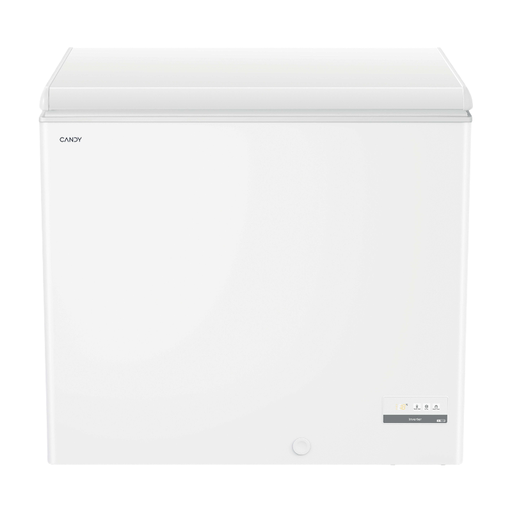
Candy CHAE 2002C chest freezer
With a capacity of 196 litres, this larger model is best suited to anyone who wants to store other frozen food as well as soup.
Energy class C, static technology and an external digital display.
View at Joybuy
Frequently asked questions
How should you prepare vegetable soup for freezing?
Let the soup cool, divide it into small portions in clean, airtight containers, then put them in the fridge or freezer within 2 hours of cooking. The Netherlands Nutrition Centre recommends setting the freezer to at least −18 °C and not adding too many fresh portions at once; also compare the appliance’s freezing capacity with the size of your usual batch.
How long does frozen vegetable soup keep, and how should you defrost it?
For opened, thick vegetable soup, the Netherlands Nutrition Centre recommends keeping it in the freezer for 3 months; its quality may deteriorate after that. For leftovers, it recommends defrosting them in the fridge. For a different recipe or product, follow the relevant storage advice.
Can any chest freezer be kept in an unheated shed?
No, it depends on the exact model. Check the permitted ambient temperature and compare it with the temperature in the intended location; the Consumers’ Association notes that not all freezers can cope with low ambient temperatures.
How do you compare energy costs, and what applies if a product is faulty?
Compare the stated annual kWh consumption for the exact model and, if you wish, multiply it by your own price per kWh. In the Netherlands, the government says there is no fixed statutory guarantee period; if a product is faulty, you may be entitled to a free repair, replacement or refund.


