
Cook making large batches of stock
Regularly freezes several portions of cooled stock at once. Compare the freezing capacity in kg per 24 hours with the largest batch you put in the freezer in one go.


Choose a chest freezer based on the largest amount of stock you want to freeze in a single day. Compare its freezing capacity in kg per 24 hours, not just its capacity in litres. Then measure the available space, including the clearance needed to open the lid, and agree on using sealed, labelled portions so everyone can find what they need in a shared kitchen.
Regularly freezes several portions of cooled stock at once. Compare the freezing capacity in kg per 24 hours with the largest batch you put in the freezer in one go.
Wants to find their own portions quickly without leaving them out of the freezer for long. The Netherlands Nutrition Centre recommends using sealed containers labelled with their contents and freezing date.
Needs to weigh up the capacity required against the floor space available, room to open the lid, ventilation requirements and annual energy consumption.
First, work out how much stock you freeze on a busy day. Then check that the chest freezer will fit and that all users can access their portions.
| What to consider | What to look for | Who is this important for? |
|---|---|---|
| Freezing a fresh batch | Weigh your largest daily batch and compare it with the stated freezing capacity in kg per 24 hours. Freeze stock in small, sealed portions. | If I regularly freeze a large amount at once, I want to know whether the appliance can handle that batch. Around 28% of consumers put freezing capacity at the top of their list. |
| Finding portions | Check which baskets are included and label sealed containers with their contents and freezing date. | If several people share the food, I want to be able to identify and retrieve portions quickly. Around 22% of consumers prioritise the layout for shared use. |
| Finding a suitable spot | Measure the space available and the clearance above the lid. Follow the ventilation clearance requirements in the manual for your chosen model. | If the kitchen has limited free space, I want to be sure the lid can open and that the chest freezer is positioned according to the instructions. Around 22% of consumers choose mainly based on where it will go. |
| Energy consumption | Compare the stated consumption in kWh per year for models with enough capacity and freezing capacity. | If I leave a chest freezer running all the time, I want to take its annual energy consumption into account. Around 17% of consumers name energy consumption as their main purchasing concern. |
| Planning maintenance | Check the defrosting instructions and whether the specific model has a defrost water drain. Agree on who will clean it. | If several people use the chest freezer, I want to know who will look after maintenance and where the portions will go temporarily. Around 11% of consumers put maintenance at the top of their list. |
Capacity in litres tells you how much the freezer can hold, not how much fresh stock it can freeze in 24 hours. For example, Inventum lists the VK1422W with a capacity of 418 l and a freezing capacity of 19 kg per 24 hours.
Weigh your largest daily batch and compare it with the stated freezing capacity. Check this figure for the exact model.
A batch that exceeds the model’s freezing capacity can affect food already in the freezer.
The available space must also allow the lid to open and meet the model’s ventilation requirements. The manual for the Inventum VK1422W specifies 10 cm of clearance on all sides.
Before buying, measure the floor space and the clearance above the appliance, then check the positioning instructions for your chosen model.
If the space is too tight, you may need to find another place for the appliance.
Inventum describes Low Frost on the VK1422W as a way to limit frost build-up, but also recommends defrosting it periodically.
Read the maintenance instructions for the exact model and agree on who will look after it in a shared kitchen.
Allow time and find a temporary place for the food while you defrost and clean the freezer.
The Consumers’ Association also recommends checking annual consumption in kWh. Actual consumption depends partly on how the appliance is used.
Compare the stated annual consumption of models that both meet your needs. Work out any energy costs using your own tariff.
Beko lists a capacity of 98 l for the CF100EWN and 198 l for the CF200EWN. These models can help you weigh up the space available against the amount you want to store.
Inventum lists a capacity of 418 l and a freezing capacity of 19 kg per 24 hours for the VK1422W. The manual requires 10 cm of clearance on all sides of the appliance.
Liebherr lists a capacity of 497 l for the CFe 2500. The manufacturer describes SmartFrost and StopFrost as ways to reduce frost build-up.
Whirlpool offers chest freezers and upright freezers. This can help you weigh up storage capacity against how easy it is to reach your everyday portions.
This selection includes chest freezers in a range of capacities. Compare each model’s capacity and stated freezing capacity with your stock and daily batch of stock, and look at the storage options for shared use.
 No image available
The capacity gives you room for a larger stock, while the removable basket can make it easier to take out portions separately.
Capacity: 291 l. Switches between fridge and freezer modes. Includes a removable basket, LED lighting and digital temperature control.
 No image available
The storage basket lets you keep smaller portions separate in a medium-sized stock.
Capacity: 140 l. Includes a storage basket, counterbalanced lid, adjustable temperature control and adjustable feet. Energy rating E.
 No image available
The compact capacity and wire shelf suit anyone looking to store a smaller amount and keep portions separate for easy access.
Capacity: 99 l. Freezing capacity: 4,5 kg per 24 hours. Stated energy consumption: 169 kWh per year. Includes a wire shelf.
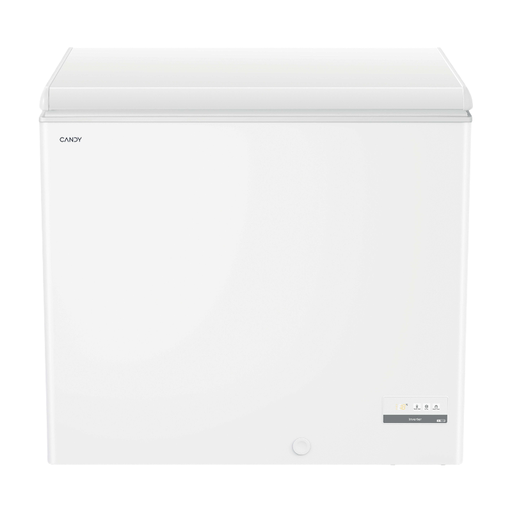 No image available
The capacity may suit anyone who wants to store more and check the temperature on the external display.
Capacity: 196 l. Static technology, energy rating C and external digital display.
Yes, but first divide the stock into small, tightly sealed portions and let it cool. The Netherlands Nutrition Centre advises not leaving cooked food out of the fridge for more than 2 hours and gives -18 °C as the ideal freezer temperature. A chest freezer is no substitute for cooling food promptly.
Label each sealed container with its contents and freezing date, and agree on a regular spot for each user. The Netherlands Nutrition Centre recommends dating labels on cooked meals that have been frozen.
The Netherlands Nutrition Centre recommends keeping stock in the freezer for 3 months; after that, its quality may deteriorate. Make sure homemade stock is cooled promptly and stored in a well-sealed container.
Read the positioning instructions for your chosen model and compare its stated consumption in kWh per year, not just its energy rating. The manual for the Inventum VK1422W requires an earthed socket and 10 cm of clearance on all sides. Actual energy costs also depend on how you use the appliance and your electricity tariff.
Not simply because the kitchen is shared. According to the Netherlands Food and Consumer Product Safety Authority, businesses that produce, process, sell or distribute food must operate a food safety plan based on HACCP or an applicable hygiene code. If the kitchen is used commercially, the operator must check which obligations and requirements for storage and cooling apply. This information does not impose the same business requirements on household use alone.