
Small household stocking up on bread
You buy sliced bread in advance and want to take a few slices each day from an organised supply. Start by portioning it out and check whether your existing freezer compartment has enough room.


If you can fit your bread portions in your existing freezer compartment, you probably don’t need another appliance. If you regularly need more freezer space, compare the space available for the freezer and its lid, the capacity you need and the annual energy consumption in kWh. A basket can make smaller portions easier to reach. If you’re planning to keep it in an unheated outbuilding, check that the model you choose is suitable for the ambient temperature.
You buy sliced bread in advance and want to take a few slices each day from an organised supply. Start by portioning it out and check whether your existing freezer compartment has enough room.
You need extra freezer space, but you’ll need to weigh up the external dimensions and the clearance needed to open the lid against the capacity.
You want to keep the freezer outside your heated kitchen, so you’ll need to check the permitted ambient temperature for the specific model.
Suitable when: you can fit the portions in without squeezing out other essentials.
Trade-off: you won’t need a second appliance, but there may not be enough room for a larger supply.
Suitable when: your regular stock won’t fit in your existing freezer compartment and you have space for the freezer and its lid.
Trade-off: a chest freezer offers open storage space, but small packs at the bottom are harder to reach than in drawers.
Suitable when: you often take out individual portions and want to keep everything organised.
Trade-off: compare usable capacity and energy consumption; the stated capacity in litres alone won’t tell you how easy it is to reach your portions.
The Netherlands Nutrition Centre recommends freezing bread in portions as soon as you buy it. First, check whether you can fit that supply in your existing freezer compartment.
| What to consider | What should you check? | Who is this most relevant to? |
|---|---|---|
| Space for bread | Try fitting your usual supply in your existing freezer compartment first; then compare the capacity and layout. | I want to store portions of bread without squeezing out other frozen food. Storage space is the top priority for around 36% of consumers. |
| Annual energy consumption | Compare the stated annual energy consumption in kWh for models with a suitable capacity. | I don’t want to run a second appliance without knowing its stated energy consumption. Annual energy use is the most important factor for around 29% of consumers. |
| Finding a place for it at home | Measure the floor space and check the external dimensions and the clearance above the lid. | I need extra freezer space, but the chest freezer must also fit in the space available. For around 21% of consumers, finding a suitable space is the main concern. |
| Positioning and access | Check the permitted ambient temperature for the exact model and compare a basket with drawers if you regularly take out individual portions. | I want to reach smaller portions easily and keep the freezer somewhere unheated. Suitable positioning and easy access are the top priorities for around 14% of consumers. |
Bread can be frozen in portions. According to Milieu Centraal, two refrigeration appliances use more energy together than one suitably sized appliance.
First, work out how much bread you usually store and try fitting those portions in your existing compartment.
If you’ll be taking food out every day, accessibility, layout and the space available for the appliance matter too.
Compare the external dimensions and layout. Consider drawers if you find it difficult to reach smaller portions in a deep chest freezer.
The permitted ambient temperature applies to specific models; it isn’t automatically the same for every chest freezer.
Before buying, check the temperature limits in the specifications and manual for the exact model.
In the Netherlands, a manufacturer’s guarantee does not replace your right to a product that is fit for purpose.
Keep your proof of purchase and contact the seller if there’s a fault. If you’re offered an additional guarantee, check what it adds to your existing rights.
The features below apply to the models and versions named; mentioning a brand doesn’t mean that a particular model is available.
The VK562W is a 99-litre chest freezer. It may be worth considering if your extra supplies won’t fit in your existing freezer compartment.
The TCF0991W is a 99-litre chest freezer. For this version, compare the basket, the space available and its stated energy consumption.
The CFc 1875 Plus has a capacity of 192 litres, making it more suitable for a larger amount of frozen food than for just a few loaves.
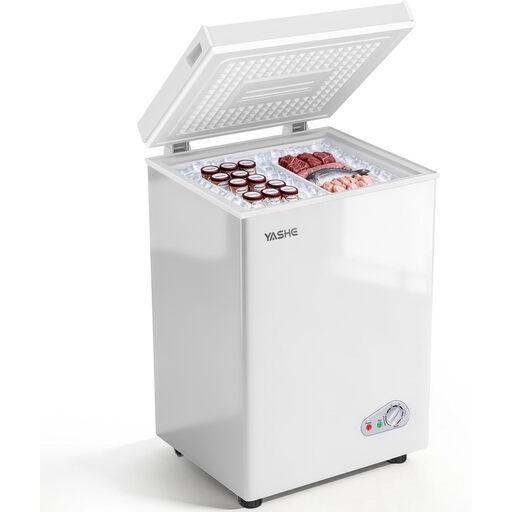
Freestanding chest freezers for anyone who wants to store regular supplies outside their existing freezer compartment.
 No image available
The capacity and removable baskets offer a layout for supplies of smaller portions that you take out regularly.
100 L capacity, two removable baskets and six temperature settings. Stated annual energy consumption: 185 kWh.
 No image available
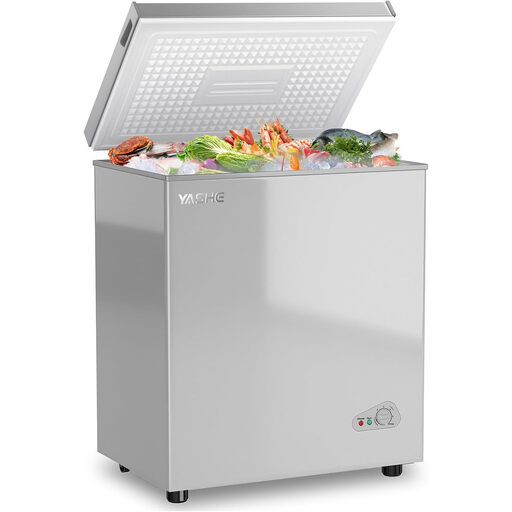
This chest freezer may be a good fit if your bread and other frozen food need more space.
150 L capacity, two removable baskets and six temperature settings. Stated annual energy consumption: 157 kWh; check that the capacity and available space suit your needs.
 No image available
The wire basket gives you somewhere to keep smaller portions that you take out regularly.
E energy rating and stated annual energy consumption of 169 kWh. The minimum suitable ambient temperature is 10 °C; check the manual before placing the model in a colder room.
 No image available
The capacity and included storage basket could suit a supply of portions you want to keep separate.
140 L capacity, storage basket, adjustable temperature control and E energy rating.
 No image available
The storage option can help you keep smaller portions separate.
99 L capacity, wire basket, E energy rating and stated annual energy consumption of 169 kWh. The minimum suitable ambient temperature is 10 °C; check the manual before placing the model in a colder room.
The Netherlands Nutrition Centre recommends freezing bread in portions as soon as you buy it, then taking out what you need each day. For opened wholemeal bread, it recommends 1–3 months for best quality; storing it for longer can make it drier. If the packaging is unopened, follow the instructions on the label too.
The Dutch Consumers’ Association recommends −18 °C as the target temperature for a freezer. A colder setting uses more energy, so check the manual and temperature setting for your own model.
No. Check the permitted ambient temperature for the specific model. Inventum says the VK562W is suitable down to −15 °C, and Tomado says the same for the TCF0991W; don’t assume this applies to other chest freezers.
Yes. The Dutch Government lists freezers among the appliances that must have an energy label. The scale runs from A to G; for models with a suitable capacity, compare their stated annual energy consumption in kWh too.
According to the Dutch Government, when you buy remotely from a business, you’re entitled to a 14-day cooling-off period in many cases. You’re also entitled to a product that is fit for purpose; a manufacturer’s guarantee doesn’t replace this right. Contact the seller if there’s a fault.