
Dough makers short on floor space
In a small shared kitchen, it’s important that the freezer fits and that the lid can open fully. A basket can help keep frequently used portions within easy reach. Inventum lists a removable basket for the VK562W.


Start with the largest quantity of pizza dough you plan to freeze in a single day, and the space the chest freezer will take up with its lid open. Then compare its freezing capacity in kg per 24 hours, storage capacity, layout and annual energy consumption. A larger freezer offers more storage, but also needs more space and a clear agreement on how shared supplies will be organised. If you’re preparing or selling food commercially, storage must also meet the applicable food safety rules.
In a small shared kitchen, it’s important that the freezer fits and that the lid can open fully. A basket can help keep frequently used portions within easy reach. Inventum lists a removable basket for the VK562W.
If you regularly add several portions at once, compare the freezing capacity in kg per 24 hours with the largest new batch. Also check that the temperature alarm and total capacity suit the way you’ll use it. Inventum lists a capacity of 4.5 kg per 24 hours for the VK562W and 9 kg per 24 hours for the VK952W.
If several people store dough, keeping portions separate, clearly labelled and dated helps you manage the supplies. The Netherlands Nutrition Centre recommends using containers labelled with their contents and freezing date. Commercial food preparation or sales are also subject to the applicable food safety requirements set by the NVWA.
| What to consider | What to look for | Who is this important for? |
|---|---|---|
| Freezing capacity | Weigh the largest batch you plan to freeze in a day and compare it with the freezing capacity of the exact model. This is different from its capacity in litres. Inventum lists 4.5 kg per 24 hours for the VK562W and 9 kg per 24 hours for the VK952W; these are manufacturer specifications, not measurements based on pizza dough. | If I’m adding a lot of dough in one day, I want to know which freezing capacity will handle that batch. Around 33% of consumers prioritise sufficient freezing capacity for dough batches. |
| Space and lid | Measure the available floor space and check that the lid can open fully there. Also allow for space around the freezer when planning its position. | In a small kitchen, I want to keep enough room to work and be able to open the lid without anything getting in the way. Around 27% of consumers prioritise available space and accessibility. |
| Organising your supplies | Check which baskets come with the exact model and agree how to keep portions separate and dated. The Netherlands Nutrition Centre recommends labelling containers with their contents and freezing date. | When several people store dough, I want to identify and find portions without having to rummage unnecessarily through the shared supplies. Around 20% of consumers prioritise well-organised storage. |
| Energy consumption and maintenance | Compare the annual energy consumption in kWh on the energy label of models with a suitable capacity. Also check the defrosting system and maintenance instructions: Low Frost doesn’t mean you’ll never need to defrost it. | If I’m using the chest freezer for a long time, I want to take its energy consumption and regular maintenance into account. Around 20% of consumers prioritise energy consumption and maintenance. |
Capacity in litres tells you how much the freezer can store; freezing capacity tells you how much a model can freeze in 24 hours. So one figure doesn’t automatically tell you how many fresh portions of dough you can add at once.
Weigh the largest batch you plan to freeze in a day and compare it with the stated freezing capacity of the exact model.
A chest freezer opens from the top. A larger-capacity model could therefore take up space you need for working in a shared kitchen or opening the lid.
Measure the space and check there’s enough room above the freezer to open the lid fully.
Low Frost can help reduce frost build-up, but it doesn’t eliminate the need to defrost.
Read the maintenance instructions for the exact model and agree who’ll take care of maintenance and moving the supplies.
Capacity alone doesn’t tell you how much electricity an appliance uses each year. An energy label also shows annual consumption in kWh.
First compare models that fit your space and capacity needs, then check their annual energy consumption on the energy label.
The VK562W and VK952W offer two different capacities in the same product range.
According to Beko, the CF200EWN and HSM22340 chest freezers have capacities of 198 and 230 litres respectively.
According to Liebherr, the CFe 2080 Pure has a total volume of 353 litres. It’s an option to consider if you want to store a large quantity and have enough room for it.
This selection features chest freezers for storing and organising pizza dough in a shared kitchen. Compare their capacity, layout and stated features with your batch size and available space.
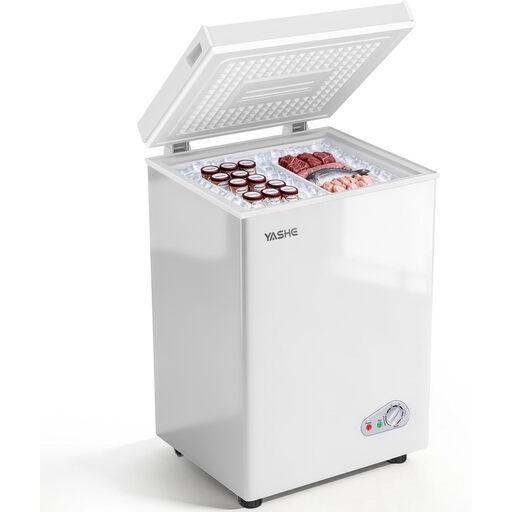 Image unavailable
A more compact capacity may be worth considering if floor space is limited.
The product information lists a capacity of 100 litres and two removable baskets to help you organise portions. Check that the capacity and layout suit your largest batch and how several people will use it.
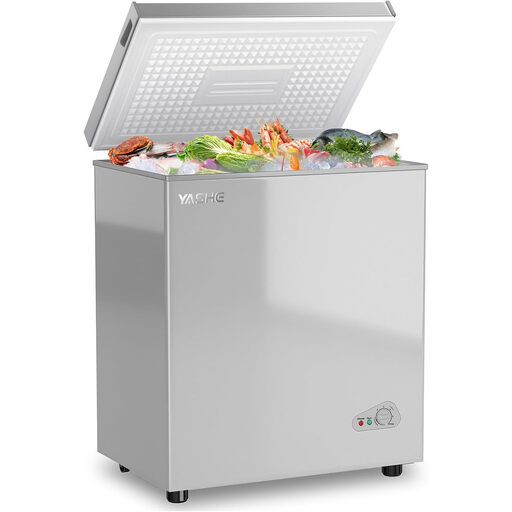 Image unavailable
The stated capacity of 150 litres may suit you if you want to store more supplies than a smaller chest freezer can hold.
The product information lists two removable baskets and a fast-freeze function. If you’re adding new batches, check the freezing capacity of the exact model too, and measure the space where you plan to put it.
 Image unavailable
The stated capacity of 291 litres is worth considering if you want to store a large quantity and have enough space.
The product information lists a switchable fridge and freezer mode, a removable basket, LED lighting and five-level digital temperature control. Check which mode suits your needs and how much space the appliance requires.
 Image unavailable
A capacity of 99 litres may be a good option if you want to store a smaller quantity in a chest freezer.
The product information lists a removable basket. For your largest batch of the day, compare the freezing capacity of the exact model and check its annual energy consumption on the energy label.
Compare the weight of the largest quantity you plan to add in one day with the exact model’s stated freezing capacity in kg per 24 hours. This figure is not the same as its total capacity in litres.
Agree where different portions will go and label the packaging with the contents and freezing date. Check in advance which baskets come with the model; Inventum lists a removable hanging basket for the VK562W.
Not necessarily. The Netherlands Nutrition Centre recommends storing an opened thin pizza base for one month; this isn’t a general storage period for every recipe or pack of homemade raw dough. Look for advice that applies to your dough and packaging, and label portions with a date.
For chest freezers with a suitable capacity, compare the annual energy consumption in kWh on the energy labels of the exact models. This lets you consider stated yearly consumption alongside capacity and the space available for installation.
Not just because you share a kitchen with housemates. If you prepare, process or sell food commercially, for example for a restaurant or bakery, the NVWA requires you to work with an HACCP food safety plan; an applicable approved hygiene code can be used for this. So first establish whether the kitchen is being used privately or commercially.