
If you freeze beans from your own harvest
If you process a large quantity of green beans on some days, the stated freezing capacity in kilograms per 24 hours is an important figure to compare.


Choose based on the largest quantity of beans you want to freeze in a day and the space you have available; the number of litres alone won’t tell you how many fresh beans a chest freezer can freeze in 24 hours. A compact model may be enough for small batches, while larger daily quantities call for sufficient stated freezing capacity. Also compare annual energy consumption and check whether your existing freezer can already handle the batches.
If you process a large quantity of green beans on some days, the stated freezing capacity in kilograms per 24 hours is an important figure to compare.
Extra space can be handy for storing portions, but measure the available area and take the chest freezer’s external dimensions and lid into account.
Compare annual energy consumption and usable capacity, and first check whether your existing freezer has enough space and freezing capacity.
First work out your largest daily batch, then measure the available space. Next, compare the freezing capacity, volume and annual energy consumption of models that meet your requirements.
| What to consider | What to look for | Who should pay particular attention? |
|---|---|---|
| Freezing capacity | Compare your largest daily batch in kilograms with the stated capacity in kg/24 hours. Also check that the freezer compartment is suitable for freezing fresh food. | If I harvest a lot of beans in one day, I want to know whether the freezer can handle that quantity. Around 36% of consumers prioritise freezing capacity. |
| Capacity and external dimensions | Measure the space available, including room for the lid to open; compare the external dimensions with the capacity in litres and the amount you plan to store. | With limited floor space, I want enough room for portions without an unnecessarily large freezer. Around 29% of consumers focus mainly on suitable dimensions and capacity. |
| Energy consumption | Compare the annual consumption in kWh of models with the capacity you need. Check the energy label to see how much energy they use. | If I’m considering an extra appliance, I want to factor in its ongoing energy use. Around 21% of consumers prioritise energy consumption. |
| Organisation and maintenance | Check whether the freezer comes with a basket and a defrost water drain. Label portions with their contents and date; frost-reduction features don’t eliminate the need to defrost. | For small bags, I want to find portions easily and keep track of what I have in stock. Around 14% of consumers prioritise organisation and maintenance. |
The capacity tells you how much will fit in the freezer, but not how many fresh beans the appliance is rated to freeze in 24 hours. Extra space may not be necessary if you only have a small amount to store.
First work out your largest daily batch in kilograms. Then compare freezing capacity, volume and annual energy consumption.
Low Frost can reduce frost build-up, but it doesn’t mean you’ll never need to defrost the freezer.
Check how the specific model defrosts and whether it has a defrost water drain.
The Joybuy title for the Beko CF100EWN states 100 litres, while the product description gives a capacity of 98 litres.
Check the model code and product specifications before taking the capacity or freezing performance into account.
Blanching is a preparation step before freezing; it isn’t necessarily the full cooking process required before eating.
Heat the beans thoroughly before eating and follow the storage instructions for frozen food.
The features listed apply to the specific models below; they aren’t a judgement on every product from these brands.
The Inventum VK562W is a compact chest freezer with a capacity of 99 litres.
According to Tomado, the TCF0991W has a capacity of 99 litres.
The Beko CF100EWN is a compact chest freezer with a stated capacity of 98 litres.
With a capacity of 192 litres, the Liebherr CFc 1875 Plus offers more space than a compact chest freezer.
This selection includes compact and larger chest freezers for extra frozen food storage. If you’re freezing fresh green beans, check that the freezer compartment is suitable for freezing fresh food and keeping it at a temperature of at least −18 °C.
 No image available
Could be a good fit if you want to store other frozen foods as well as beans and will make use of the extra capacity.
The description lists a capacity of 141 litres, a 7-setting thermostat, a removable basket and a four-star freezer compartment for freezing food.
The stated external dimensions are 632 × 554 × 848 mm. Check that these dimensions and the space needed for the lid fit the available area.
 No image available
Could be a good fit if you want to store a smaller extra supply and a capacity of 95 litres suits your needs.
The description lists a 7-setting thermostat, a removable basket and a four-star freezer compartment for freezing food.
The stated external dimensions are 550 × 475 × 848 mm. Measure the available space and allow room for the lid.
 No image available
Could be a good fit if you’re looking for a chest freezer with a storage basket and the stated capacity suits the amount you plan to store.
The product title lists a capacity of 140 litres, a counterbalanced lid and adjustable feet. Before freezing fresh beans, check that the freezer compartment is suitable for freezing fresh food and keeping it at a temperature of at least −18 °C.
 No image available
Could be a good fit if you’re looking for a compact chest freezer and your daily batch is within its stated freezing capacity.
The description lists a four-star freezer compartment, a freezing capacity of 4,5 kg/24 uur and a wire shelf. The product title gives an energy rating of E.
The stated external dimensions are 54,5 × 47,6 × 83,5 cm. Check that it will fit in the space you have in mind.
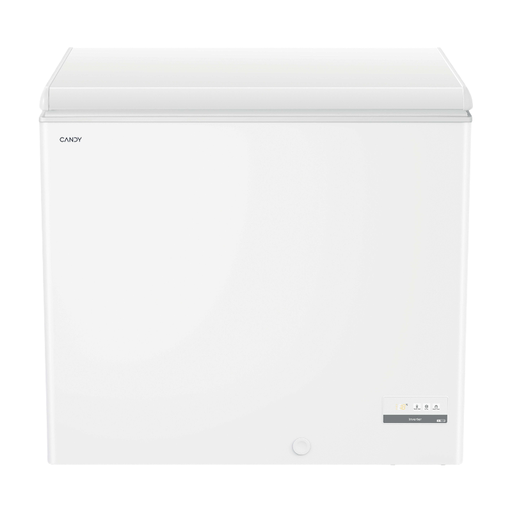 No image available
Could be a good fit if you need more freezer space than a small supply of beans alone would require.
The product title lists a capacity of 196 litres, static technology, an energy rating of C and an external display. Before freezing fresh beans, check that the freezer compartment is suitable for this and can keep food at a temperature of at least −18 °C.
Blanch the beans, then cool them quickly in iced water. Divide them into portions, label them with their contents and date, and don’t freeze more at once than the stated freezing capacity allows. Set the freezer to at least −18 °C; blanching isn’t necessarily the full cooking process required before eating.
The Netherlands Nutrition Centre’s storage guide gives a storage time of one year for cooked frozen green beans; after that, their quality may deteriorate. This isn’t necessarily an exact storage time for every batch you blanch yourself. Label the date and keep the beans continuously frozen.
That depends on the permitted ambient temperature for the exact model. Inventum states that the VK562W is suitable for rooms down to −15 °C, and Tomado gives the same information for the TCF0991W; don’t apply this to other models.
EU rules require energy labels for household refrigerating and freezing appliances; the label provides information about energy consumption. Consumer purchases are also covered by the statutory guarantee: if an appliance breaks down too soon under normal use, the retailer must put it right free of charge, according to ACM ConsuWijzer. If you buy a similar new appliance, a private individual can return the old one free of charge, according to the Dutch government.
According to the Netherlands Nutrition Centre, you can put food back in the freezer if it is still frozen solid. If the outside has softened, don’t refreeze it. Follow the product advice for storing it afterwards.