
A freezer for weekend portions
You blanch broccoli for a few lunches and want to know whether your existing freezer has enough room, or whether a compact chest freezer might be useful.


For a few lunch portions, it’s worth checking whether your existing freezer space is enough before buying anything else. An additional chest freezer is mainly worth considering if you regularly need more room. When choosing one, compare its total capacity, how much you want to freeze at a time, its annual energy consumption and the temperature where you plan to put it. The Netherlands Nutrition Centre recommends blanching broccoli briefly, cooling it quickly and freezing it in portions.
You blanch broccoli for a few lunches and want to know whether your existing freezer has enough room, or whether a compact chest freezer might be useful.
You freeze other foods as well as broccoli, so you’re comparing capacity, freezing capacity and the chest freezer’s layout.
You’re considering putting the chest freezer in a garage or shed and want to check that the ambient temperature is within the model’s permitted range.
First, take stock of your existing freezer space and the food you keep in it. Then compare the capacity and external dimensions of models suited to the amount you want to store.
| What to consider | What should you check? | Who is this important for? |
|---|---|---|
| Suitable capacity | Take your existing supplies into account and compare net capacity in litres with the external dimensions. | If I’m only adding lunch portions, I don’t want to buy a larger appliance than I need. Around 40% of consumers prioritise having the right amount of extra capacity. |
| Batch freezing capacity | Compare the stated freezing capacity in kg/24 hours with the largest batch you plan to freeze. | If I freeze other foods as well as broccoli, it matters how much the freezer can handle at once. Around 30% of consumers prioritise this amount. |
| Annual energy consumption | Compare the energy label and stated consumption in kWh per year for models with a suitable capacity. | If I’m running an additional freezer, I want to take its stated annual energy consumption into account. Around 20% of consumers focus mainly on reducing electricity use. |
| Positioning | Check the external dimensions and compare the expected minimum and maximum temperatures with the specifications for the exact model. | If I’m putting it in an unheated shed, I want to know whether the chest freezer can be used at the temperature there. Around 10% of consumers prioritise suitability for that location. |
The freezer space you already have may be enough for a few lunch portions. Milieu Centraal recommends choosing a suitable size and taking annual energy consumption into account.
Before comparing models, check how much space you actually have left alongside your other frozen food.
Litres describe storage space; kg/24 hours shows how much a model is stated to be able to freeze in a day. Inventum lists both specifications for models including the VK952W.
Compare the freezing capacity with your largest planned batch, and check that the storage capacity suits the amount of food you keep.
Inventum states that the VK1122W with Low Frost still needs to be defrosted periodically.
Check the care instructions for the exact model and find out whether it has Low Frost or No Frost.
According to ETNA, whether you can put a freezer in a garage or shed depends on the model and the temperature at the location. ETNA states a lower limit of 10 °C for climate class SN.
Compare the expected temperatures where you plan to put it with the range stated by the manufacturer for the exact model.
The Beko CF100EWN is a compact model to include when comparing the capacity you need with the floor space available.
The chest freezers mentioned range in capacity from the 198-litre VK952W to the 293-litre VK1122W.
The CFd 2505 Plus is a larger chest freezer to compare if you want to store more frozen food as well as lunch portions.
Below you’ll find chest freezers for extra freezer space, from compact models to larger options. Compare capacity, freezing capacity, dimensions and energy consumption with your own food supplies and the location you have in mind.
 No image available
Worth comparing if you’re looking for extra freezer space and the option to switch between fridge and freezer modes is useful to you.
Capacity: 141 litres. Energy class E. Dimensions: 632 × 554 × 848 mm. Includes a removable basket and convertible fridge and freezer modes.
 No image available
The larger capacity may be useful if you want to store other foods as well as broccoli. Compare the available space with your total food supplies and the location you have in mind.
Capacity: 291 litres. Energy class E; stated annual energy consumption: 226 kWh. Dimensions: 1100 × 597 × 872 mm. Includes a removable basket, LED lighting and convertible fridge and freezer modes.
 No image available
A compact option to compare if you need a limited amount of extra freezer space and want to be able to take out small portions separately.
Capacity: 99 litres. Energy class E; stated annual energy consumption: 169 kWh. Stated freezing capacity: 4.5 kg/24 hours. Includes a removable basket; switches between fridge and freezer modes.
The product information states that it is for household use and excludes outdoor use and damp environments.
 No image available
A compact option to compare if you don’t need much extra capacity and would like to use a rack for smaller portions.
Capacity: 99 litres. Energy class E; stated annual energy consumption: 169 kWh. Stated freezing capacity: 4.5 kg/24 hours. The product information lists a wire rack and dimensions of 54.5 × 47.6 × 83.5 cm.
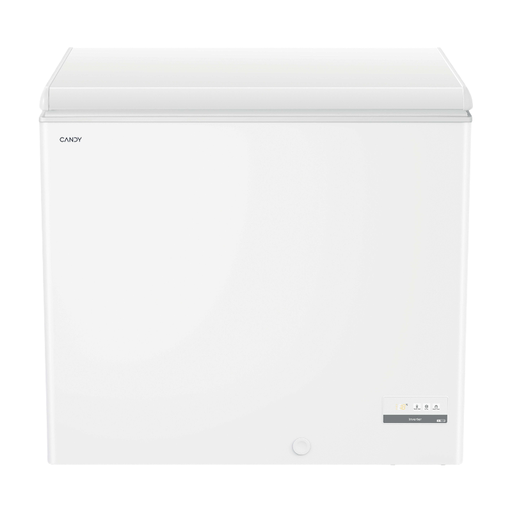 No image available
The capacity may suit you if you want to store broccoli alongside a larger supply of frozen food. Compare the external dimensions and stated energy consumption with your needs.
Capacity: 196 litres. Energy class C. Static cooling technology and an external display. The product information lists R600a as the refrigerant; keep the ventilation openings clear.
Blanch the broccoli briefly, cool it quickly in iced water, drain it and dry it thoroughly. Then freeze it in portions, recommends the Netherlands Nutrition Centre.
The Netherlands Nutrition Centre recommends setting your freezer to at least −18 °C, freezing small portions and not adding too much at once. Check the temperature setting on your own appliance.
Compare the stated consumption in kWh per year for models with a capacity that suits your food supplies. You can multiply that figure by your own electricity price per kWh to get an estimate; your actual consumption and bill may differ.
It depends on the exact model and the temperatures in the garage. ETNA states that climate class SN has a lower limit of 10 °C, so check the permitted ambient temperature range for the chest freezer you’re considering.
According to the Netherlands government, online purchases often come with a 14-day cooling-off period, although exceptions may apply. This is separate from a fault: if there’s a problem with a product, you should contact the seller. Check the terms that apply to your purchase.