
Vandaag of morgen in huis

Kwaliteit gegarandeerd

Welkomstaanbiedingen ontgrendelen: GRATIS bezorging | Tot 80% korting | Gratis 30 dagen JoyPlus-proefperiode
Download de app
A chest freezer is useful when your fridge freezer drawers fill up quickly. You can use it to store larger packs, meals or seasonal produce. However, not every chest freezer is right for every home. A compact model may take up little floor space, for example, but be too small for a household. A larger chest freezer may work well in a garage, but it needs more room and can be harder to organise.
When comparing models, don’t just look at capacity in litres. Marketing copy often focuses on claims such as “quiet”, “efficient” or “powerful”, but other specifications are just as important.
The stated capacity doesn’t tell you exactly how much usable space you’ll have. An internal basket, the cooling system and the shape of the freezer compartment all affect how you can organise it. So check whether it comes with a basket, compartments or removable accessories. Without these, smaller items can disappear beneath larger boxes.
An energy rating, such as C or E, is a verifiable indication within the European energy labelling system. Also check the stated annual energy consumption in kWh. This figure is more useful for estimating running costs. Actual consumption depends on factors including ambient temperature, positioning, how full the freezer is and the temperature setting.
A chest freezer in a kitchen, student room or office is closer to living and working spaces than one in a utility room. A model with a stated noise level of 38 or 39 dB may be more practical in these spaces than an appliance with no noise information. Also, don’t place the freezer right next to a radiator, in direct sunlight or without space for ventilation.
First, work out how much freezer space you actually need:
A table-top freezer or compact freezer is often chosen when floor space is limited. However, bear in mind the difference between an upright model with a door and a chest freezer with a lid. A chest freezer may take up less wall space, but you’ll need to leave room above it.
The freezing capacity, for example 4.5 kg per 24 hours, indicates how much food the product specifications say can be frozen during that period. This matters if you regularly store larger quantities of fresh food.
Storage time during a power cut is important too. The Wiggo WF-TT82C(B), for example, states a storage time of 10 hours during a power cut. Treat figures like these as product specifications based on set conditions; the actual time may vary depending on the surroundings, how full the freezer is and how often the lid is opened.
Check these points together:
The selection below is based on stated capacity, dimensions, energy rating, controls and layout. Always check the latest product specifications and installation instructions before buying.
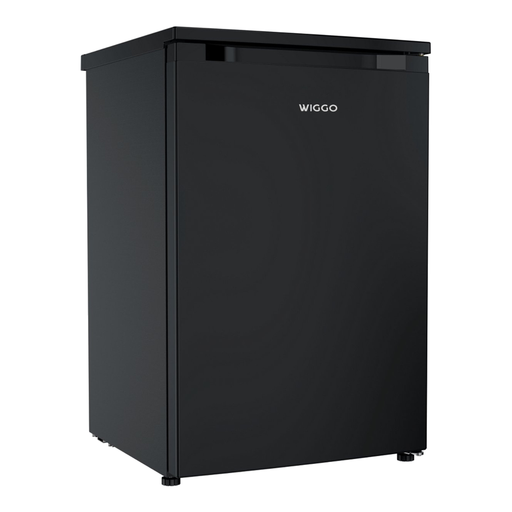
Why it suits this profile: With a net capacity of 85 litres and three storage sections, it’s a good fit for a flat, student room or office where you need extra freezer space.
The stated layout, with two drawers and a lid, means your food doesn’t all end up loose at the bottom of the freezer. The stated noise level is 39 dB.
85-litre capacity, C energy rating, 105 kWh per year according to the product specifications, reversible door and a freezing capacity of 4.5 kg per 24 hours.
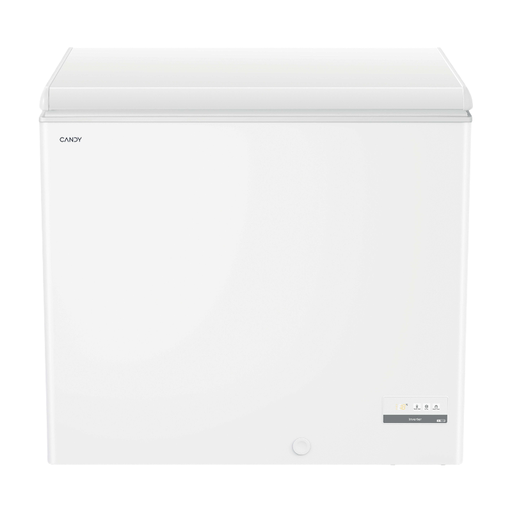
Why it suits this profile: With a capacity of 196 litres, it’s designed for households or small food businesses looking to store larger quantities in one appliance.
The external digital display lets you check the temperature setting without opening the lid. The manufacturer specifies static technology; follow the manual for maintenance.
196-litre capacity, C energy rating, external digital controls and a design made for bulk storage.

Why it suits this profile: Its compact external dimensions and stated temperature range of 10 to 43 °C make this model worth considering for a garage, office or student room, provided you follow the placement requirements.
The product specifications state a noise level of 39 dB and list a wire basket and rollers. This means you can check the noise level, layout and ease of moving it before you buy.
99-litre capacity, a freezing capacity of 4.5 kg per 24 hours, E energy rating, manual defrosting and annual energy consumption of 169 kWh according to the information sheet.

Why it suits this profile: According to the product description, this model can be set to work as either a fridge or a freezer. That makes it suitable for households, small cafés and shops with changing storage needs.
The removable basket, defrost drain and seven-setting thermostat make everyday use and maintenance easier.
95-litre capacity, E energy rating, 165 kWh per year, 38 dB according to the product specifications, and a switchable fridge and freezer function.
We’ve put together a complete, up-to-date list of products that meet these strict selection criteria and the applicable European safety regulations.
It can be, but check the climate class and permitted ambient temperature range. An unheated garage may fall outside the recommended range in winter or summer. Keep the appliance out of direct sunlight and make sure it has enough ventilation.
It varies by model. Check the annual consumption in kWh on the energy label or product information sheet. Multiply this by your current electricity tariff for a rough estimate. Actual costs depend on how you use the freezer, the ambient temperature and maintenance.
Its lifespan depends on build quality, use, ventilation and maintenance. Keep the condenser and ventilation openings clear, avoid overloading it for long periods and follow the defrosting procedure in the manual. Keep your purchase and warranty documents in case you need service.
