What should you look for?
Start with the space and freezing time you already have. Then compare your harvest with the dimensions and annual energy consumption of any extra chest freezer you’re considering. The Dutch Consumers’ Association and Milieu Centraal highlight choosing the right size and energy consumption as important considerations.
| What to consider |
What to look for |
Who should prioritise this? |
| Freezing your harvest in time |
Weigh your largest picking and compare it with the stated freezing capacity in kg/24 hours. Don’t convert the 24-hour figure into a few hours. |
If I want to freeze a large picking before lunch, I need to know whether the quantity is manageable in the time available. Around 36% of consumers prioritise freezing capacity for a one-off harvest. |
| Capacity and space for the appliance |
Measure the space and check the external dimensions. Also work out how much room the berries will take up alongside your existing stock. |
If you have limited floor space, you’ll want extra capacity without choosing a chest freezer that won’t fit properly. Around 29% of consumers give the right dimensions and capacity top priority. |
| Energy consumption |
Compare the stated annual energy consumption in kWh of models that are the right size. Milieu Centraal also highlights the energy label. |
If I’m considering an extra appliance for more than one lunch, I want to factor in its energy consumption. Around 21% of consumers prioritise the energy use of extra freezer space. |
| Temperature where the appliance will be placed |
Measure the temperature in your garage or shed and check whether the documentation for the exact model confirms it can handle those conditions. The Dutch Consumers’ Association stresses that this varies by model. |
If you only have an unheated space available, you’ll want to know whether your chosen model can be kept there. Around 14% of consumers prioritise suitability for a cold location. |
Chest freezers on Joybuy
This selection includes chest freezers with capacities ranging from compact to larger, for extra freezer space. To find the right option for your harvest, compare the external dimensions and stated freezing capacity, and check that the exact model is suitable for the space where you plan to put it.
 Image unavailable
AUCMA 291 l convertible chest freezer
For anyone looking for extra storage who also wants the option of switching to fridge mode.
291 l capacity; energy class E; switches between freezer and fridge modes; removable basket.
View on Joybuy
 Image unavailable
TCL CF182EWE0NL 140 l chest freezer
An option if you’re looking for 140 l of extra freezer space and want to use a storage basket.
140 l capacity; energy class E; counterbalanced lid; adjustable temperature control; adjustable feet.
View on Joybuy
 Image unavailable
Comfee' RCC143WH2EU(E) 99 l chest freezer
For anyone looking for a smaller amount of extra storage. Check the stated freezing capacity against the quantity of berries you want to freeze at once.
99 l capacity; energy class E; switches between fridge and freezer modes; removable basket.
View on Joybuy
 Image unavailable
CHiQ JR99DWE 99 l chest freezer
An option if you’re looking for 99 l of storage and a wire basket, provided the ambient temperature where you plan to put it is within the product specifications.
99 l capacity; energy class E; 4-star freezing; wire basket. The product information gives a minimum ambient temperature of 10 °C; don’t use this model somewhere colder.
View on Joybuy
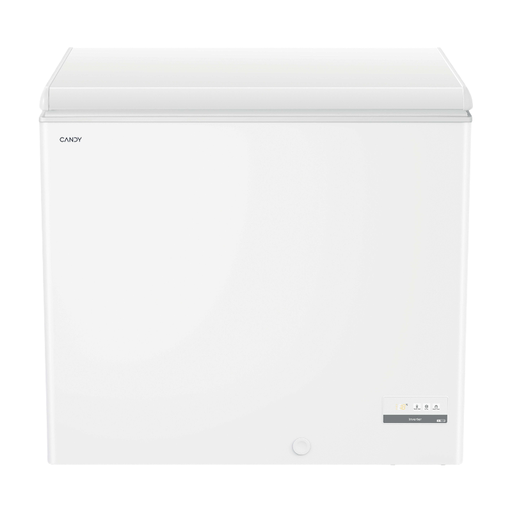 Image unavailable
Candy CHAE 2002C 196 l chest freezer
For anyone looking for around 196 l of extra storage for berries and other frozen food.
196 l capacity; energy class C; static technology; external display.
View on Joybuy
Frequently asked questions
Do you need a chest freezer for a small berry harvest?
Not necessarily. If your harvest fits in your existing freezer and there’s enough time to freeze it, extra storage may be unnecessary. First check how much space is available, and consider the quantity you’ll be adding at once.
Does a freezing capacity in kg per 24 hours mean berries will be frozen before lunch?
No. The stated kg/24-hour figure doesn’t guarantee that berries will be ready in just a few hours. Compare the weight of your harvest with that capacity, and separately allow for the time until lunch.
Can you keep any chest freezer in a cold garage or shed?
No. According to the Dutch Consumers’ Association, suitability for low ambient temperatures varies by model. Measure the temperature where you plan to put it and check the documentation for the exact model.
How should you prepare redcurrants for freezing?
The Netherlands Nutrition Centre advises washing redcurrants first and patting them dry. Freeze them in a thin layer to stop them sticking together, then transfer them to an airtight container or freezer bag.
Are frozen berries safe to serve for lunch without any further preparation?
Freezing does not disinfect food. According to the Netherlands Nutrition Centre, some viruses can survive freezing, and the RIVM cites contaminated frozen fruit as a possible route for hepatitis A. Wash fruit before use, but if you suspect contamination, don’t rely on freezing or washing alone to make it safe.
Is the energy class enough to compare a chest freezer’s energy consumption?
No. Also compare the stated annual energy consumption in kWh and the capacity of models that are the right size. The European Commission explains that the EU energy label for household freezers gives information about energy class, consumption and storage volume.


