
Solo picker with bumper harvest days
Some days, you pick more berries than your current freezer can freeze in one go. In that case, the stated freezing capacity matters more than the total storage capacity alone.


You may not need a separate chest freezer: first check whether you can freeze your harvest in batches over several days using the freezer you already have. If you need extra space, compare the largest amount you freeze in one day with the stated freezing capacity, and consider the capacity, external dimensions, annual energy consumption and temperature where you plan to keep it.
Some days, you pick more berries than your current freezer can freeze in one go. In that case, the stated freezing capacity matters more than the total storage capacity alone.
You want to store a seasonal supply but avoid giving up more floor and usable space than necessary for another appliance.
The place where you plan to keep your freezer may get cold in winter. So check the stated ambient temperature range for the exact model.
Choose this if: your harvest can be frozen in batches over several days, within the available space and freezing capacity.
Bear in mind: you’ll need to check how much space and freezing capacity your current appliance actually offers.
Choose this if: you need extra space for small batches and have limited room.
Bear in mind: food stored at the bottom is less accessible than in an upright freezer with drawers. The stated capacity also doesn’t tell you how many kilos a model can freeze per day.
Choose this if: you regularly store other produce or larger quantities alongside your berries.
Bear in mind: extra capacity may be unnecessary if you only have a modest berry harvest; measure the available floor and lid clearance.
Choose this if: you often take out small batches and like to organise them by drawer or compartment.
Bear in mind: drawers divide up the available space, so check that the usable capacity and external dimensions suit your stock.
| What to consider | What to look for | Who should consider this? |
|---|---|---|
| Freezing capacity | Compare your biggest one-day harvest with the stated number of kg per 24 hours; also check the freezing capacity of your existing freezer. | If I pick a lot of berries in one day, I want to know whether the appliance can handle that amount or whether I need to spread out the harvest. Around 31% of consumers say freezing capacity is their main concern when dealing with a bumper harvest. |
| Space required | Measure the space and check that there’s room to open the lid; compare your stock with the capacity. | I want enough room for my batches without giving up too much floor space. Around 31% of consumers prioritise storage space that suits their needs. |
| Energy consumption | Compare the kWh/year figure for the exact models and first check whether your existing freezer has enough space. | An extra appliance stays on outside the berry season too, so I want to compare annual energy consumption. For around 23% of consumers, annual energy use is the main priority. |
| Keeping it somewhere cold | Measure the temperature where you plan to put it and compare this with the rating plate, instruction manual and any additional information for the model. | If my freezer is going in an unheated shed, I want to know whether the exact model can operate at the measured temperature. Around 15% of consumers say keeping a freezer in a cold space is their main concern. |
Storage capacity and freezing capacity describe different things. Two 99-litre chest freezers, the Inventum VK562W and Tomado TCF0991W, have stated freezing capacities of 4.5 and 2.25 kg per 24 hours respectively, according to their manufacturers.
Compare the largest amount you usually harvest in one day with the stated capacity for the exact model.
An extra appliance takes up floor space and uses energy outside the berry season too.
First check the available space and freezing capacity of your current freezer. If you do need an additional freezer, compare its stated annual energy consumption.
The climate class and any additional claims about low ambient temperatures don’t automatically apply to every model from a brand.
Measure the temperature where you plan to put it and consult the rating plate and instruction manual for the exact model.
The VK562W is a compact option to compare, with a stated capacity of 99 litres.
The TCF0991W is another chest freezer with a stated capacity of 99 litres; the same capacity doesn’t automatically mean the same freezing capacity.
The CFc 1875 Plus is a larger chest freezer to consider if you regularly store more than just berries.
This selection includes compact chest freezers and upright freezers with drawers, to give you extra freezer space for a seasonal harvest. Compare the stated capacity, freezing capacity and space requirements for each model.
 No image available
An option if you want extra space and would like to store smaller items separately in a basket.
Stated capacity: 140 litres. Includes a storage basket and counterbalanced lid. E energy rating.
 No image available
A compact capacity could suit you if you need extra freezer space but don’t want to go straight for a larger chest freezer.
Stated capacity: 99 litres. 4-star freezer compartment and E energy rating; includes a wire basket and counterbalanced lid.
 No image available
An alternative if you’d rather divide your berries between shelves and a drawer; this is an upright freezer, not a chest freezer.
 No image available
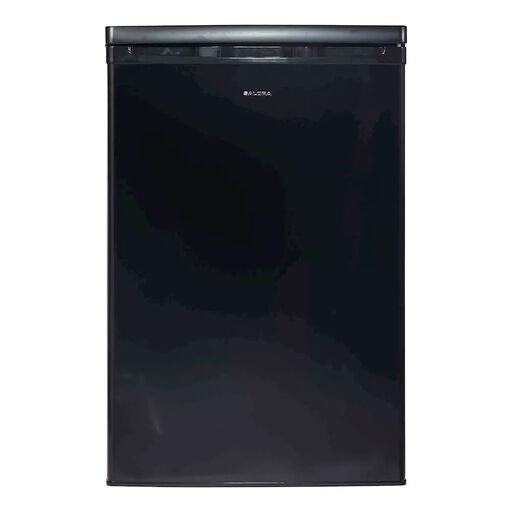
An under-counter model with drawers could suit you if you like to keep batches separate and would prefer not to have a chest freezer.
Stated capacity: 87 litres. B energy rating and three drawers.
 No image available
An upright freezer with drawers is an alternative if you want to organise your batches and find them more easily than in a chest freezer.
Stated capacity: 91 litres. Reversible door and adjustable thermostat.
The Netherlands Nutrition Centre recommends using a sealed container or freezer bag for blueberries. Divide your harvest into portions you’ll use later, and if you have a large crop, check how many kilograms your appliance can freeze per 24 hours.
The Netherlands Nutrition Centre recommends keeping blueberries in the freezer for 8–12 months and notes that their quality may decline after that. This advice applies to blueberries and not necessarily to every type of berry.
Not without first checking the temperature and the information for the specific model. The climate class on the rating plate gives the standard operating range; compare this with the measured temperature and any additional information for the exact model. A claim for one model doesn’t automatically apply to other freezers.
The EU energy label for household freezers shows, among other things, the energy rating and annual consumption in kWh. You can work out an estimate of your own electricity costs by multiplying the kWh/year figure by your electricity price per kWh.
According to the Dutch government, there’s no fixed statutory warranty period in the Netherlands, but you’re entitled to a product that meets what you could reasonably expect. If a product is faulty, the retailer is your point of contact; a manufacturer’s guarantee doesn’t replace your statutory rights.
According to the Dutch government, when you buy a new, similar appliance for personal use, the free take-back scheme applies, including to online purchases. Arrange how you can hand over your old appliance at delivery or have it collected later.