
Makers who want to show the details
You want to photograph carving, engravings or the texture of a material clearly and on their own. In that case, the magnification and capabilities of your chosen lens are important.


For portfolio photos of chess pieces, your choice mainly depends on the framing: a standard zoom may work for whole pieces and arrangements, while small engravings or material details may call for a dedicated close-up or macro lens. If you’re considering one, check its magnification, mount and what’s included in the kit. A lens that offers 1:1 magnification is not the same as one with a maximum of 1:2. Lighting, a stable set-up and, for very close shots, possibly a series of focus-bracketed images are important too.
You want to photograph carving, engravings or the texture of a material clearly and on their own. In that case, the magnification and capabilities of your chosen lens are important.
You mainly want to capture whole pieces and cohesive arrangements, with enough sharpness throughout the depth of the image. Canon Netherlands describes focus stacking as combining images to increase depth of field.
You want to get started without changing lenses unnecessarily and know in advance exactly which components you’ll receive. So compare the full kit contents with the photos you want to take.
First decide whether you mainly want to photograph a whole chess piece, an arrangement or a small detail of its craftsmanship. Then choose a lens and check that the lighting and space you have available suit the shot you want.
| What to consider | What to check before buying | Who should consider this most? |
|---|---|---|
| Capturing small details of craftsmanship prominently | Check the magnification of the exact lens, its mount and whether it’s included in the offer. | If I want engravings or small marks left by the maker to fill the frame, I look at the lens first. Around 31% of consumers prioritise small details. |
| Keeping an entire chess piece in focus | Check whether the camera body supports focus bracketing and whether you’ll need to combine the images yourself. Also consider whether you can create a stable set-up in your workspace. | If I want both the front and back of a piece to be sharp in a close-up, I allow for extra shots and post-processing. Around 25% of consumers prioritise sharpness across the whole piece. |
| Showing the material, colour and finish clearly | Take test shots of light and dark pieces in the lighting you plan to use, and assess the colour, texture and reflections before buying extra equipment. | If the finish and how the material appears are central to my portfolio, I first want to see what my own lighting set-up can do. Around 25% of consumers prioritise a clearly visible finish. |
| Getting started easily with a complete set-up | Read the exact list of kit contents and compare it with the components you need, including any separate lens and stable support. | If I want to get started without unexpected lens changes, I check exactly what’s in the box beforehand. Around 19% of consumers prioritise a simple, complete purchase. |
The two-zoom-lens kits described by Canon and Nikon contain zoom lenses, not the separate macro lenses discussed for the close-ups mentioned here.
Compare the full kit contents with the smallest framing you want to achieve, and check whether you’ll need a compatible close-up or macro lens.
Focus bracketing takes shots at different focus points. To create an image with greater depth of field, you may still need to combine the shots.
Check the bracketing function for the exact model and find out what post-processing is needed to achieve the result you want.
A distance specification on its own doesn’t tell you whether the magnification and room for lighting will suit your set-up.
Check the stated magnification too, and try out the distance with an actual chess piece and your lighting.
The EOS R50 is a mirrorless camera option; the RF 35mm F1.8 MACRO IS STM is a separate close-up lens with an RF mount.
The Z50II can be paired with the separate NIKKOR Z MC 50mm f/2.8 for close-ups.
The X-S20 with its X mount can be paired with the separate XF30mmF2.8 R LM WR Macro.
The E 30mm F3.5 Macro is an APS-C lens with an E mount, designed for a compatible Sony α body.
This selection includes cameras and camera kits relevant to this topic. For each model, check whether the features mentioned and any included lens are suitable for still photos of your chess pieces.
 No image available
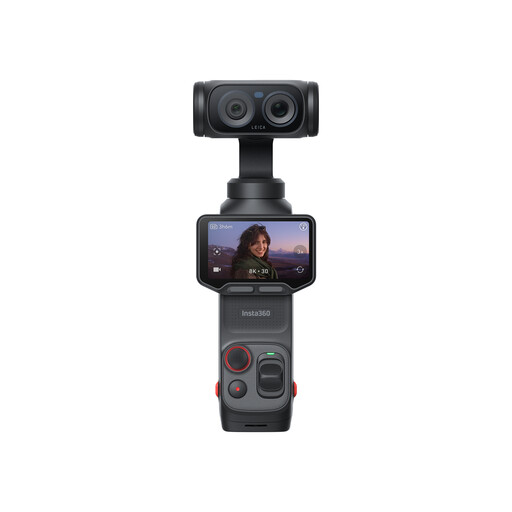
The product description mentions several framing options and a detachable screen. Try it with your chess pieces to see whether it can achieve the close-up you want.
 No image available
The product title mentions 12× optical zoom and 4K. Take some test shots to see whether the framing you want and the way the finish appears are right for your portfolio.
 No image available
The product title highlights video recording and image stabilisation. If you mainly want to take still detail shots, check beforehand whether the controls and close-up capabilities suit that use.
 No image available
This kit is listed with a 16–50mm zoom lens. A zoom lens like this can help you try different framings, but the lens name alone doesn’t confirm macro magnification. Check whether it can capture the smallest details you want.
 No image available
The kit is listed with a 16–50mm f/3.5–5.6 OSS II lens. Take a test shot to check whether you can achieve the framing you want for a chess piece. The zoom lens listed doesn’t, by itself, tell you what level of detail magnification you’ll get.
No, it depends on the framing you need. For a whole piece or a board arrangement, you could first try a suitable standard zoom. If you can’t get a small detail of the craftsmanship large enough in the frame, compare the stated magnification of separate close-up and macro lenses. Canon specifies a maximum of 1:2 for the RF 35mm F1.8 MACRO IS STM, while Nikon states 1:1 magnification for the NIKKOR Z MC 50mm f/2.8, as does Fujifilm for the XF30mmF2.8.
Start with a test shot and assess how sharpness falls off. If there isn’t enough depth of field for a close-up, use a stable set-up to take shots at different focus points, then combine them if needed. Canon describes focus bracketing for the EOS R50. Check which bracketing function is available on the exact model and what post-processing is needed.
Before mounting a lens, check that its mount is compatible with the camera body and that the kit includes the lens you need. Canon lists native RF and RF-S support for the EOS R50, while Fujifilm specifies an X mount for the X-S20. For settings, any firmware updates and lens care, consult the information for the exact model.
No. According to the Government of the Netherlands, there is no fixed statutory warranty period in the Netherlands. What you can reasonably expect from a product depends, among other things, on the product and how it’s used. If a product is faulty, the seller is your point of contact. For eligible distance purchases by consumers, you’ll often have a 14-day cooling-off period, with some exceptions. Check that you’re buying from a business as a consumer before applying these rules to your situation.