
Photographers focusing on individual pieces
If you want to capture carving or texture in sharp, enlarged detail, consider the lens’s close-up capabilities.


For close-ups of small details, the magnification of the specific lens matters more than the megapixel count alone. For a complete chess set-up, controlled lighting and a steady camera position are important considerations. You can start with a smartphone or camera you already own. A mirrorless camera with a suitable macro lens gives you more choice of magnification, but the lens may need to be bought separately.
If you want to capture carving or texture in sharp, enlarged detail, consider the lens’s close-up capabilities.
If you’re photographing light and dark chess pieces against a dark background, you can carefully balance the lighting and background.
If you regularly take similar photos of several pieces or set-ups, look for a consistent frame and a stable camera position.
| What to consider | What should you check? | Who is this for? |
|---|---|---|
| Close-up detail | Check the mount, the lens supplied and the maximum magnification of the exact combination. | If I want to fill the frame with small engravings, I’ll prioritise the lens’s magnification. Around 36% of consumers put detail reproduction first when choosing a camera. |
| Visibility against a dark background | Check the exposure and white balance settings, and assess the lighting with both light and dark pieces. | I want to keep the details visible when photographing both light and dark pieces against a dark background. Around 29% of consumers prioritise visibility against a dark background. |
| Consistent framing | Check whether the camera can be conveniently mounted on a tripod and whether you can assess the composition from that position. | If I want to photograph several pieces in the same way, a fixed camera position is important. Around 21% of consumers prioritise repeatable set photos. |
| Keeping extra purchases to a minimum | Compare what your current equipment can capture, and check whether the deal includes a lens or just a camera body. | If I want to start with the equipment I already own, I’ll weigh up a new body against what my current camera can do. Around 14% of consumers prioritise keeping additional purchases to a minimum. |
A dark background can draw attention to a chess piece, but controlled lighting is still important if you want the details to show.
Try the set-up with both a light and a dark chess piece before choosing a camera based on photos of the camera body.
The stated magnification applies to a specific lens. A body-only deal doesn’t automatically include the macro lens you’ll need for close-ups.
Check the full kit contents, the lens mount and the lens’s stated magnification.
Sony lists a minimum focusing distance of 9,5 cm for the SEL30M35, measured from the sensor, and a working distance of 2,4 cm from the front of the lens. This short working distance is worth bearing in mind when placing a light close to your subject.
When planning a macro set-up, compare working distance and focusing distance using the same point of measurement.
Canon offers mirrorless cameras with an RF mount, as well as separate RF lenses for close-ups.
The Z50II is a Z-series mirrorless camera, while the Z MC 50mm f/2.8 is a separate macro lens for Z cameras.
The α6400 uses Sony’s E-mount, and the separate SEL30M35 also has an E-mount.
According to OM SYSTEM, the OM-5 Mark II has a Focus Stacking function.
This selection on Joybuy includes cameras suited to a range of shots. For each model, check how close you can focus and which lighting settings are available for your chess set-up.
 No image available
The zoom can help you adjust your framing; check separately whether it can capture the close-up of a chess piece you want.
The product name lists 64 MP, 12× optical zoom, 4K and Wi-Fi.
 No image available
For close-ups of chess pieces, check that the focusing distance and framing suit your needs; the stated video and stabilisation features don’t determine whether the camera is suitable for macro photography.
The product name lists a 1-inch CMOS sensor, 4K/120fps video and 3-axis stabilisation.
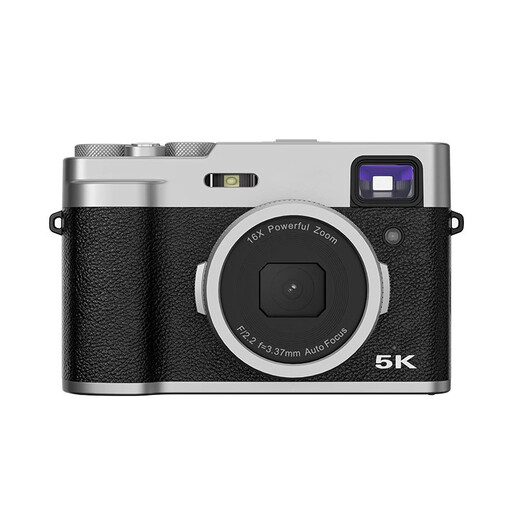 No image available
If autofocus is important when photographing individual pieces, also check that the camera offers the close-up capability and lighting you need.
The product name lists 48 MP and autofocus.
 No image available
The zoom lens can help you vary your framing; check that its close-up distance suits the details you want to photograph.
The product name lists a 16–50 mm zoom lens.
 No image available
The listed zoom lens gives you some flexibility with framing; check that its close-up distance suits your chess pieces.
The product name lists a 16–50 mm f/3.5–5.6 OSS II lens.
Not for every shot: start with the framing your current camera can achieve. If you want small details to fill the frame, check the maximum magnification of the specific lens. For example, Canon lists 1:2 for the RF 35mm F1.8 MACRO IS STM, while the stated 1:1 magnification of the Nikon Z MC 50mm f/2.8 and Sony SEL30M35 applies to those separate lenses.
Keep the camera and framing fixed while you change the pieces. Canon describes a tripod as a way to maintain consistent composition and reduce camera movement. Then check for each piece that the lighting makes the details visible.
Check whether the deal includes a camera body or a kit, and whether the lens you want is included. For a consumer purchase in the Netherlands, the retailer is your point of contact if something goes wrong. According to the Dutch government, there is no fixed statutory warranty period in the Netherlands.
For eligible distance purchases from a business, the Dutch government says that in many cases you have a 14-day cooling-off period. The same rule does not automatically apply when you buy from a private individual, so check who the seller is and which terms apply to your purchase.