For a chessboard or a complete chess piece, a standard or supplied zoom lens may be enough, provided it can capture the framing you want in sharp focus; a macro lens is not automatically necessary. For small engravings and material textures, magnification and working distance matter more, while close-ups of an entire piece may require extra attention to depth of field. Check which lens is included with each kit and make sure it suits your subject and lighting set-up.
Who is this buying guide for?
Photographing the details of a single piece
You want to capture an engraving or material texture in close-up, so you are looking at magnification, working distance and precise focusing. Sony Netherlands, Canon Netherlands and Nikon Netherlands explain relevant lens specifications for close-up photography.
Photographing a board or a series of pieces
You photograph several pieces or repeat the same set-up, so a consistent camera position and controlled lighting are important considerations. Canon Netherlands and Zoom.nl offer practical advice on product photography.
Buying your first camera kit
You want to know in advance whether the supplied lens is suitable for the photos you have in mind, so you can decide whether you need additional optics. Check the kit contents with the retailer.
What should you look for when choosing?
Camera with a standard or zoom lens
Choose this if: you mainly photograph the board, several pieces or a complete piece, and the lens can capture the framing you want in sharp focus.
Bear in mind: a kit lens does not automatically offer enough magnification for small details; check the lens specifications.
Mirrorless camera with a macro lens
Choose this if: an engraving, wood grain or other small finish needs to fill a large part of the frame.
Bear in mind: maximum magnification and working distance are separate considerations; a macro lens may also need to be bought separately. Canon Netherlands lists a maximum magnification of 1:2 for the RF 35mm F1.8 MACRO IS STM, compared with 1:1 for the NIKKOR Z MC 50mm f/2.8, according to Nikon Netherlands.
Camera with focus stacking
Choose this if: you regularly take close-ups where both the front and back of a stationary piece need to appear sharp.
Bear in mind: stacking combines several shots and does not replace a suitable lens or a stable set-up. OM Digital Solutions describes in-camera focus stacking for the OM-1 Mark II.
| Consideration |
What should you check? |
Who is this important for? |
| Magnifying small details |
Compare the lens’s maximum magnification and working distance; do not judge the working distance solely by the minimum focusing distance. Sony Netherlands explains the difference between the subject and the front of the lens. |
If I want to show an engraving or wood grain in close-up, I focus on both magnification and the space left in front of the lens for the piece and the lighting. Around 33% of consumers put magnifying details first. |
| Getting the whole piece in focus |
Decide on the framing and depth of field you want; check whether the exact camera supports focus stacking if you want to use this feature. OM Digital Solutions describes this technique for the OM-1 Mark II. |
When I want to show the shape of a whole chess piece clearly, I consider depth of field and lighting together. Around 27% of consumers prioritise sharpness across the whole subject. |
| Consistent shots for a series |
Check that you can position the camera securely and assess the lighting and reflections. Canon Netherlands recommends using a tripod for consistent photos; Zoom.nl discusses controlling the set-up and lighting. |
For a series of photos, I want to keep the camera position, background and lighting consistent, while being able to adjust reflections. Around 20% of consumers make consistent shots for a series their top priority. |
| A complete first kit |
Read the exact kit contents and compare the lens specifications with the framing you want; also check the lens mount before choosing a macro lens later. |
When I buy a camera kit for the first time, I want to know what I can use straight away and whether I really need extra optics. Around 20% of consumers prioritise a usable first kit without an unnecessary extra lens. |
Common buying mistakes
-
Assuming a camera kit is a complete macro kit
A kit may include a standard zoom lens that does not offer the same magnification as a dedicated macro lens. The EOS R50 kit described by Canon Netherlands Store includes an RF-S 18-150mm zoom lens; the specifications of a different Canon macro lens do not automatically apply to this kit.
Check the exact lens name and kit contents, then compare the magnification with the detail you want to photograph.
A compatible macro lens may need to be bought separately.
-
Confusing minimum focusing distance with working distance
Minimum focusing distance is measured from the sensor plane, so the space in front of the lens may be smaller. This affects how much room you have for a chess piece and its lighting.
Where possible, compare the working distance at the magnification you actually want to use.
-
Assuming one sharp detail means the whole piece will be sharp
With close-ups, only a narrow area may be in focus. Focus stacking combines several images taken at different focus distances, as described in OM Digital Solutions’ OM-1 Mark II manual.
First decide whether you want to highlight a single detail or show the whole piece in sharp focus; then adjust your aperture and any stacking to suit.
Stacking requires several shots, which can add to your shooting time.
Camera brands to consider
Canon
The EOS R50 is an APS-C mirrorless camera option. For close-ups, choosing the lens is a separate consideration.
- Canon Netherlands specifies a maximum magnification of 1:2 for the separate RF 35mm F1.8 MACRO IS STM.
- The EOS R50 kit described by Canon Netherlands Store includes an RF-S 18-150mm zoom lens, not that RF macro lens.
Nikon
The Z50II is a Z-system camera option; its macro capabilities also depend on the lens you choose.
- Nikon Netherlands specifies 1:1 magnification for the separate NIKKOR Z MC 50mm f/2.8.
- That magnification applies to the lens, not the Z50II body. Check the kit contents and how much room the lens leaves in your set-up.
Sony
The α6400 is an APS-C camera with an E-mount and RAW support.
- Sony Netherlands specifies a maximum magnification of 1.0× and a minimum focusing distance of 0.095 m for the separate SEL30M35 APS-C lens.
- The minimum focusing distance is not the same as the space in front of the lens. A standalone α6400 body does not include a lens.
OM SYSTEM
The OM-1 Mark II can perform in-camera focus stacking, according to the OM Digital Solutions manual.
- Focus stacking combines several shots to achieve greater depth of field than a single shot.
- This feature does not replace a suitable lens or a stable set-up; consider whether this technique is useful for the photos you want to take.
Fujifilm
The X-T5 is an APS-C alternative for anyone also considering cropping options and detail rendering.
- Fujifilm lists the X-T5’s sensor resolution as 40,2 MP.
- The sensor specification alone says nothing about macro magnification; check the specifications of a suitable lens for that.
Cameras on Joybuy
These Joybuy products are suitable for photographing stationary subjects with a standard or zoom lens. For close-ups, check the lens specifications, kit contents and the space available for your lighting set-up.
 Image unavailable
DJI Osmo Pocket 3 Creator Combo
The product information mentions photography of stationary subjects; check whether this model and its included accessories suit the camera position you want for photographing chess pieces.
The product name lists a 1-inch CMOS sensor, 3-axis stabilisation and video recording up to 4K/120fps.
The listed specifications do not in themselves confirm macro magnification or suitability for the close-up you want.
Joybuy
 Image unavailable
Sony ZV-E10 with 16–50mm zoom lens, black
The supplied zoom lens may suit photos of a board or complete chess pieces; compare the framing you want with the lens’s capabilities.
The product information lists a 24,2 MP APS-C sensor, a 16–50mm lens and a Product Showcase setting.
For small details, check the lens’s magnification and working distance.
Joybuy
 Image unavailable
Sony Alpha A6100 with 16–50mm f/3.5–5.6 OSS II lens
The supplied zoom lens may suit photos of a board or individual pieces; check whether it can achieve the framing you want.
The product information lists a 24,2 MP APS-C sensor, continuous shooting at up to 11 fps and a 16–50mm lens.
For close-ups of small features, the lens’s magnification and working distance are worth checking.
Joybuy
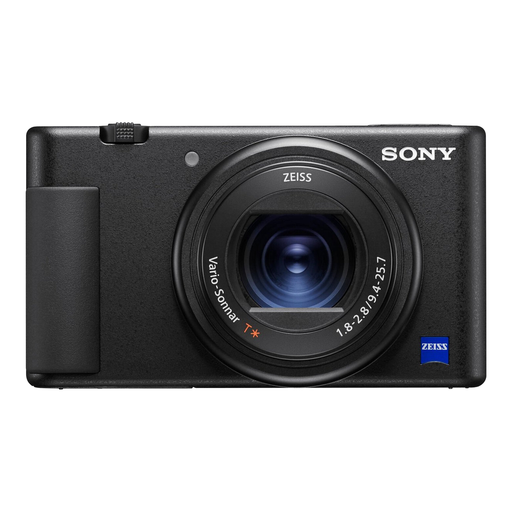 Image unavailable
Sony ZV-1 compact camera
A compact camera is one option to consider for photographing chess pieces; check whether its lens offers the framing and focusing capabilities you need.
The product information lists a 24–70mm focal length range, an f/1.8–2.8 aperture and RAW file support.
These specifications alone do not confirm macro magnification for small details.
Joybuy
 Image unavailable
Sony ZV-E10 camera body without a lens
This body is for anyone choosing their own lens; a lens is required for photography and is not included with this kit.
The product information lists a 24,3 MP APS-C sensor and compatibility with Sony E-mount lenses.
Check the lens mount and specifications for the framing you want and any close-ups you plan to take.
Joybuy
Frequently asked questions
Do you need a macro lens to photograph the whole chessboard?
Not necessarily. First check whether the included lens can capture the framing you want in sharp focus; macro magnification is mainly relevant when you want small details to appear large in the frame.
How can you keep a series of chess pieces framed consistently?
Use a stable set-up and keep the camera position and background the same. Check the lighting and reflections before changing your set-up.
What might you need in addition to the camera?
First check the exact kit contents. A compatible macro lens for detailed shots and accessories for a stable, controllable lighting set-up may need to be bought separately.
What are your rights when buying a camera online in the Netherlands?
According to the Dutch government, when you buy as a consumer, the seller must provide a product that works properly and resolve problems with faulty goods. For distance sales, you have a 14-day cooling-off period in many cases; check the applicable terms and exceptions.
Does a CE mark mean a camera has been officially approved by the EU?
No. The European Commission describes CE marking as the manufacturer’s declaration for products that must carry the mark under specific EU rules, not as an approval issued centrally by the EU. The requirements for a specific model and its accessories need to be assessed product by product.


