
Detail photographer
You want to capture the shape, material or finish of a single chess piece up close. The lens’s usable focusing distance and magnification are then more important than the megapixel count alone.


Start by considering how far away you can position the camera from the small table, then decide whether you mainly want close-up shots of a single chess piece or want to capture the board as well. A compact camera with a macro mode keeps your equipment simple; with a mirrorless camera, you can change lenses, but the standard zoom lens won’t automatically be suitable for highly magnified details. In either case, leave enough room for lighting and a stable set-up.
You want to capture the shape, material or finish of a single chess piece up close. The lens’s usable focusing distance and magnification are then more important than the megapixel count alone.
You want to frame one or more pieces together with the board from a limited distance. So pay attention to the angle of view and the space you’ll need to position the camera properly.
You photograph several pieces in similar conditions and want consistent framing and controllable colour. A fixed set-up and careful lighting can help.
Suitable for:Anyone who mainly wants to photograph individual pieces up close without changing lenses. OM SYSTEM confirms that the TG-7 has a Microscope mode.
Consider:The lens is fixed, so check whether you can get the board framing you want from your camera position while leaving enough room for lighting.
Suitable for:Anyone who wants to try different compositions or frame the whole board, and may want to use another lens later.
Consider:A supplied zoom lens isn’t automatically a macro lens; check the focusing distance and magnification at the zoom setting you want to use.
Suitable for:Anyone who regularly wants to fill the frame with details of a single chess piece and is happy to choose a suitable lens separately.
Consider:Check the lens mount, working distance and framing. The Canon RF 35mm F1.8 MACRO IS STM is a separate lens and isn’t included with the EOS R50 kit reviewed.
| What to consider | What to look for when buying | Who it matters more to |
|---|---|---|
| Focusing up close | Check both the focusing distance and magnification at your preferred zoom setting and focus mode; also leave room for lighting around the piece. | If I want to capture one piece at a large size, I need to know whether the lens can focus from the camera position available to me. Focusing up close is the top priority for around 40% of consumers. |
| Framing the board | Measure the available distance and check whether both a single piece and the desired section of the board will fit in the frame. | If I want to show several pieces or the board, I choose based on the framing I can achieve with the space on my table. Framing the board is the top priority for around 30% of consumers. |
| Repeatable photos | Check whether there’s room for a tripod or other support, and for lighting beside the camera and board. | If I want to take a series of similar photos, I look for a fixed position and even lighting. Consistent focus, exposure and colour are the top priority for around 20% of consumers. |
| Simple, complete set-up | Check which lens comes with the camera and decide whether you’ll also need a macro lens or support. | If I want to keep my equipment simple, I need to know in advance which lens and accessories I’ll need. A simple, complete set-up is the top priority for around 10% of consumers. |
For the Canon RF-S 18-45mm, the stated distances vary depending on the focal length and focus mode. So a single figure doesn’t necessarily tell you what the lens can do at the setting you’ve chosen.
Compare the specifications for the zoom setting and focus mode you plan to use.
The Canon EOS R50 kit reviewed includes a standard zoom lens; the Canon RF 35mm F1.8 MACRO IS STM is a separate lens.
First check whether the supplied lens can achieve the close-up framing you want. Only then consider choosing a compatible close-up lens.
For larger close-up shots, you may need a separate suitable lens; it isn’t included in the EOS R50 kit mentioned.
Positioning a camera close to a chess piece can leave little room for lighting. A tripod can help you take product photos with consistent compositions, as described in Canon Netherlands’ product photography tips.
Try out the positions of the board, camera, support and lighting in advance.
The EOS R50 kit with RF-S 18-45mm is an interchangeable-lens option for different types of framing; the RF 35mm F1.8 MACRO IS STM is a separate close-up option.
The TG-7 is a compact camera with a fixed lens and Microscope mode, designed for anyone who wants to take close-up photos without changing lenses.
The Z50II with NIKKOR Z DX 16-50mm zoom is a mirrorless camera kit for anyone who wants to frame the board in different ways.
The ZV-E10 II kit with E PZ 16-50mm OSS II is an interchangeable-lens option for anyone who wants to film the table as well as take photos.
These cameras are options to compare for photographing chess pieces and board set-ups on a small table. For close-ups, check the focusing distance and magnification, and make sure the framing you want is possible within your available working space.
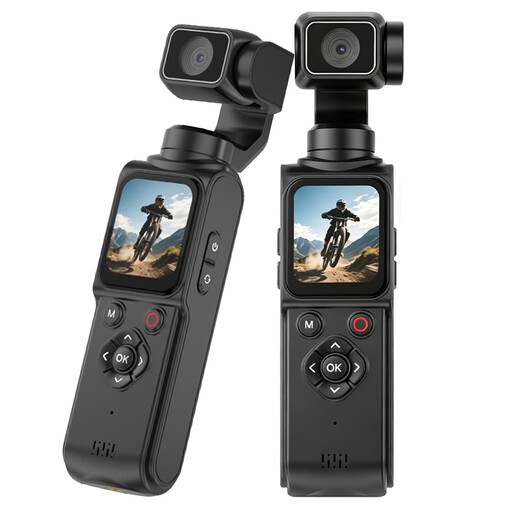 No image available
Check the focusing distance and magnification before choosing this camera for close-ups of a single chess piece.
The product name lists 4K, 64 MP, a 330° rotating lens, a 1.72-inch touchscreen, Wi-Fi, Type-C and a tripod.
 No image available
Compare the zoom with the framing you want for the board, and check the focusing distance and magnification for detail shots.
The product name lists 12× optical zoom, 4K, 64 MP and Wi-Fi.
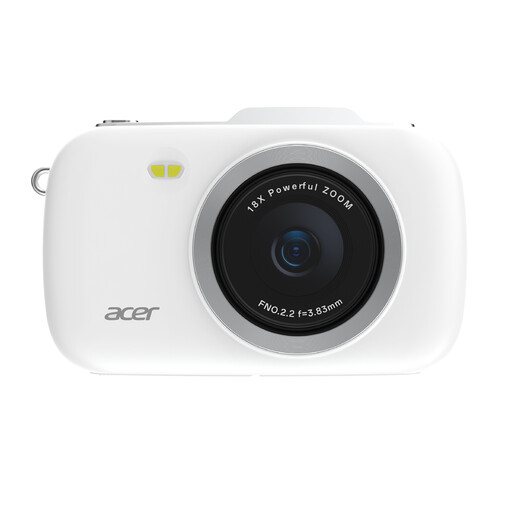 No image available
Check whether the stated zoom gives you the framing you want from your table, and check the focusing distance for close-up shots of chess pieces.
The product name lists 4K, 80 MP, 18× zoom and the colour white.
 No image available
Check whether the focusing distance and magnification suit your close-up needs; zoom alone doesn’t tell you how large a piece will appear in the frame.
The product name lists 8× optical zoom, 5K, 64 MP and a dual lens.
 No image available
The zoom lens gives you the option to adjust your framing; also check the focusing distance and magnification for close-ups of chess pieces.
The product name lists a 16-50mm zoom lens and the colour black.
Not always. Also check the maximum magnification, zoom setting and focus mode; Canon Netherlands lists different figures for the RF-S 18-45mm at different settings.
Keep the camera position and background the same, and watch for changes in the lighting. A tripod can help keep your composition consistent, according to Canon Netherlands’ product photography tips.
No. The Canon EOS R50 kit reviewed includes the RF-S 18-45mm lens; the RF 35mm F1.8 MACRO IS STM is a separate lens. Check what’s included in the specific offer.
Contact the seller. The Dutch government explains that the seller must provide a solution if a product is faulty; a manufacturer’s warranty or additional guarantee is separate from this.
No, this doesn’t apply to every transaction. According to the Dutch government, a 14-day cooling-off period applies in many cases when you buy at a distance, with exceptions and situations that don’t count as distance selling.