
Vandaag of morgen in huis

Kwaliteit gegarandeerd

Welkomstaanbiedingen ontgrendelen: GRATIS bezorging | Tot 80% korting | Gratis 30 dagen JoyPlus-proefperiode
Download de app
A good chef's knife is the foundation of any kitchen. Yet, the search for one is often frustrating. You invest in a knife that promises to be razor-sharp, but after a few months, it struggles with a tomato. Or you buy an expensive set, only to find you never use half of the knives. As a Product Recommendation Officer at Joybuy, I see the challenges consumers face every day. Let's expose the most common pitfalls so you can make an informed choice.
Pitfall 1: The "forever sharp" myth. No knife stays sharp forever without maintenance. Marketing terms like "self-sharpening" or "never sharpen again" are often misleading. The actual lifespan of the edge depends on the steel type, its hardness, and how you use and maintain the knife.
Pitfall 2: The impractical "all-in-one" design. A knife that claims to be perfect for everything, from filleting fish to chopping bones, is rarely good at either. A European chef's knife has a different shape and function than a Japanese chef's knife or a cleaver. The wrong choice leads to frustration and unsafe cutting.
To cut through the marketing, focus on the actual product features. These are the three most important specifications that determine a knife's quality and performance.
The blade material is crucial. Most kitchen knives are made of stainless steel, but the quality varies enormously. Pay attention to the specific steel type, such as X50CrMoV15, a reliable German standard that offers a good balance between edge retention, durability, and corrosion resistance.
The hardness of the steel is expressed in Rockwell Hardness (HRC).
The manufacturing method has a major impact on a knife's balance and durability.
The 'tang' is the part of the blade that extends into the handle. A full tang means the steel runs all the way to the end of the handle, often visible between the two halves of the grip. This provides superior balance, control, and durability. Knives with a 'half tang' or 'rat-tail tang' are often lighter and less balanced, which can be fatiguing during prolonged use.
Based on objective specifications, we have selected several popular choices that suit different cooking styles and budgets.
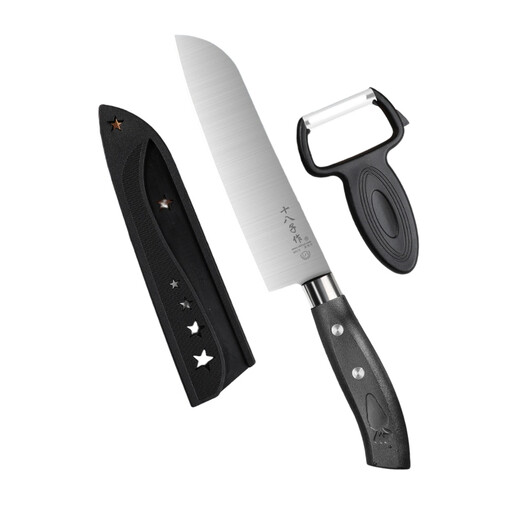
Why This Fits Their Persona: A complete and affordable set to get started immediately without a major investment. Ideal for daily cutting tasks in a student or starter kitchen where functionality and budget are top priorities.
This set bypasses the 'all-in-one' pitfall by providing specific tools for different tasks (a knife for cutting, a peeler for peeling), which is more efficient than a single, clumsy compromise.
Very accessibly priced and ready to use out of the box. The set includes a knife, a peeler, and a knife guard for safe storage.
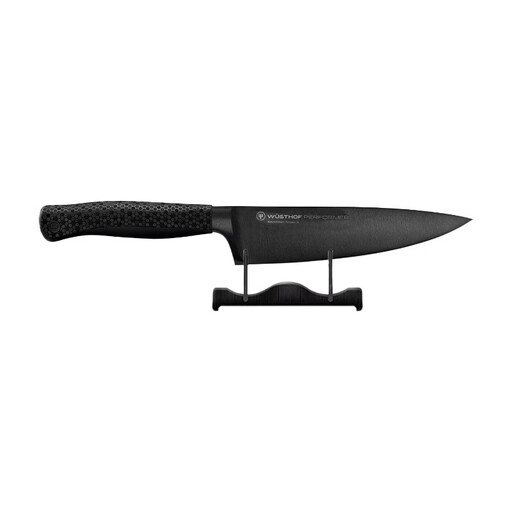
Why This Fits Their Persona: For those who take cooking seriously and are investing in a professional chef's knife that delivers performance and durability. Perfect for intensive use and refining cutting techniques in the home kitchen.
This is a forged knife made from high-quality X50CrMoV15 steel. The manufacturer specifies the materials and technology, such as the DLC coating, and avoids vague promises about "lifelong sharpness".
According to Wüsthof, the Diamond-Like Carbon (DLC) coating provides very high hardness and a non-stick effect. The innovative hexagonal, non-slip handle ensures excellent control.
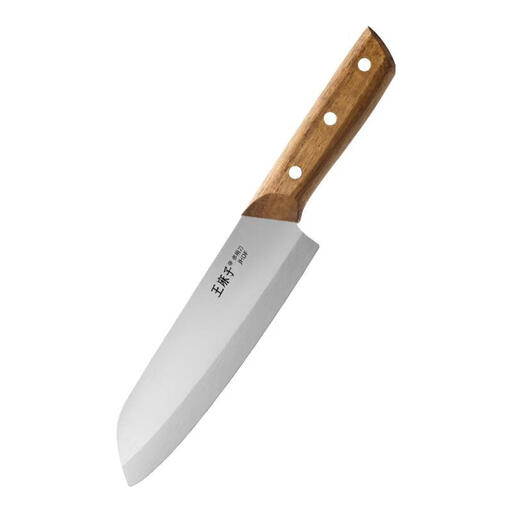
Why This Fits Their Persona: Ideal for those who prefer the Japanese cutting style: fast, precise, and suitable for vegetables, fish, and boneless meat. The lighter weight and straighter edge are characteristic of a santoku knife.
This is not a generic chef's knife, but a specific santoku knife, designed for the 'three virtues' (slicing, dicing, and mincing). It focuses on a specific function rather than promising to do everything.
The 400-series stainless steel blade and acacia wood handle offer a good balance between functionality and a traditional aesthetic. An excellent choice for anyone wanting to try an authentic Japanese chef's knife.
Whether you're looking for a complete knife set or a specific knife with a non-slip handle, there are more choices that meet strict selection criteria.
This depends on the frequency of use, the knife's material, and your cutting board (always use wood or plastic, never glass or stone). A general rule for the home cook is to sharpen your knife a few times a year with a whetstone or a professional sharpener. Regular honing with a honing steel helps keep the edge straight and sharp between sharpening sessions.
Not necessarily. A higher price can indicate superior materials (like special steel), a more complex manufacturing process (such as a forged knife with a full tang), or a renowned brand. However, the 'right' knife is personal. A €200 knife might not feel comfortable in your hand, while a cheaper model might be perfectly balanced for your cutting style. Focus on the specifications and how the knife feels, not just the price.
The main difference lies in the shape of the blade. A classic European chef's knife has a pointed tip and a curved blade, ideal for a 'rocking' cutting motion. A santoku knife has a flatter cutting edge and a rounded 'sheepsfoot' tip. This makes the knife very suitable for a chopping, up-and-down motion and for making paper-thin slices. Santokus are also often lighter and thinner.
