
Baker with limited worktop space
You want to bake cheese straws at home, but first need to work out where a freestanding oven can be placed safely with enough room for ventilation. The fire service advises allowing heat from appliances to disperse.


First, choose a spot where the oven can be positioned safely according to the manual, then check whether the baking tray has enough room for your twisted cheese straws. A smaller oven may take up less worktop space, but could mean baking in more batches. A larger model may offer more tray space or extra heating settings, although these specifications alone do not guarantee even baking.
You want to bake cheese straws at home, but first need to work out where a freestanding oven can be placed safely with enough room for ventilation. The fire service advises allowing heat from appliances to disperse.
You want to know how many twisted straws will fit on the baking tray and whether a larger oven could reduce the number of batches. An Albert Heijn Allerhande recipe for cheese straws uses two baking trays.
You’re comparing top and bottom heat with models that have a fan, without assuming that a particular setting alone determines the baking result. Koopmans’ recipe for cheese puff pastry straws specifies 200 °C.
| What to consider | What should you check? | Who is this important for? |
|---|---|---|
| Positioning on a small worktop | Measure the external dimensions and the clearance required around the exact model, as specified in its manual. Also check that you can reach the socket. | If space is limited, I want to know whether the oven can be positioned safely without blocking the required clearance around it. Around 36% of consumers prioritise safe positioning. |
| Baking tray space and portions | Compare the length of your shaped straws with the usable tray dimensions. Also check how many trays and shelf positions you can actually use. | If I want to bake several straws at once, the usable tray needs to suit their length and the portion I’m making; otherwise, I may need extra batches. Around 29% of consumers prioritise having room for the portion they want to make. |
| Temperature and heating settings | Check the temperature range and whether the model offers top and bottom heat, a fan, or both. Follow the settings in the recipe you’re using. | If my puff pastry recipe specifies a particular temperature and baking method, I want to check whether I can set these on the model I’ve chosen. Around 21% of consumers focus mainly on the available baking settings. |
| Cleaning and controls | Check which baking and crumb trays are included, which parts can be cleaned according to the manual, and how the timer works. | After baking, I want to know how to remove crumbs and cheese residue, and whether the controls suit my recipe. Maintenance and ease of use are the main priorities for around 14% of consumers. |
An oven gives off heat and may need extra clearance. Positioning requirements vary by model.
Measure the available space again, allowing for the clearance specified in the manual for the exact model you’re considering.
The capacity in litres doesn’t tell you exactly how many long cheese straws will fit side by side on the baking tray. You may therefore need more batches than you expect.
Measure your shaped straws and compare them with the usable tray dimensions, rather than looking only at the oven’s capacity.
A different model code may indicate a different capacity or different heating settings. Don’t rely on a similar product name alone.
Check the full model code and compare the specifications on the product page for the version you want to buy.
The Tristar OV-3615 is an example of a compact oven for smaller quantities.
The Severin TO 2052 is an example of a compact baking and toast oven.
The Inventum OV207B is a larger option to compare if tray space and heating settings are important to you.
The Princess 112701 is a compact oven to include in your comparison of worktop space and tray size.
The Ariete 979 Vintage is an 18-litre oven with conventional heating settings.
This selection includes compact ovens and worktop ovens with a range of capacities and heating functions. Compare the external dimensions and usable baking space with your available space and the length of your cheese straws; the product type or capacity alone won’t tell you how many straws will fit.
 No image available
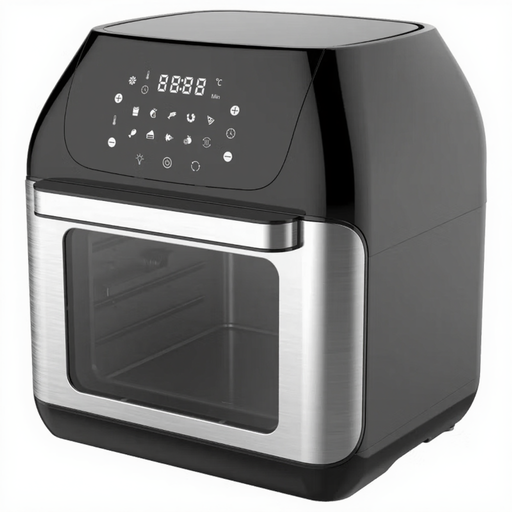
The stated capacity and external dimensions can help you decide whether this fan oven will fit on your worktop; also check the clearance around the appliance.
12 litres; 1500 W; external dimensions 33,67 × 33,6 × 36,8 cm; 9 pre-set menus; timer up to 90 minutes; viewing window and rotisserie.
 No image available
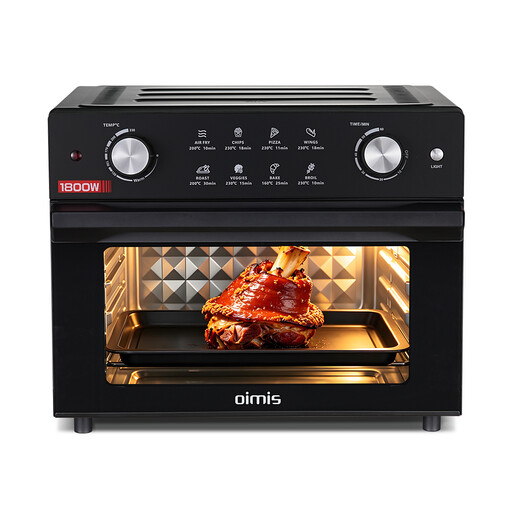
The 30 cm ceramic stone is worth considering if you want to check whether the available baking space suits what you’re making; measure your shaped straws and check the oven’s interior dimensions.
30 cm ceramic stone; top and bottom heating elements; viewing window and timer. Surfaces may become hot during use: wear heat-resistant gloves and don’t touch the casing.
 No image available
The compact capacity can help you compare worktop ovens, but it doesn’t tell you how many long cheese straws will fit in the basket at once.
6,5 litres; 1700 W; temperature range 80–200 °C; timer up to 60 minutes; mechanical time and temperature dials. The description mentions 360° hot-air circulation. Don’t overfill the basket, and keep the air inlet and outlet clear.
 No image available
With a stated capacity of 45 litres, this is a larger option to compare if baking space matters more than having the smallest possible oven. Check in advance that it will fit in your chosen spot with enough room for ventilation.
45 litres; 2000 W; top and bottom heat, fan function and six settings. The instructions call for a stable, heat-resistant surface and clear ventilation openings.
 No image available
The baking tray can accommodate items up to 20 cm. This is a particularly relevant option if your cheese straws are short enough to fit in that space; measure them beforehand.
10 litres; external dimensions 38,5 × 27 × 23 cm; temperature range 80–230 °C; 30-minute timer; top and bottom heat. The door and surfaces get hot; keep the appliance away from flammable materials.
It depends on the recipe. Koopmans’ recipe for cheese puff pastry straws specifies 200 °C for around 20 minutes. Check that setting against your oven’s capabilities and follow the recipe you’re actually using.
Don’t assume it can: the oven needs to release heat. The fire service advises allowing heat from appliances to disperse. Before choosing a spot, check the required clearance in the manual for the exact model.
Let the oven cool and follow the manual for your model. Inventum advises cleaning the inside of the OV207B with a soft, damp cloth and a little washing-up liquid, and explains which removable parts are dishwasher-safe. This advice doesn’t automatically apply to other ovens.
For a typical online consumer purchase, ACM ConsuWijzer states that you generally have a statutory cooling-off period of up to 14 days after delivery. Your statutory guarantee is separate from any manufacturer’s warranty: if a product used normally doesn’t meet what you could reasonably expect, the seller must offer a solution under the applicable terms.
Equipment covered by the European Low Voltage Directive must carry a CE marking; this includes equipment designed for 50–1.000 V AC. Check the voltage and product documentation for the exact version: the product name alone doesn’t confirm that it meets the requirements.