
Recipe-led home baker
You want to bake cheese scones using a particular recipe, so you check the oven setting, temperature and preheating requirements first. Arla’s example recipe calls for 250 °C in a conventional oven or 225 °C in a fan oven.


Choose an oven that can reach the setting and temperature specified in your recipe, and that’s large enough for your baking tin – so don’t just look at the number of litres. Arla’s example recipe calls for 250 °C in a conventional oven or 225 °C in a fan oven. You should also consider the space available for a built-in or freestanding model, as well as any extra features.
You want to bake cheese scones using a particular recipe, so you check the oven setting, temperature and preheating requirements first. Arla’s example recipe calls for 250 °C in a conventional oven or 225 °C in a fan oven.
You want your tin and the number of scones you plan to make to fit in the oven, so you don’t automatically have to plan several batches. The Consumers’ Association recommends comparing the internal dimensions with the tin you intend to use.
You’re looking for an oven that fits the space available: a suitable housing unit for a built-in model or enough worktop space for a freestanding one. Remember to measure the tin you plan to use, too.
Choose this option if: you have a suitable housing unit and want to follow your recipe’s settings. Bosch lists top and bottom heat and a temperature range of 50–275 °C for the HBA534BB3.
Bear in mind: the space required for installation and the dimensions of your baking tin; the stated capacity doesn’t necessarily tell you whether your tin will fit.
Choose this option if: you don’t want to use a built-in space and are looking for an oven to sit on your worktop. The Inventum OV607B and Tomado TEO7501B are examples of freestanding models.
Bear in mind: according to their manufacturers, both models mentioned reach a maximum of 230 °C, so you won’t be able to select the 250 °C conventional oven setting in Arla’s example recipe. Also check the available settings and ventilation clearance.
Choose this option if: saving space is a priority and your baking tin will fit inside the smaller appliance.
Bear in mind: the usable internal space and available oven settings; a small exterior doesn’t automatically mean your tin will fit.
Choose this option if: you want a microwave function as well as an oven. The ETNA CM450RVS is an example of a built-in model with both oven and microwave functions.
Bear in mind: the oven setting, the dimensions of the housing unit and the space available for your tin. The Consumers’ Association points out that a combination microwave designed mainly for reheating often has fewer oven settings or shelf positions.
| What to consider | What should you check? | Who should pay particular attention? |
|---|---|---|
| Recipe temperature and oven setting | Check the temperature range for each oven setting and whether the recipe specifies conventional heat or fan cooking. | If you want to follow your chosen recipe, you’ll need to be able to set the right mode and temperature; around 36% of consumers prioritise this recipe setting. |
| Space for your tin | Measure your baking tin and compare it with the usable internal dimensions and shelf space. | If you’re expecting guests, you’ll want to bake your tin’s worth in a single batch; around 29% of consumers prioritise this oven space. |
| Space in your kitchen | For a built-in model, check the housing unit dimensions and installation instructions. For a freestanding model, measure the exterior dimensions and leave the required ventilation clearance. | If your kitchen has limited space, you’ll want to know where the oven can be safely placed or installed; around 21% of consumers start by considering the space available. |
| Baking and reheating | Check that the model has a separate oven setting with a suitable temperature range and enough space for your tin. | If you’re looking for one appliance for baking and reheating, you’ll want both functions to be practical to use; around 14% of consumers prioritise this combination. |
The stated capacity doesn’t tell you whether your muffin tin or baking tray will fit in the oven. That’s why the Consumers’ Association recommends checking the internal dimensions.
Measure your tin and compare its dimensions with the usable internal space and shelf height before you choose.
A smaller oven may mean planning several batches or needing a different tin.
Arla’s example recipe specifies 225 °C for fan cooking and 250 °C for a conventional oven. The right setting therefore depends on both the recipe and the settings and temperatures available on the model.
Check the temperature range for each oven setting and allow time to preheat as instructed in the recipe.
The product title for the Severin TO 2052 on Joybuy states 12 litres, 1500 W and fan cooking. Severin lists this model as having a capacity of 9 litres, a power rating of 800 W and no fan function.
Compare the full model number and key specifications with the manufacturer’s details. Ask the seller for clarification if the product information is inconsistent.
Built-in ovens for anyone with a suitable housing unit. The HBA534BB3 is one example, with top and bottom heat as well as 3D fan cooking.
A freestanding oven option if you don’t want a built-in model. The OV607B is one example, with a stated capacity of 60 litres.
A freestanding option with a larger stated oven capacity. The TEO7501B is one example, with a capacity of 75 litres and five shelf positions.
Mini ovens for anyone short on space. The TO 2052 is a compact example, with a capacity of 9 litres according to Severin.
A built-in oven with a microwave function for anyone looking to combine both uses. The CM450RVS is one example, designed for a housing unit 45 cm high.
These oven options at Joybuy are selected with cheese scones in mind, including freestanding models and a built-in combination oven.
 Image unavailable
A freestanding option if you’re looking for a larger stated capacity and a maximum temperature of 250 °C.
65 litres, maximum temperature of 250 °C and 2000 W. The product information lists six functions and a turbo fan; check which temperature applies to your chosen oven setting. Keep the ventilation openings clear.
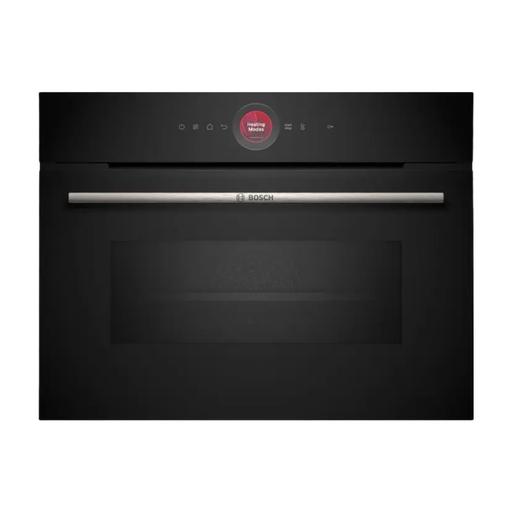 Image unavailable
A built-in combination oven for anyone who wants a microwave function as well as an oven.
45 litres and a microwave power rating of 900 W; the product information lists convection cooking up to 230 °C. The stated housing unit dimensions are 56 × 55 × 45,5 cm (W × D × H). Check the oven setting required for your recipe and whether your tin will fit.
 Image unavailable
A freestanding option to compare if you want top and bottom heat as well as convection cooking.
45 litres and 2000 W. The product information lists six functions, including top heat, bottom heat and convection. Place the oven on a stable, heat-resistant surface and keep the ventilation openings clear.
 Image unavailable
A freestanding option to consider if your baking tin is no more than 25 cm in diameter.
The product information lists five heating settings, top and bottom heat, fan cooking and a maximum temperature of 230 °C. The stated maximum baking tin diameter is 25 cm. Leave enough space for ventilation when positioning the oven.
 Image unavailable
A freestanding fan oven to compare if you’re looking for a model with several shelf positions.
The product title lists a capacity of 35 litres, a thermometer, a four-level baking rack and an LED display. Before buying, check the temperature range and oven setting required for your recipe.
No. Check whether your oven’s fan setting can reach the specified temperature. Arla’s example recipe calls for 225 °C with fan cooking and 250 °C in a conventional oven. Also check that your muffin tin will fit. The stated baking time of 10–12 minutes applies to this specific recipe and doesn’t include preheating.
Follow the installation, ventilation and cleaning instructions for your specific model. The Netherlands Fire Service advises that heat from ovens and other appliances must be able to escape, and recommends plugging high-power appliances into a wall socket rather than using a multi-socket extension or cable reel.
According to the Dutch government, you should contact the seller first. They must offer a solution and cannot simply refer you to the manufacturer; a separate manufacturer’s guarantee doesn’t replace your statutory rights.
Yes. According to the Dutch government, when you buy a similar electrical appliance, the seller must take your old one free of charge, including when you buy online. If your new oven is being delivered, agree in advance how you’ll hand over the old one.