
Baking for a party with lots of guests
You want to bake the required number of cheese scones in as few batches as possible, so you compare baking trays and usable space.


Start with the number of cheese scones you want to serve. Compare the usable baking tray space and the number of batches you’ll need, rather than looking only at the oven’s capacity in litres. A compact freestanding oven may suit a smaller kitchen if you don’t mind baking in several batches. If you want more baking space or multiple shelf positions, it’s worth comparing larger freestanding and built-in ovens. Also check which oven setting your recipe calls for and, for a built-in model, the niche dimensions and included accessories.
You want to bake the required number of cheese scones in as few batches as possible, so you compare baking trays and usable space.
You don’t have a suitable built-in oven niche or much worktop space, and need an oven that can be placed somewhere suitable.
You want to use the oven setting specified in the recipe and adjust the cooking if the recipe and oven differ.
First choose between a freestanding and built-in oven based on the space available. Then compare the baking capacity and oven settings you need for your recipe.
Best for: smaller kitchens, if you can plan for several batches.
Bear in mind: the baking tray may limit how many scones will fit at once with enough space between them.
Best for: anyone without a built-in oven niche who wants to compare models with a larger stated baking area.
Bear in mind: a larger model takes up more worktop space, and the baking tray dimensions alone won’t tell you how many scones will fit.
Best for: kitchens with a suitable niche, if you want to use multiple shelf positions.
Bear in mind: check the niche dimensions and how many baking trays are included. Multiple shelf positions don’t automatically mean multiple trays.
| What to consider | What to look for when buying | Who should pay particular attention? |
|---|---|---|
| Number of scones per batch | Compare the baking tray dimensions and allow space between the scones. | If you’re baking lots of scones for a party, you’ll want to know how many will really fit on one tray. Around 33% of consumers say that avoiding multiple batches is their main concern when buying. |
| Oven setting for the recipe | Check that the specified setting is available. If using fan-assisted cooking, follow the guidance for that setting. | If you want to follow a recipe closely, the right oven setting matters more than extra features. Around 25% of consumers say that having the right setting for their recipe is their top priority. |
| Suitable and safe placement | Compare the external dimensions or niche dimensions with the space available, and follow the model’s installation instructions. | If you have limited worktop space or want to use an existing niche, you’ll want to know in advance whether the oven will fit. Around 25% of consumers say that available space is their biggest consideration. |
| Use and aftercare | Check which trays and racks are included, and compare the cleaning instructions. | If you’ll use the oven regularly after the party, cleaning and the warranty may matter alongside baking capacity. Around 17% of consumers say that use and aftercare are among their main considerations. |
The PLUS recipe for cheese scones recommends preheating the oven to 200 °C. The Netherlands Nutrition Centre notes that many recipes assume conventional top-and-bottom heat; if you switch to fan-assisted cooking, it advises setting the temperature around 10% lower. Follow the instructions in the recipe you’ve chosen and check the scones towards the end of the baking time.
The Dutch Consumers’ Association points out that the usable oven space may be smaller than the stated capacity. The baking tray’s dimensions and shape also matter.
Arrange the scones across the baking tray with enough space between them, then work out how many batches you’ll need.
A smaller usable baking tray may mean more batches. Check whether you’ll need a suitable extra tray.
The number of shelf positions isn’t the same as the number of baking trays included. For example, ETNA lists one baking tray and one rack as standard with the OP670Ti.
Measure the niche according to the model’s installation instructions, and check which trays and racks are actually included.
For its freestanding OV207B, Inventum lists a 20-litre capacity, a baking tray and several heating settings.
Severin says its freestanding TO 2058 has a 42-litre capacity and several heating settings.
For its freestanding OV-3640, Tristar lists a 60-litre capacity and a baking area of 45 × 35 cm.
Bosch says its built-in HBA534BS3 oven features 3D Hotair on up to three shelf positions.
ETNA lists a 72-litre capacity, five shelf positions and pyrolytic cleaning for its built-in OP670Ti oven.
This Joybuy selection includes freestanding and built-in ovens; one freestanding model is a gas cooker with an oven. Compare the stated capacity and type with the space available and the baking tray you need for your recipe.
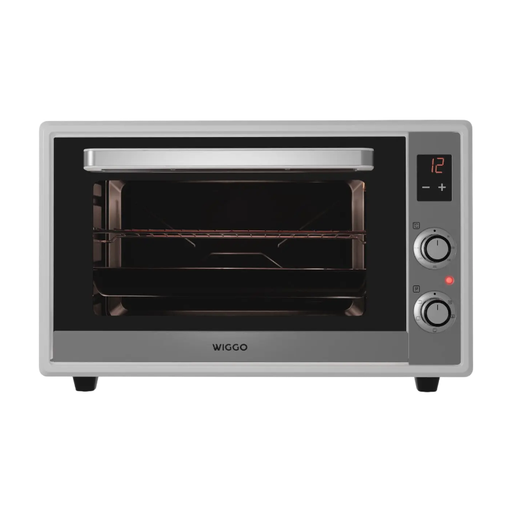 No image available
A freestanding model to compare if you’re not using a built-in oven niche. The product name lists a capacity of 65 L and a power rating of 2000 W.
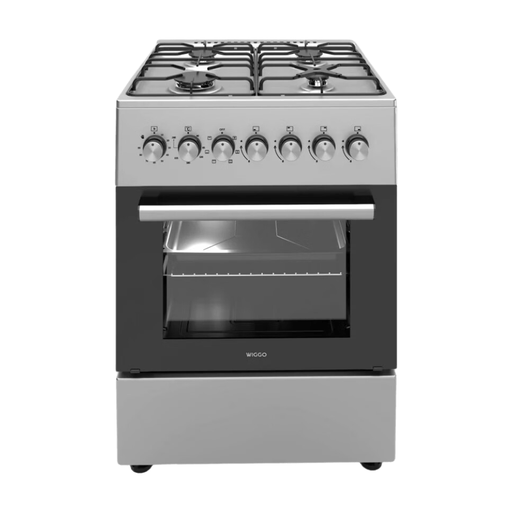 No image available
A freestanding gas cooker with an oven to compare if you’re also looking for a cooker. The product name lists a capacity of 66 L and a width of 60 cm. According to the product description, installation and connection to the gas supply must be carried out by a qualified technician.
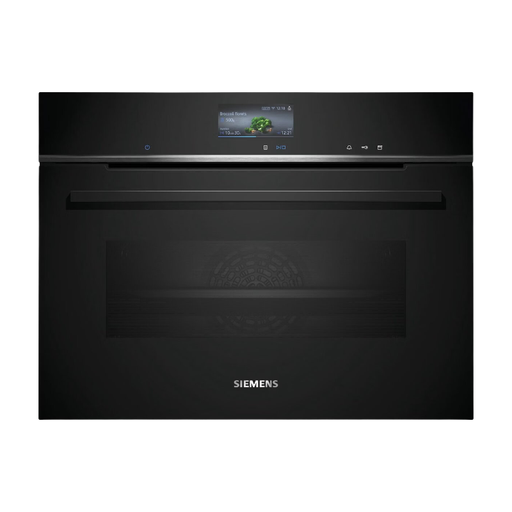 No image available
A built-in model to compare if you have a suitable niche. The product name lists a capacity of 47 L and describes it as a steam oven.
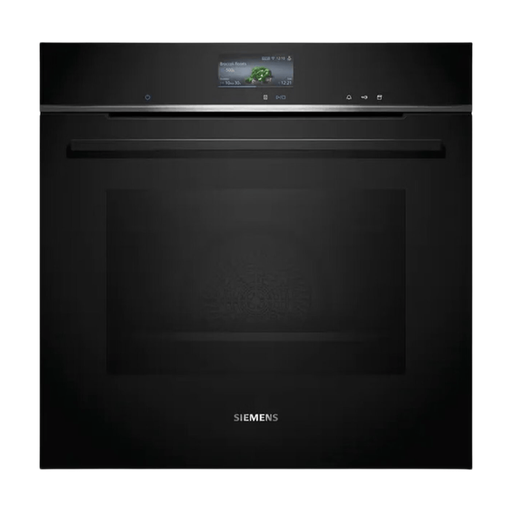 No image available
A built-in model to compare if you have a suitable niche. The product name lists a capacity of 60 L and 4D hot air.
 No image available
A built-in model to compare if you have a suitable niche. The product name lists a capacity of 71 L, 3D hot air and pyrolytic self-cleaning.
Start by following the setting and temperature in your chosen recipe. The Netherlands Nutrition Centre notes that many recipes assume conventional top-and-bottom heat and advises lowering the temperature by around 10% if you switch to fan-assisted cooking. Check the scones towards the end of the baking time.
Don’t assume you can: heat needs to escape from an oven. The Netherlands Fire Service advises allowing for heat dissipation. Check the manual for the exact model to find out how much space is required.
No, not exclusively. According to ACM ConsuWijzer, a product that has been used normally is also covered by the statutory guarantee if it doesn’t meet reasonable expectations. In that case, the seller must offer an appropriate solution at no extra cost. What you could reasonably expect from the product will be taken into account when assessing your claim.