Choose a fridge freezer with enough usable shelf space for your wrapped portions, and check the temperature during the workshop; the Netherlands Nutrition Centre recommends keeping your fridge at 4 °C. Only choose freezer space you’ll actually use: the stated capacity in litres is not the same as practical usable space, and a larger appliance may use more electricity. If you serve food as a business, you must also follow the relevant food safety rules and storage instructions.
Who is this choice relevant to?
Workshop host with lots of portions of cheese
You want to put several wrapped portions back in the fridge in an organised way, and check the temperature when the appliance is opened frequently during the session. The Netherlands Nutrition Centre recommends keeping your fridge at 4 °C.
Organiser with a small workspace
You need refrigeration and may also want freezer space in a limited area. Measure the space where the appliance will stand and the doorway, then check whether the portions will fit on the available shelves.
Buyer who takes electricity use into account
If you use the appliance regularly, compare its annual energy consumption and size, as well as the fridge space you need. Milieu Centraal points out that choosing a fridge that’s either too large or too small can have practical consequences.
What should you consider when choosing?
Compact freestanding fridge freezer
Suitable for: limited space and a modest number of wrapped portions at a time.
Keep in mind: a compact model may offer less usable shelf space; check the layout and external dimensions.
Larger fridge freezer
Suitable for: storing several portions and other ingredients that need chilling at the same time.
Keep in mind: a higher stated capacity in litres doesn’t guarantee proportionally more usable space; compare annual electricity use and external dimensions too.
Fridge without a freezer compartment
Suitable for: workshops where you mainly chill fresh portions of cheese and freeze very little.
Keep in mind: a separate freezer takes up extra space and uses electricity too; consider one only if you genuinely need the freezer capacity.
| What to consider |
What should you check? |
Who should bear this in mind? |
| Cooling during use |
Follow the storage instructions on the packaging and check the fridge temperature. The Netherlands Nutrition Centre recommends 4 °C. |
If I’m taking portions out and putting them back frequently during a busy workshop, I want to know whether the fridge stays at the right temperature. Around 36% of consumers prioritise reliable cooling. |
| Usable shelf space |
Check whether the packaging fits on the shelves and compare fridge and freezer capacity separately. The stated capacity in litres doesn’t tell you how much practical space is left once the shelves and drawers are in place. |
If I’m chilling portions for several participants at once, I want to be able to arrange them neatly. Around 29% of consumers prioritise usable fridge space. |
| Annual electricity use |
Compare the energy label and kWh per year for appliances with enough space. |
If the appliance runs regularly, I want to take its energy use into account without choosing more capacity than I need. Around 21% of consumers prioritise an appropriate size and electricity use. |
| Space for the appliance |
Measure the available space and doorway; check the climate class if the appliance will be in an unheated or warm room. |
If the workshop space is limited or unheated, I want to know in advance whether the appliance will fit and the door can open properly. Around 14% of consumers prioritise suitability for the space where the appliance will stand. |
Common buying mistakes
-
Choosing based only on the total capacity in litres
The stated capacity isn’t the same as the practical space available once the shelves and drawers are in place. The Consumers’ Association (Consumentenbond) points out that these components aren’t included in the stated capacity.
Compare the fridge compartment separately and check whether the wrapped portions will fit on the available shelves.
A cramped layout may mean you need extra refrigeration space after all.
-
Assuming No Frost guarantees the right storage temperature
No Frost refers to frost build-up in the freezer compartment; it doesn’t prove that cheese stays at the right temperature during use.
Follow the label, set the fridge appropriately and check the temperature. Don’t base food safety on the name of a feature.
-
Putting a fridge freezer in an unheated room without checking the climate class
According to the Consumers’ Association (Consumentenbond), a cold environment can also affect the freezer compartment.
Before installing the appliance, check its climate class and the guidance for the exact model.
An unsuitable environment may affect how the appliance works.
-
Overlooking annual electricity use
The energy label shows annual energy consumption and the capacity of the fridge and freezer compartments, so you can compare suitable appliances on the same basis.
First choose enough usable space, then compare energy consumption in kWh per year.
With regular use, electricity consumption adds up; the cost depends on how much you use and your own tariff.
Brands to compare
Beko
Beko’s range includes the freestanding RCHE300K40WN, a fridge freezer that’s 54 cm wide. This could be worth considering if space is limited.
- Beko lists No Frost and an E energy rating for this model.
- The external width doesn’t tell you how many workshop portions will fit on the shelves; check the layout separately.
Samsung
Samsung states that the freestanding RB34C670DWW/EF has a total capacity of 344 litres.
- Samsung lists a D energy rating and app features for this model.
- Samsung’s stated potential savings with AI Energy Mode are based on internal tests and conditions; they don’t demonstrate savings during a cooking workshop.
LG
The LG GBBS322CPY is a fridge freezer with a total capacity of 375 litres, according to LG.
- LG lists adjustable zones and DoorCooling for this model.
- Claims about faster or more even cooling don’t prove that portions of cheese will stay at a safe temperature during a particular workshop.
Bosch
Bosch lists 260 litres of fridge space and 103 litres of freezer space for the freestanding KGN39OCAF, with external dimensions of 203 × 60 cm.
- Bosch specifies an A energy rating, 112 kWh per year, 29 dB(A) and Total No Frost for this model.
- These are product and label details, not independent measurements taken during a workshop. Check that the height and space available are suitable.
Fridge freezers at Joybuy
These fridge freezers are for anyone looking to keep portions of cheese and other ingredients chilled. Compare the fridge capacity, shelf layout, dimensions and stated electricity use with your workshop’s needs.
 No image available
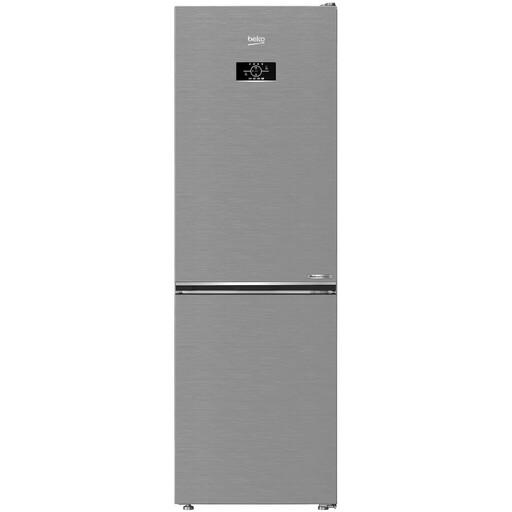
Beko B5RCNE366HXB1, 316 l, No Frost, stainless steel
Worth comparing if you want to spread wrapped portions across several fridge shelves.
The product information lists 210 litres of fridge space, four fridge shelves, a C energy rating and 165 kWh per year. It also mentions a touchscreen, a recommended setting of 4 °C, 35 dB and dimensions of 187 × 60 × 66 cm. The climate class is SN-T.
View at Joybuy
 No image available
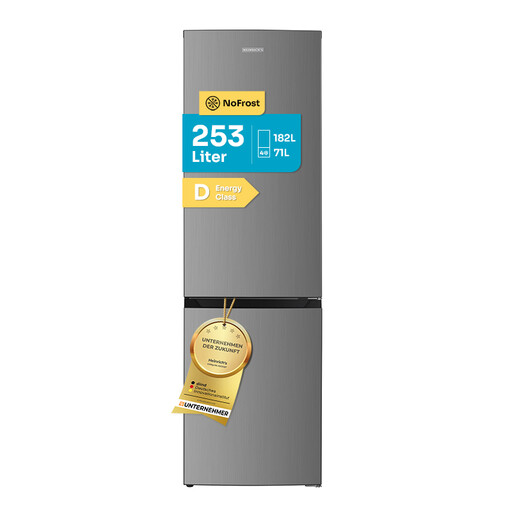
Heinrich´s fridge freezer, 253 litres, stainless steel
Worth comparing if you want to weigh up fridge and freezer space separately.
The product information lists 182 litres of fridge space, 71 litres of freezer space, four fridge shelves, a D energy rating and 39 dB. The door can be fitted to open from either side; No Frost is also mentioned in the product name.
View at Joybuy
 No image available
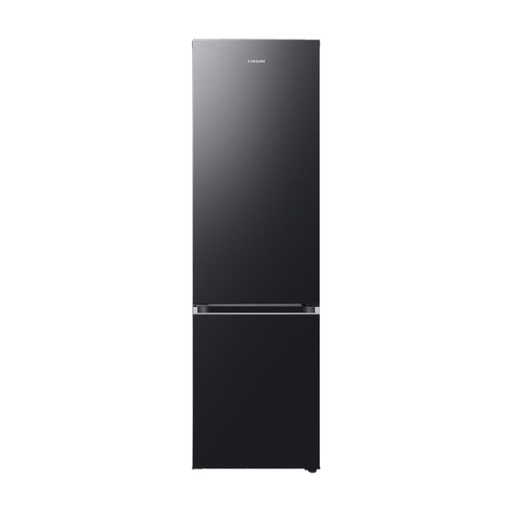
Samsung RB38C607AB1/EF, energy rating A
Worth including in a comparison if you need a spacious fridge compartment and want to keep an eye on annual electricity use.
The product information lists 273 litres of fridge space, three fridge shelves, an Optimal Fresh+ drawer, an A energy rating and 108 kWh per year. The stated external dimensions are 203 × 59,5 × 65,8 cm.
View at Joybuy
 No image available
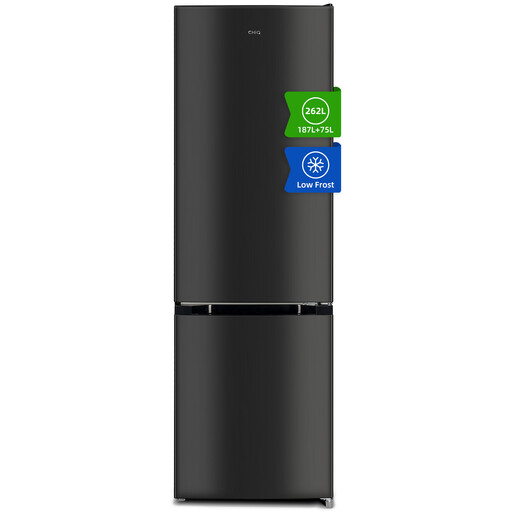
CHiQ JR263LGE, 262 l, Low Frost
Worth comparing if adjustable storage and the practical positioning of the door are important to you.
The product information lists adjustable fridge shelves and a temperature-controlled fresh food drawer. The product name mentions four-star freezer performance, 39 dB and a reversible door.
View at Joybuy
 No image available
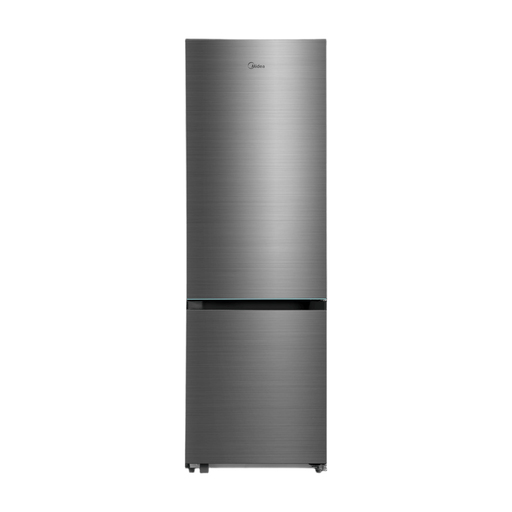
Midea MDRB457FGE46, 330 l, Total Frost Free
Worth comparing if you want to look at fridge and freezer space, shelf layout and annual energy use side by side.
The product information lists 232 litres of fridge space, 98 litres of freezer space, four fridge shelves and 248 kWh per year. It also mentions electronic temperature controls, 35 dB, a depth of 57 cm and a reversible door. The product name lists an E energy rating.
View at Joybuy
Frequently asked questions
What temperature should you store portions of cheese at during the workshop?
The Netherlands Nutrition Centre recommends setting your fridge to 4 °C and returning chilled products to it promptly. Also follow the storage instructions on the cheese packaging. For commercial food storage, the Netherlands Food and Consumer Product Safety Authority (NVWA) says to follow the temperature on the label; if no temperature is given, the NVWA specifies 7 °C or below. This doesn’t replace the consumer recommendation of 4 °C.
Does a commercial cooking workshop need to follow an HACCP plan?
If you prepare, process or sell food as a food business, the NVWA requires you to work with a food safety plan or hygiene code based on HACCP. Whether a particular workshop falls under this business requirement depends on how it is actually organised.
Do you need to provide information about allergens in the portions of cheese you serve?
If you’re a business offering unpackaged food to consumers, the NVWA says you must provide information about any allergens it contains. Milk, including lactose, is one of the listed allergens. Check how the portions will be served during the workshop and make the information available where necessary.
Can you freeze cheese to use later?
It depends on the type of cheese and its packaging. The Netherlands Nutrition Centre gives separate advice for opened 40+ cheese and grated cheese, and warns that freezing can affect the quality. Don’t automatically apply this advice to all soft cheeses; check the guidance for the specific product.
What should you consider when positioning the appliance and checking its temperature?
Measure the space where the appliance will stand and the doorway, and check the climate class if it will be placed in an unheated or warm room. Keep the wrapped portions organised and check the temperature during use. According to the Consumers’ Association (Consumentenbond), No Frost prevents frost build-up in the freezer compartment, but that doesn’t tell you whether cheese stays at the right temperature.


