
Organisers with lots of cheese portions
If you’re preparing larger quantities and want to keep them chilled and organised, ample usable space and temperature control are especially important. Portability matters less at a fixed workshop venue.


For workshops at a fixed venue, a table-top fridge is suitable if all the packaged portions fit inside; for larger quantities, a fridge with more chilled storage may be more practical. For changing venues, choose a portable compressor cool box if its capacity and power connections meet your needs, and always check the actual temperature: the Voedingscentrum recommends setting a fridge to 4 °C.
If you’re preparing larger quantities and want to keep them chilled and organised, ample usable space and temperature control are especially important. Portability matters less at a fixed workshop venue.
A compact fridge may suit a fixed set-up, but check its external dimensions and whether your portion containers will actually fit inside.
If you take cheese portions to different workshop venues, consider the capacity, power connections and temperature you can maintain at each location.
Choose this when: the workshop is at a fixed venue and all the packaged portions fit in the table-top fridge.
Trade-off: its smaller external dimensions take up less space, but its capacity and layout may limit how many portions you can store.
Choose this when: you want to keep several prepared batches chilled at once and don’t need freezer space.
Trade-off: more chilled storage may mean a larger appliance that needs more space.
Choose this when: you travel between venues and have a suitable power connection at each one.
Trade-off: compare its capacity with the number of portions you need to store, and check the temperature during use.
Choose this when: you’ve confirmed at the venue that the appliance can reach and maintain the required storage temperature.
Trade-off: its cooling performance may depend on the ambient temperature, so a consistent internal temperature isn’t guaranteed.
Measure the space for the appliance and compare its layout with your own containers. A stated capacity in litres doesn’t guarantee that your portions will fit neatly inside; once the appliance is set up, check its temperature too.
| Consideration | What should you check? | Who should pay particular attention? |
|---|---|---|
| Reliable storage temperature | The Voedingscentrum recommends setting a fridge to 4 °C. Check the actual temperature with a fridge thermometer. | When I store cheese portions, I want to be able to check the temperature rather than rely on the setting alone. Around 36% of consumers rank reliable storage temperature as their top priority. |
| Space and layout | Compare the interior space and shelf layout with your containers, and measure the appliance and the space available. | When I prepare portions for several groups, I want to store the containers neatly and be able to reach them during the workshop. Space and layout come first for around 29% of consumers. |
| Taking it to another venue | Compare the capacity, power connections required and the temperature you can maintain at the venue. | For workshops at different venues, I want to be able to take the portions with me and plug in the appliance on site. Portability is the main purchasing concern for around 21% of consumers. |
| Power consumption for regular workshops | When comparing suitable fridges, compare their annual consumption in kWh on a like-for-like basis and consider how often the appliance will be switched on. | If a fridge is on frequently, I want to make sure its capacity is right for my needs and take its annual consumption into account. Around 14% of consumers prioritise power consumption for regular workshops. |
The temperature can vary from one part of a fridge to another. The setting alone doesn’t tell you what temperature your portions are actually being kept at.
Once the fridge is set up, check the temperature with a fridge thermometer and adjust the setting if necessary.
Dometic states that the TCX 14 cools to a maximum of 27 °C below the ambient temperature. This means the temperature in a warm workshop space could affect its performance.
Only use this type of model for cheese if you can maintain and check the required storage temperature at the venue.
The stated annual consumption in kWh and how often an additional fridge is switched on are also relevant when choosing.
First compare appliances that can fit your portions, then check their energy labels and annual consumption on a like-for-like basis.
Beko lists compact freestanding fridges, including the LS9052WN.
The Rc 1400 Pure is a table-top fridge for a fixed set-up.
The KTR15NWEB is a table-top fridge without a freezer compartment.
Dometic offers portable compressor and thermoelectric cool boxes for use at different locations.
This selection includes table-top fridges for a fixed workshop venue and a portable compressor cool box for use at different locations.
 No image available
An option for a fixed workshop venue if a table-top model suits the space available.
The product title lists an 88-litre capacity, energy rating E and a black finish. Check that your portion containers will fit inside.
 No image available
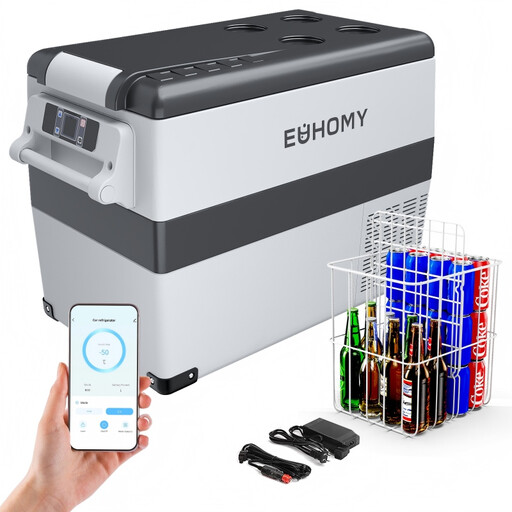
A portable option for workshops at different venues, provided the capacity and available power connection are suitable.
The product title lists a temperature range of −20 °C to +20 °C and connections for 12/24 V DC and 100–240 V AC. Keep the vents clear and check the actual temperature with a thermometer.
 No image available
An option for a fixed set-up if the table-top design and layout suit your workshop space.
The product information lists a capacity of 107 litres, mechanical temperature control and a width of 54 cm. Check the dimensions and layout against your own containers.
 No image available
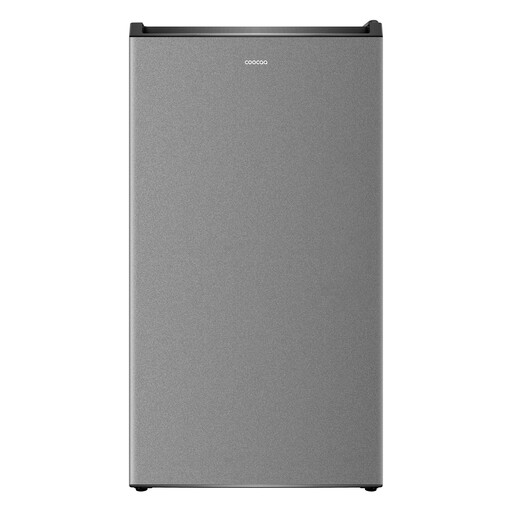
An option for a fixed location if its capacity and set-up suit the number of portions you need to store.
The product information lists a chilled capacity of 83 litres and temperature control. Check the layout and measure the temperature during use.
 No image available
An option for a compact fixed set-up if its width and layout suit your portions.
The product information lists a capacity of 92 litres, a width of 47 cm, a chill drawer and seven temperature settings. Check that the drawer and shelf layout suit your packaged cheese portions.
For pre-packed cheese, follow the storage temperature on the label. The Voedingscentrum recommends setting a fridge to 4 °C and checking the temperature with a fridge thermometer. For food businesses, the NVWA advises that pre-packed food without temperature information should be kept at 7 °C or below; this doesn’t override a lower temperature stated on the label.
Store cheese according to the product-specific guidance and keep the packaging closed. For hard cheese, for example, the Voedingscentrum recommends cheese paper or reusable food wrap. Check the fridge temperature with a thermometer too.
When you buy as a consumer in the Netherlands, you’re entitled to a product that works as it should; according to the Dutch government, there’s no fixed statutory guarantee period. Discuss any fault with the seller; a manufacturer’s guarantee is in addition to your statutory rights. This applies to consumer rights, not the terms of a business purchase.
If you run a food business that prepares, processes or sells food, the NVWA requires an HACCP food safety plan or an applicable approved hygiene code. The NVWA also states that food businesses must register. The word ‘workshop’ alone doesn’t determine whether this applies to you; consider the type of business and the activities you carry out.