
Cheese lover with limited space
Wants to chill packaged portions of cheese in a small available space, and needs to check the external dimensions, door swing and ventilation clearance required.


If you only have room for a few portions of cheese, compare a minibar with a slim under-counter fridge by checking the external dimensions and ventilation clearance required. If you also store everyday groceries, focus on an under-counter fridge’s usable capacity and layout. Follow the cheese packaging for storage advice, and use a thermometer to check that the fridge stays at around 4 °C, as recommended by the Netherlands Nutrition Centre.
Wants to chill packaged portions of cheese in a small available space, and needs to check the external dimensions, door swing and ventilation clearance required.
Stores everyday groceries as well as cheese, so will benefit more from usable shelves and fridge capacity than from the smallest possible external dimensions.
Is looking for a fridge with the right capacity, and also compares the stated noise level and annual energy consumption without assuming these figures reflect measurements taken at home.
First, measure the entire space where you plan to put the fridge. Then check which capacity and storage temperature suit the food you keep in it.
| What to consider | What should you check? | Who is this important for? |
|---|---|---|
| Space and positioning | Measure the width, height, depth and door swing; also allow for the clearance specified in the manual. | If I only have a tight space available, I want to know in advance whether the door can open and whether the appliance has enough room. Around 36% of consumers prioritise the available installation space. |
| Fridge temperature | Follow the instructions on the cheese packaging and check the fridge temperature with a thermometer; the Netherlands Nutrition Centre recommends 4 °C. | When I buy cheese that needs to be kept chilled, I want to know what temperature the fridge actually reaches. Around 29% of consumers prioritise reliable chilled storage for cheese. |
| Capacity and layout | Compare the net fridge capacity and check that packaged portions fit on the shelves alongside your other groceries. | If I need to store everyday groceries as well as cheese, I want enough usable space and a layout that suits my packaging. Around 21% of consumers prioritise storage capacity. |
| Energy use and noise | Compare the current EU energy label, annual consumption in kWh and stated noise level for the exact models. | If the fridge is in an open-plan kitchen and living area, I want to take the stated noise level and energy use into account once the size and capacity are right. Around 14% of consumers prioritise running costs and noise. |
The ventilation clearance required and the space needed for the door to swing open are in addition to the external dimensions.
Check the installation manual for the exact model and measure the full available space, including the door swing.
A small compartment or a temperature control dial does not confirm what temperature the fridge reaches in use or how many portions it can hold.
Follow the storage instructions on the cheese packaging and check the temperature with a fridge thermometer. The Netherlands Nutrition Centre recommends 4 °C.
Since 1 March 2021, the European Commission has used an A to G energy label scale for household fridges. An older A+ label cannot therefore be compared directly with this scale.
Compare the current EU energy label and the annual kWh figure for the exact appliance.
Salora describes the CFB4300BL as a freestanding 43-litre minibar for spaces with limited room.
The KK471W is a slim 94-litre under-counter fridge; the KK550 offers more fridge space at 131 litres if you have room for a width of 55 cm.
Bosch describes the KTR15NWEB as an under-counter fridge without a freezer compartment, with 134 litres of fridge space.
The Liebherr Rci 1620 Plus is an under-counter fridge that requires a width of 60 cm.
These models are designed for chilled storage in a compact kitchen, from a minibar to a freestanding under-counter fridge. Choose according to the space you have and the layout you need.
 No image available
A freestanding under-counter fridge for portions of cheese and other chilled items, if a compact fridge suits what you need to store.
88-litre capacity; stated width of 48 cm; reversible door; three adjustable glass shelves, a salad drawer and three door compartments.
Stated noise level of 39 dB and energy consumption of 90 kWh per year.
 No image available
A freestanding fridge without a freezer compartment for anyone who wants to store groceries and portions of cheese in one chilled space.
82-litre capacity; adjustable glass shelves; mechanical temperature control.
Energy class E and 84 kWh per year; stated noise level of 40 dB.
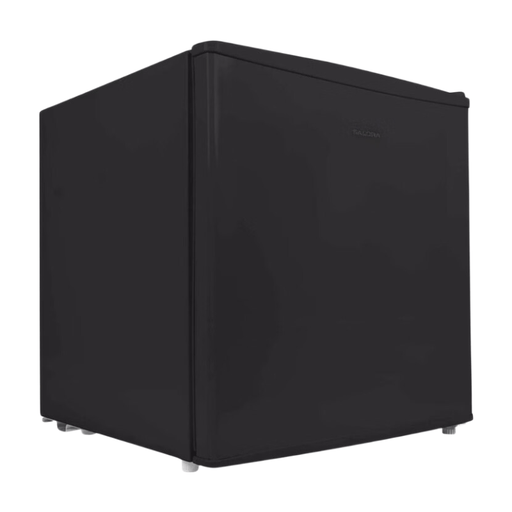 No image available
A minibar for a very small space and a limited amount of chilled food.
43-litre capacity; external dimensions of 49,2 × 47,2 × 45 cm; metal shelf and dial temperature control.
Stated noise level of 41 dB.
 No image available
A compact fridge with shelves for organising portions of cheese and other chilled items.
90-litre capacity; three adjustable glass shelves; dimensions of 449 × 485 × 842 mm.
According to the product description, the separate chiller box has a temperature range of −5 to 5 °C. Follow the cheese packaging for storage advice and check the temperature where you keep the cheese.
 No image available
A compact freestanding model for portions of cheese and everyday groceries when width is limited.
92-litre capacity; stated width of 47 cm; adjustable glass shelves and reversible door.
Energy class E and 85 kWh per year; stated noise level of 39 dB.
Follow the instructions on the cheese packaging and check the fridge with a thermometer. The Netherlands Nutrition Centre recommends setting your fridge to 4 °C and specifically lists soft cheese as a food that should be kept chilled.
For 40+ cheese, the Netherlands Nutrition Centre recommends a sealed wrapper, preferably cheese paper or reusable food wrap. Advice can vary depending on the cheese and product; if it comes in sealed packaging, follow the instructions on the label.
Don’t assume you can: the ventilation clearance required varies by model. Check the installation manual for the exact appliance and measure the space needed to open the door too.
Compare the current EU energy label and the annual kWh figure for the exact models. The European Commission states that the energy label scale for household fridges has run from A to G since 1 March 2021; an old A+ label is not part of the current scale.
The Dutch Government describes a ‘like-for-like’ scheme under which a retailer must take back an old, similar appliance free of charge, including for online purchases. Check in advance how the handover will be arranged at delivery.