First, choose enough accessible fridge space for the cheese portions you’ll eat soon, then assess the freezer separately based on what you actually want to freeze. The Netherlands Nutrition Centre gives different storage advice for hard cheese and soft cream cheese, so extra freezer space isn’t equally useful for every type of cheese. Next, compare the external dimensions, the capacity of each compartment and the annual energy consumption shown on the energy label.
Who is this guide for?
Store portions from your class for the next few days
You want to keep opened cheese sealed and easy to find in the fridge after your class. The Netherlands Nutrition Centre gives storage advice for each type of cheese and recommends setting your fridge to 4 °C.
Short on kitchen space?
You’re looking for a fridge-freezer with external dimensions, a door and an interior layout that suit your space, without more capacity than you need. The Dutch Consumers’ Association and Beko highlight size and dimensions as important considerations; make sure you measure the space where the appliance will go, too.
Want to keep suitable cheese for longer?
You want useful freezer space as well as everyday fridge capacity. First check whether your type of cheese is suitable for freezing: the Netherlands Nutrition Centre says soft cream cheese is less suitable for the freezer.
What should you consider when choosing?
Compact freestanding fridge-freezer
Ideal for: a small space and a limited supply of food; compare the external dimensions and the capacity of both compartments.
Bear in mind: a narrower appliance may leave less room for other groceries. Beko lists the RCHE300K40WN as 54 cm wide; also measure the space needed for the door and drawers.
More fridge and freezer space
Ideal for: a larger supply of groceries or cheese that’s suitable for freezing; compare the fridge and freezer capacities separately.
Bear in mind: extra capacity takes up space. The Netherlands Nutrition Centre says soft cream cheese is less suitable for the freezer, so don’t choose based on freezer capacity alone.
Consider noise and energy use
Ideal for: a kitchen close to your living area or frequent daily use; compare models of a suitable size by their noise information and annual energy consumption.
Bear in mind: a stated noise level doesn’t tell you what an appliance sounds like in person. Bosch lists 35 dB for the KGN36VICT, while Liebherr lists 34 dB for the CBNsda 5223.
The Netherlands Nutrition Centre recommends keeping cheese chilled and setting your fridge to 4 °C. So first choose a practical layout for the portions you’ll keep chilled. Then compare freezer space, dimensions and stated annual energy consumption.
| What to consider |
What should you look for? |
Who is this most important for? |
| Chilling and finding portions |
Look at the layout of the fridge compartment and, once the appliance is installed, use a thermometer to check that the fridge reaches 4 °C. |
If I want to find several wrapped portions after my class, I look for an organised layout and the right temperature. Around 36% of consumers prioritise everyday chilling and storage. |
| Suitable size |
Measure the space where the appliance will go and check its external dimensions, as well as the room needed for the door and drawers. Also check the fridge and freezer capacities separately. |
With limited kitchen space, I want to know whether the appliance will fit without sacrificing the fridge space I need. For around 29% of consumers, finding a suitable spot for the appliance is the main priority. |
| Freezer space for cheese |
First decide which type of cheese you want to freeze. Then compare the freezer capacity and, for larger quantities, the freezing capacity per 24 hours. |
If I want to keep portions for longer, I first check whether my type of cheese is suitable for freezing. Around 21% of consumers prioritise useful freezer space. |
| Energy use and noise |
For models of a suitable size, compare annual energy consumption in kWh and the noise information on the energy label. A stated dB figure doesn’t tell you what an appliance sounds like in person. |
If the fridge-freezer is close to my living area, I consider its stated noise level as well as its energy use. Around 14% of consumers prioritise energy use and noise. |
Common buying mistakes
-
Assuming freezer space is suitable for every type of cheese
The Netherlands Nutrition Centre gives different advice for hard 40+ cheese and soft cream cheese; the latter is less suitable for the freezer.
Think about which cheese you’ll actually be storing, then choose a balance of fridge and freezer space to suit.
-
Looking only at the total capacity
The fridge and freezer capacities answer different questions. The external dimensions and the space needed for the door and drawers also need to suit your kitchen.
Compare the capacity figures for each compartment and measure the space where the appliance will go. Also check the installation instructions for the exact model.
-
Ignoring annual energy consumption when comparing models
The energy label shows annual energy consumption. Models that suit your needs in terms of size and capacity may differ in this respect.
Compare the annual energy consumption in kWh of appliances that meet your space and capacity requirements; your own electricity tariff will also affect the cost.
Brands and models to consider
The features listed below apply to the specific models shown and are provided by their manufacturers. They aren’t an independent performance test or an endorsement of the brand as a whole.
Beko
The RCHE300K40WN is a freestanding model worth comparing if a narrower appliance would suit your space.
- Beko lists this model as 54 cm wide and featuring No Frost.
- Beko lists it as energy class E. Also check the layout and energy use to see if they suit your needs.
Inventum
The KV1840S is a freestanding model worth comparing if you’re considering the fridge and freezer capacities separately.
- Inventum lists 221 l of fridge space, 106 l of freezer space, energy class C and No Frost.
- Check that the external dimensions and layout suit your supplies and the space available.
Bosch
The freestanding KGN36VICT is worth a look if adjustable compartments, No Frost and stated noise levels matter to you.
- Bosch lists this model as having 218 l of fridge space, 103 l of freezer space, energy class C and a noise level of 35 dB.
- The stated dimensions are 1860 × 600 × 665 mm; check that the appliance will fit. Manufacturer information isn’t an independent performance test.
Liebherr
The CBNsda 5223 is worth comparing if total capacity, No Frost and the stated noise level matter to you.
- Liebherr lists a total capacity of 320 l and a noise level of 34 dB.
- Liebherr describes the BioFresh zone, which is kept at around 0 °C, as suitable for foods including meat and milk. Don’t assume this means the zone is suitable for every portion of cheese.
Fridge-freezers at Joybuy
These models are options to compare for keeping cheese portions chilled, with your available kitchen space and preferred fridge and freezer layout in mind.
 No image available
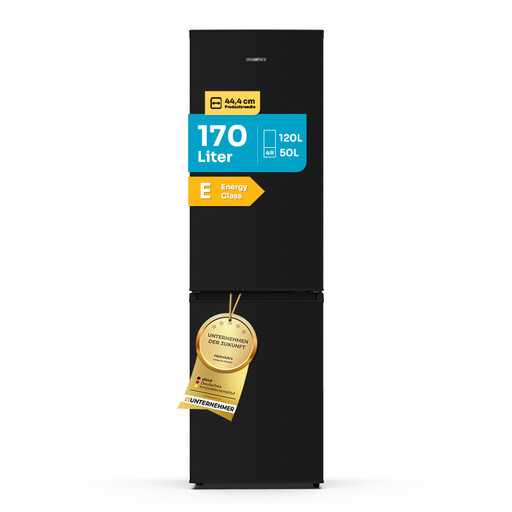
Heinrich´s fridge-freezer, 170 l, energy class E, black
An option to compare if you want to keep chilled portions and use a separate freezer compartment in one appliance.
Listed features: 120 l of fridge space, 50 l of freezer space, 40 dB and energy class E.
View at Joybuy
 No image available
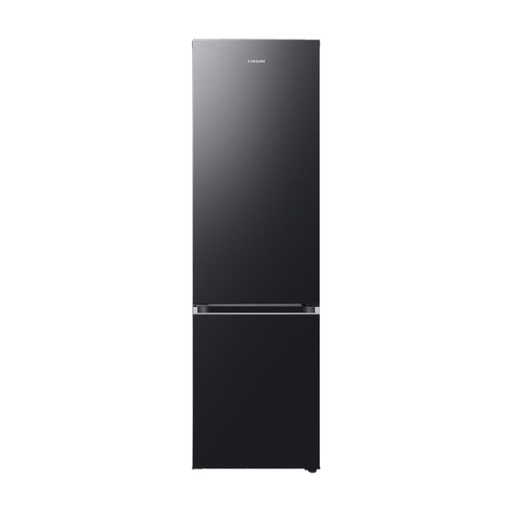
Samsung RB38C607AB1/EF, energy class A, Premium Black Steel
An option to consider if energy class is important to you. Check that the dimensions and layout of this version suit the amount of food you store.
The product name lists energy class A and Premium Black Steel.
View at Joybuy
 No image available
TCL RF338BSE0, 187 l of fridge space, 73 l of freezer space, 55 cm
An option to compare if you’re looking for a fridge-freezer with a stated width of 55 cm; measure the full space available.
The product name lists energy class E and a reversible door. According to the product information, this model needs to be defrosted manually.
View at Joybuy
 No image available
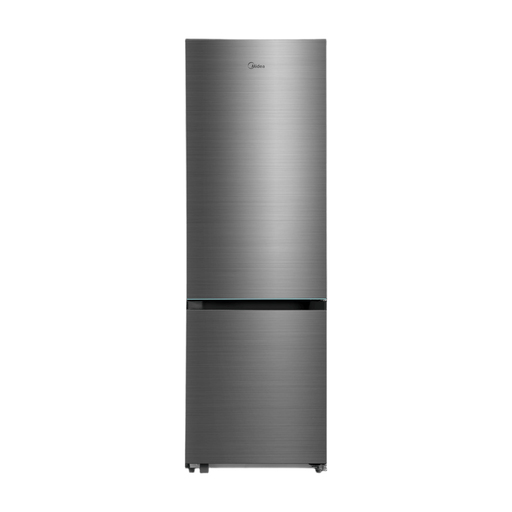
Midea MDRB457FGE46, 330 l, Total Frost Free, energy class E, Inox
An option to compare if you want to store other groceries as well as chilled portions; check the capacity of each compartment separately.
The product name lists 35 dB and an inverter compressor.
View at Joybuy
 No image available
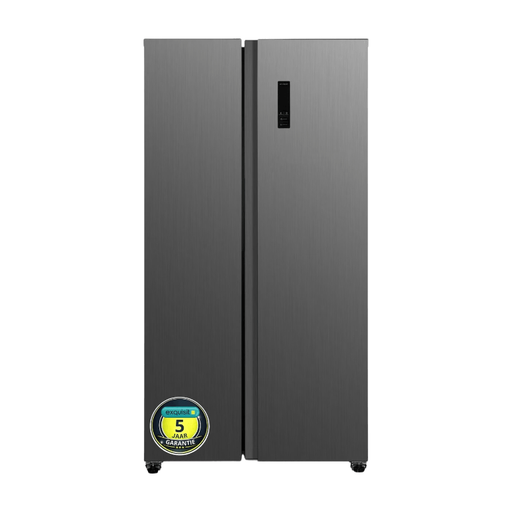
Frilec CDJ445-041EG fridge-freezer
An option to compare if you want to weigh up the shelf layout and available fridge and freezer space against the amount of food you store.
The product name lists Frost-Free Operation and adjustable shelves.
View at Joybuy
Frequently asked questions
Should all cheese portions go in the freezer after class?
No. Store cheese according to the advice for that particular type, and follow the label if it’s in a sealed pack. The Netherlands Nutrition Centre says opened hard 40+ cheese can be frozen, but soft cream cheese is less suitable for the freezer.
How do I check the temperature after installation?
The Netherlands Nutrition Centre recommends setting your fridge to 4 °C and your freezer to at least −18 °C. Place a fridge thermometer in the middle of the bottom shelf and check it after half a day or overnight. Adjust the setting if needed.
What should I look for on the energy label and when comparing energy use?
Compare the stated annual energy consumption in kWh of appliances that are the right size and have enough capacity for your needs. The energy label also gives information about fridge and freezer capacity and noise; your actual electricity costs will also depend on your tariff.
What warranty and old-appliance disposal arrangements apply to purchases in the Netherlands?
According to the Dutch Government, you’re entitled to a product that works properly and should contact the seller first if there’s a fault; there is no fixed statutory warranty period that applies to all products. When you buy a new, similar appliance, the free take-back scheme for your old one also applies to online purchases. Ask the seller how collection will be arranged when your new appliance is delivered.


