
Photographers who want true-to-life cheese colours
If you take photos under lamps, you’ll want to be able to correct a warm or green colour cast. Canon Europe explains how different light sources can affect the colours you see.


When photographing a cheese board under artificial light, your choice of camera starts with controlling the light and white balance: a different camera body won’t correct a colour cast on its own. A suitable kit zoom may be enough for a wide shot; for fine textures, compare the focusing distance and magnification of the specific lens. A tripod helps keep your composition steady when using a slower shutter speed.
If you take photos under lamps, you’ll want to be able to correct a warm or green colour cast. Canon Europe explains how different light sources can affect the colours you see.
If you photograph the whole cheese board from a fixed angle, consider framing, depth of field and a stable setup. Cameranu explains how a tripod helps you keep your composition steady while adjusting the exposure or setup.
If you want to capture textures up close, compare the focusing distance and magnification of the specific lens. These features vary by lens and can also depend on the zoom setting.
Colour under artificial light, framing the whole board and focusing on fine details each require different checks. Canon Europe explains how different types of lamps can create a warm or green colour cast, so take a test shot under the lighting you’ll actually use.
| What to consider | What should you check? | Who is this important for? |
|---|---|---|
| Colour under artificial light | Check the camera model’s white balance settings and take a test shot under your own lights. | If I take photos under different lights, I want to be able to correct the colour cast rather than expect more megapixels to fix it. Around 33% of consumers put colour accuracy first. |
| Sharp wide shots | Check whether the supplied lens’s wide-angle setting can capture the whole board from the space you have available; also check that your setup can remain stable. | When I photograph the whole board from the space around the table, I want to frame the composition well and capture it sharply. Around 27% of consumers prioritise a sharp wide shot. |
| Fine details | Compare the focusing distance and maximum magnification of the exact lens and zoom setting. | For a close-up of something like a cheese rind, I want to know how large the details will appear in the frame. Around 20% of consumers prioritise fine details. |
| Kit contents and components | Check whether your chosen variant includes a lens and any other components you need; also check which lens mount you’ll need if you plan to expand your kit later. | If I want to choose a complete set for my needs, I want to know in advance which components are included and what else I need. Around 20% of consumers prefer a complete set. |
A colour cast is linked to the light source and the white balance you choose; more pixels won’t correct it on their own.
Compare the white balance options and take a test shot under the lights you use for your cheese board.
Focusing distance and maximum magnification vary between specific lenses and can differ depending on the zoom setting.
Before choosing a kit, compare those lens specifications with the size of the textures you want to photograph.
If the kit lens can’t show the details at the size you want, you may need a suitable separate lens.
The included components can vary between offers, even when the camera name is the same.
Read the contents of the exact kit and check that it includes the lens and any other components you need.
The product description for the Sony ZV-E10 with 16–50mm zoom states that the mains adapter/charger and SD card are not included.
The EOS R50 with RF-S 18-45mm is a kit option for wide shots and changing compositions.
The ZV-E10 II kit with SELP16502 is worth considering if you want to make product videos as well as take photos.
The Z50II with NIKKOR Z DX 16-50mm is a kit option for wide shots and modest close-ups.
This selection from Joybuy includes a camera with a wide-angle lens for a broad composition, and a Sony camera with a 16–50mm kit zoom for flexible framing.
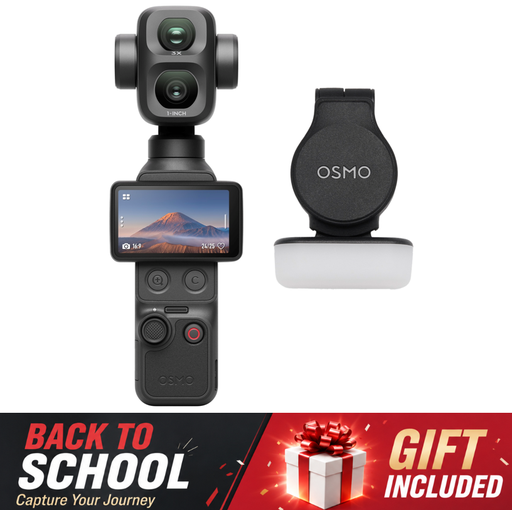 No image available
The listed 20mm wide-angle lens is suited to capturing a broad composition of the cheese board.
The product description lists a 1-inch CMOS sensor and a 20mm f/2.0 wide-angle lens.
 No image available
The included 16–50mm kit zoom offers different angles of view for framing the cheese board.
The product description lists a 24.2MP APS-C sensor and an E PZ 16–50mm kit lens.
According to the product description, the mains adapter/charger and SD memory card are not included.
Set the white balance to suit the light you’re using and check a test shot. Canon Europe explains that different types of lamps can create a colour cast; according to the information provided, shooting in RAW gives you more scope to adjust the white balance afterwards.
Not necessarily: a suitable kit zoom can capture the whole composition. For fine details, compare the focusing distance and magnification of the specific lens before choosing another one.
A tripod helps keep your composition steady and makes it more practical to use a slower shutter speed with a smaller aperture. Also check that the light illuminates the scene evenly.
For a consumer purchase, the seller must provide a solution under the statutory guarantee, according to the Dutch government. The Netherlands has no fixed statutory guarantee period; what you can expect from a product depends, among other things, on the product itself and the information provided at the time of sale.
For a distance purchase from a business, you generally have a 14-day cooling-off period, according to the Dutch government. Before placing your order, check the seller’s information about the terms that apply to your purchase.