
People managing shared charging cables
You want to quickly identify cables moved around by visitors and staff. Brother describes flexible ID tape for use as a flag or wrap on cables.


Start with the tape and how the label will be attached to the charging cable. Brother describes flexible ID tape for use as a flag or wrap, while Brady lists self-laminating cable wraps for specific compatible printers. Then choose a printer that supports the cassette you want and suits the way staff will enter text. The material applications mentioned come from manufacturers; they are not based on independent durability testing.
You want to quickly identify cables moved around by visitors and staff. Brother describes flexible ID tape for use as a flag or wrap on cables.
You want to add a name to a cable without having to use a phone or computer first. A printer with its own keyboard could be a good fit; Brother lists this type of operation for the PT-E110VP.
You make labels for shared equipment as well as cables, and want to weigh up your input and tape options. According to Brother, the PT-D610BTVP has a keyboard and USB and Bluetooth connections.
First, choose a label format to suit the cable and how it will be used. Then compare cassette compatibility and the way staff will enter text.
| What to consider | What should you check? | Who is this most important for? |
|---|---|---|
| Label on a cable that gets moved around | Check whether the tape is designed for cable flags or wraps and is compatible with the printer. Brother describes both uses for Flexi-ID tape. | If charging cables are moved around often, I want the label to remain legible and the chosen format not to get in the way. Around 36% of consumers prioritise a cable-friendly attachment method. |
| Different staff members using the printer | Check whether you need a keyboard on the printer or whether entering text on a phone or computer suits the way you work. | When volunteers need to enter a cable name on site, ease of use matters more than extra connectivity options. Around 29% of consumers prioritise on-site operation. |
| Redesigning labels | Check whether the model offers the input or formatting options you need if you use the same names repeatedly or make several types of label. | If we often make the same labels or also mark shared equipment, I want to be able to repeat designs easily. Around 21% of consumers prioritise repeatable designs. |
| Cassettes and ongoing costs | Compare the exact cassette code, printer compatibility, width and contents; different brands use different systems. | When ordering replacements regularly, I want to know which cassette fits the printer before choosing a system. Around 14% of consumers prioritise the right cassette and ongoing costs. |
A printer kit may include standard tape, while cables may need a different label format or a flexible material. For example, DYMO describes flexible nylon as a cable material, while Brother sells flexible ID tape separately.
Before buying, check which cassette is included and the code of the tape you want to use for cables.
A cassette needs to match the printer’s stated compatibility, not just its dimensions. Brady lists specific compatible printers for its cable cassette.
Before ordering tape, check the exact printer model, cassette code and supported width.
Epson Netherlands lists the LabelWorks LW-Z710 and LW-600P as discontinued products. So an existing product page does not mean that model is still available.
Check the current version of any alternative and whether the corresponding tape is suitable for it.
Brother offers handheld and desktop printers, among other options. For cable marking, the brand describes flexible ID tape from its TZe range.
Brady lists the M210 as a portable printer and specifies self-laminating cable wrap cartridges for certain compatible models.
DYMO describes the Rhino 4200 as a handheld printer with shortcut keys for formats including wraps and flags.
Epson’s LabelWorks models offer options for cable labelling, but the Dutch product pages for the LW-Z710 and LW-600P state that these models have been discontinued.
These label printers suit some of the requirements, such as entering labels on site or creating repeatable identification labels. For charging cables, always check that the cassette you choose is suitable for the intended use and compatible with the exact model.
 No image available
Suitable for entering text on a phone or tablet via Bluetooth; the product information does not mention cable-specific tape.
Supports TZe tape. The stated print speed is 20 mm/sec.
 No image available
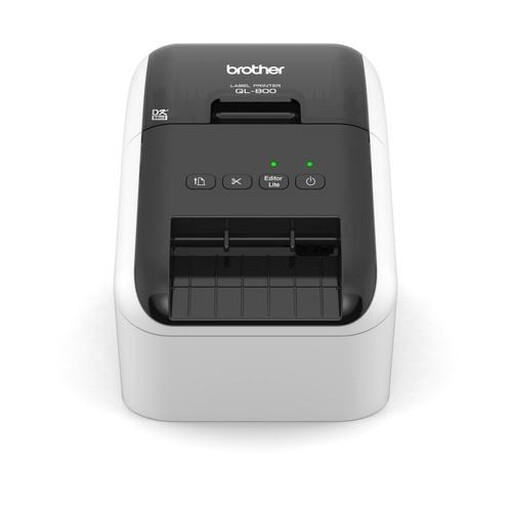
Could suit recurring identification or inventory labels where USB input or barcodes are useful; the available product information does not mention cable-specific tape.
Uses DK tape and has a wired USB connection.
 No image available
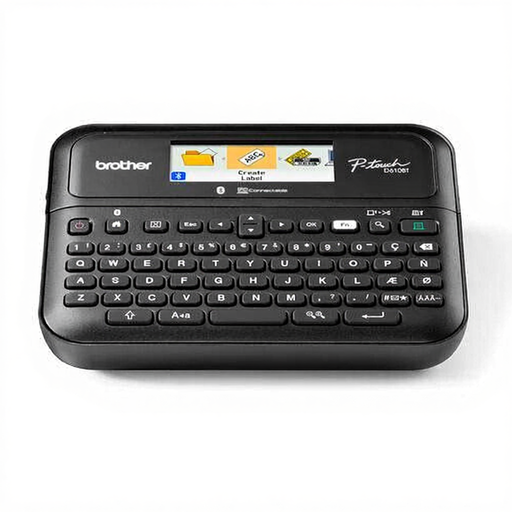
Suitable for shared use when staff want to enter labels using the keyboard or a connected device; check which cassette is suitable for cable use.
Supports TZe tape and, according to Brother, has a keyboard, USB and Bluetooth. The product name lists 180 × 360 DPI and 30 mm/s.
 No image available
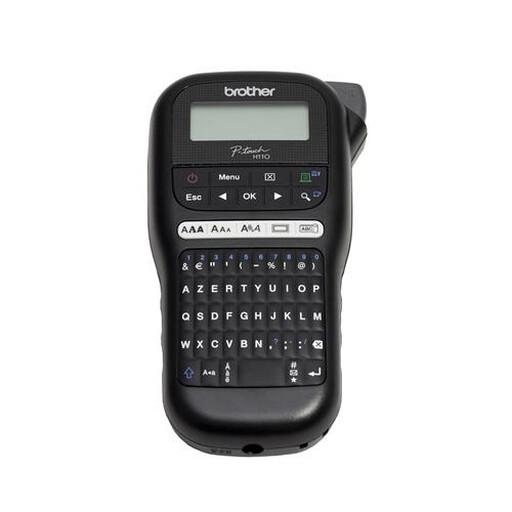
Suitable for entering text on site without needing to use a phone or computer; check that the version and keyboard layout suit the users.
The product information lists an LCD screen and support for TZe tape from 3.5 to 12 mm wide.
 No image available
Could suit repeat product labels and barcodes, but the described process requires the Print Master app on an iOS or Android device.
The product information lists label widths of 20–50 mm, batch printing and a rechargeable battery. Cable suitability is not specified.
A flag sticks out from the cable with the text on it, while a wrap goes around the cable. Brother describes both uses for Flexi-ID tape. Choose based on the space available and how easy you want the label to be to read; this is not an independent comparison of durability.
Don’t assume so: Brother describes TZe-FX211 as flexible ID tape for cables and lists it as compatible with P-touch printers bearing the TZ or TZe logo. Also check the supported width and compatibility of the exact cassette.
Not necessarily: for individual labels entered by volunteers on site, a keyboard on the printer may be enough. Bluetooth or USB may be useful if staff also want to create designs on a phone or computer, or make several types of label.
Make a note of the exact cassette code and check printer compatibility, width and contents before ordering. Brother, Brady and DYMO materials are not interchangeable.
An electrical label printer placed on the market in the Netherlands must carry the applicable CE marking. The Netherlands Food and Consumer Product Safety Authority and Ondernemersplein outline the relevant requirements for electrical products; check the product information for the specific version. A CE marking on its own is not a real-world test of the printer.