
Vandaag of morgen in huis

Kwaliteit gegarandeerd

Welkomstaanbiedingen ontgrendelen: GRATIS bezorging | Tot 80% korting | Gratis 30 dagen JoyPlus-proefperiode
Download de app
Choosing a new charger seems straightforward: check the wattage, check the connection and place your order. In practice, problems often arise because of hidden limitations. For example, a fast charger won’t automatically charge every device at its maximum speed. A 22 kW charging station at home can’t necessarily be connected to every electrical installation either.
These tips will help you compare chargers and charging stations for home, the office, when you’re out and about, or for your electric car.
A 65W USB-C charger may be suitable for a laptop, but only if the laptop supports USB-C Power Delivery and accepts the right charging profile. A smartphone may then draw much less power. So, the highest wattage on the packaging doesn’t guarantee the fastest charging speed.
The same applies to electric cars. A 22 kW charging station can only charge at that capacity if the car, cable and electrical installation support it. For example, the car’s onboard charger may be limited to 11 kW.
Always check the connector and charging protocol. A Samsung charger with a USB-C output works with many USB-C devices, but the charging technology available varies by model. If you have an iPhone with magnetic attachment, you may need a MagSafe charger. A wireless charger without the right support may supply power, but not at the speed you expect.
For electric cars, check for the Type 2 standard. This connection is widely used in Europe for AC charging, but charging capacity varies by car and installation.
A compact adapter is handy when travelling, but a cable with damaged insulation, a loose connector or insufficient current capacity can cause problems. For a car charger, you should also check that the car’s connection and the socket are suitable.
For a home charging point, the consumer unit, earthing, cable thickness, residual current protection and mains connection are all important. Have a fixed EV charging station installed and commissioned in accordance with the instructions by a qualified electrician.
For smartphones, 15W to 25W is often a practical choice, depending on the device. A tablet or laptop usually needs more. A smartphone and laptop charger should ideally have USB-C Power Delivery and enough power for the most demanding device you want to connect.
A multi-port charger may share its available power between several ports. So check not only the total power, but also the maximum power per output and when using multiple ports at the same time.
For wireless charging, the phone, charger and power adapter all play a part. According to Apple’s product information, the Apple MagSafe Wireless Charger supports up to 15W with compatible devices. The same product information states that older models may use less power.
Before buying, check:
According to the product specifications, a Samsung 25W charger with a USB-C cable is designed for USB-C devices and delivers up to 25W. That doesn’t mean every USB-C device will use this amount of power.
For indoor use, protection against overheating, overcurrent and short circuits are important things to check. For outdoor use, look at the IP rating, protective cover and installation location. An IP rating doesn’t mean you can expose a device to water in all conditions.
For a smart charging point, also check the Wi-Fi, Bluetooth, app support, RFID and scheduling features. According to the product information for various models, these features may depend on the network connection, configuration and electrical installation.
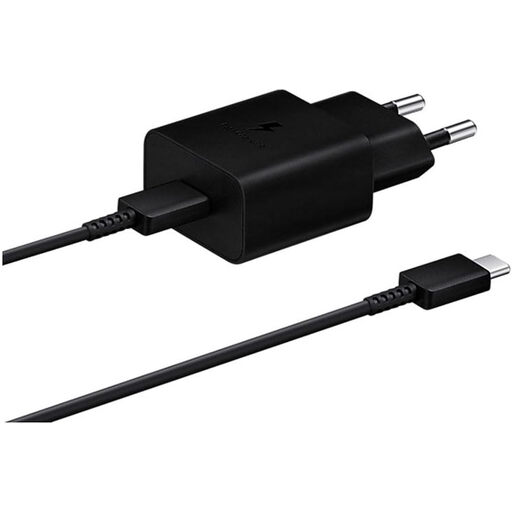
Why it suits this profile: A straightforward choice for everyday use with a smartphone, tablet or smartwatch, with a 1-metre cable included.
The specifications clearly state 15W, one USB-C output and compatible devices. So you won’t pay for extra ports or power you don’t need.
15W output, a 1-metre USB-C cable and a compact design.
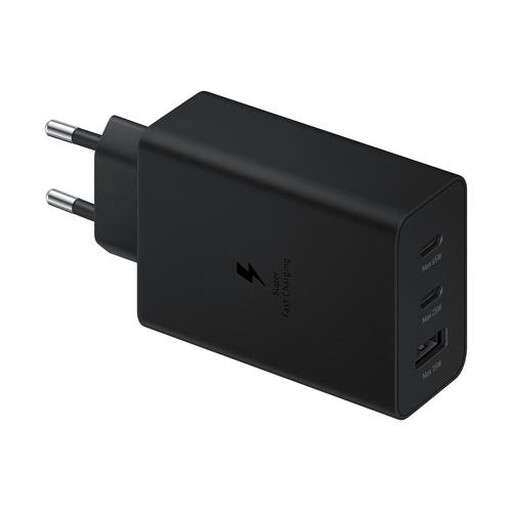
Why it suits this profile: Ideal for home workers and travellers who want to charge a smartphone, tablet and other devices with a single adapter.
The product information lists two USB-C ports, one USB-A port and how the power is divided. This makes simultaneous use easier to predict.
65W total, 2x USB-C, 1x USB-A and a foldable design.
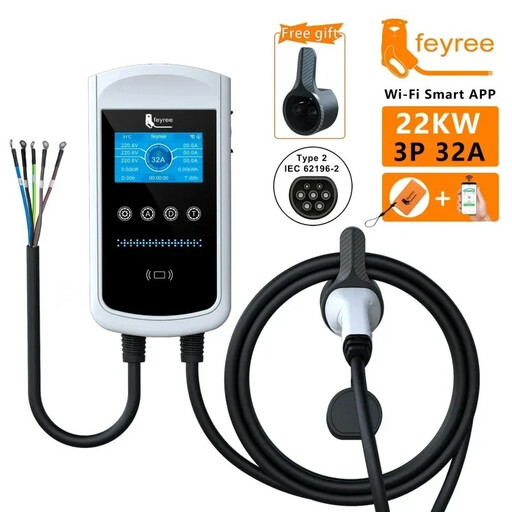
Why it suits this profile: For EV owners who want to charge a Type 2 vehicle at home and value app control, scheduling and adjustable current.
The product information lists adjustable current from 8A to 32A and highlights that actual capacity depends on the car and installation. Have the connection checked beforehand.
Type 2 connection, app control, RFID function, scheduling and several safety features according to the product description.
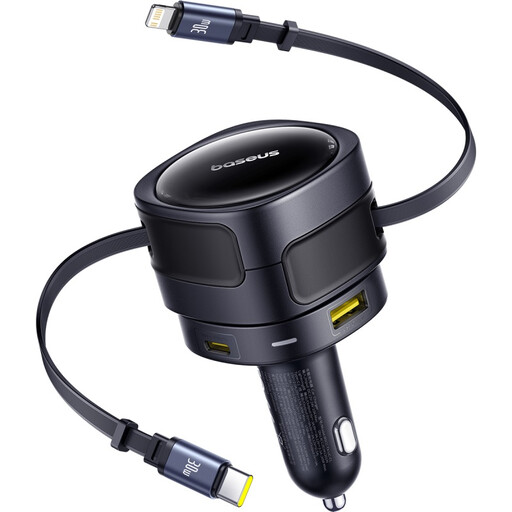
Why it suits this profile: Handy for car journeys when several passengers want to charge phones, tablets or other USB devices at the same time.
The product specifications list separate USB-C, Lightning and USB-A connections, and show how power is divided when they’re used at the same time.
Suitable for 12–24V connections, multiple integrated cables and up to 90W total according to the product information.
We’ve put together a complete, up-to-date list of products that meet these strict selection criteria and the applicable European safety requirements.
Lifespan depends on use, heat, strain on the cable and storage. Keep the adapter in a dry, well-ventilated place, don’t pull on the cable and don’t use a damaged plug. For an EV charging station, it’s a good idea to check the cable, connector and casing visually from time to time.
Charging costs mainly depend on the number of kilowatt-hours used and your electricity tariff. A charging station doesn’t automatically change the car’s energy consumption. Charging smartly during a cheaper tariff can affect the cost, if your energy supplier and installation support it.
That depends on your car’s onboard charger, the mains connection available and the installation. An 11 kW charging station typically uses a three-phase connection; 22 kW requires more capacity and may not be practical or available in every home or for every car. Have the setup checked before you order.
