
Vandaag of morgen in huis

Kwaliteit gegarandeerd

Welkomstaanbiedingen ontgrendelen: GRATIS bezorging | Tot 80% korting | Gratis 30 dagen JoyPlus-proefperiode
Download de app
Choosing a new charger seems straightforward, until you realise that not every phone charger supports the same charging standard. An adapter may advertise a high wattage, but without the right cable or compatible technology, your device will not charge any faster. Wireless chargers and battery chargers also have clear limitations that often only become apparent after purchase.
So pay particular attention to these common pitfalls:
Power is expressed in watts. For smartphones, 20 to 25 W is often sufficient, while tablets and laptops may require more power. A laptop charger with multiple ports must also divide its total power output when you connect several devices at the same time.
As well as the wattage, check which technologies are supported:
According to the product description, the Samsung 25W Efficiency Adapter supports USB-C and up to 25 W. The Samsung 45W models state that they support Power Delivery and PPS. The suitable charging speed still depends on the connected device and the cable being used.
Whether you work from home or travel regularly, you will often need several connections. A multi-charger with two USB-C ports and two USB-A ports can be more practical than four separate adapters. However, check how the total power is distributed.
The Anker 543 PowerPort Atom III states a total output of 65 W, distributed across one USB-C port with up to 45 W, one USB-C port with up to 20 W and two USB-A ports. This makes the GaN charger suitable for charging, for example, a smartphone, tablet and laptop at the same time, provided the total power consumption remains within the specifications.
A GaN charger uses gallium nitride instead of traditional silicon in its switching technology. According to the product description, this enables a slim design. On its own, this says nothing about its lifespan or performance in every real-world situation; check the technical specifications, warranty and user manual for that information.
A phone charger, battery charger and car battery charger are not interchangeable.
Pay attention to the environment too. Products intended for indoor use should be kept dry. Connect a car battery charger according to the instructions and check the polarity. A CE marking and stated protection against issues such as overheating or short circuits are useful points to check, but always use the product according to the manual.
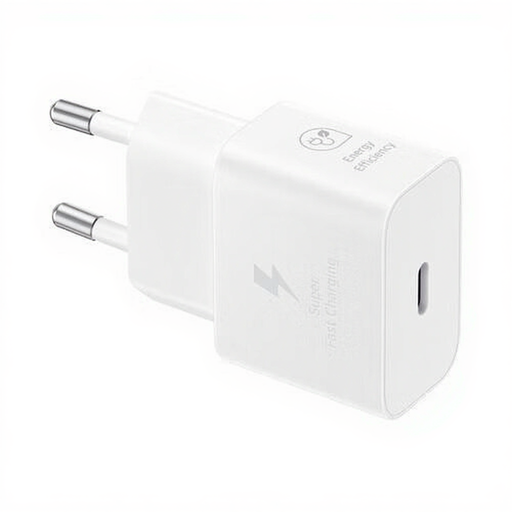
Why it suits this profile: A straightforward choice for anyone looking for one compact adapter with a cable for a USB-C smartphone.
The maximum power output and included cable are clearly stated. However, check that your device supports 25 W and the correct charging technology.
25 W output, one USB-C port and a 1-metre cable.
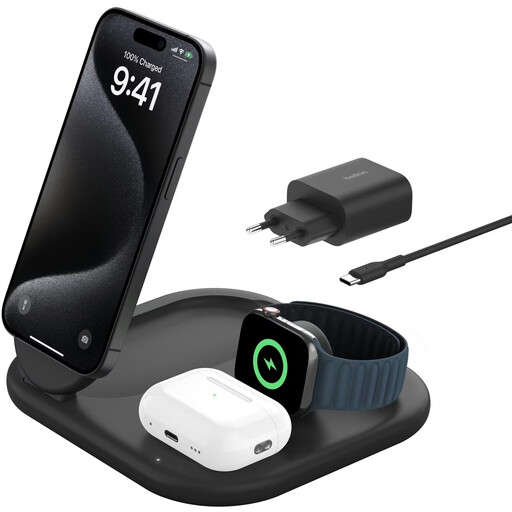
Why it suits this profile: Ideal for a dedicated desk or bedside table where an iPhone, Apple Watch and AirPods can be charged together.
Compatibility is specifically described for MagSafe-compatible iPhones, Apple Watch and AirPods with a wireless charging case.
Qi2 up to 15 W, three charging positions, foldable design and an included USB-C cable.
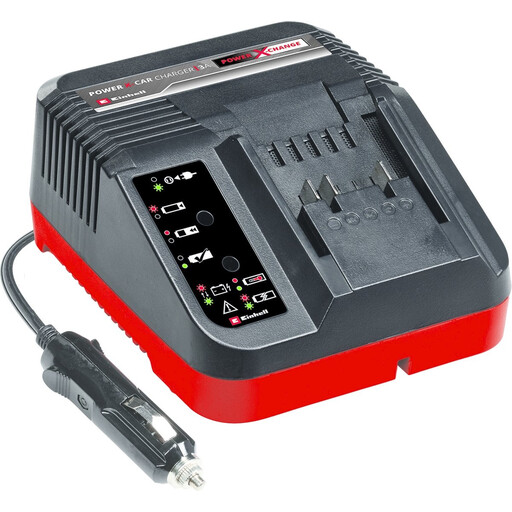
Why it suits this profile: Convenient for users of Einhell Power X-Change tools who want to charge batteries on the move in a car or caravan.
The charger is designed for Power X-Change lithium-ion batteries and not for batteries from other brands. This makes the compatibility limits clear.
12V connection, 3A charging current, seven-stage LED status indicator and car battery protection according to the product description.
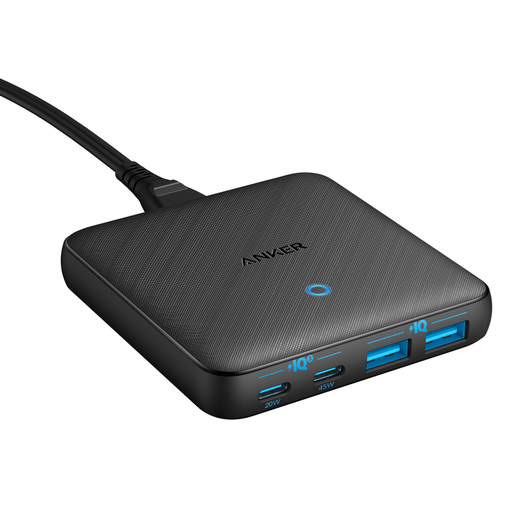
Why it suits this profile: A practical solution for a desk, hotel room or hand luggage with several USB devices.
The port layout and total power output are specified. This allows you to assess in advance which devices can be connected at the same time.
Two USB-C and two USB-A ports, 65 W total and a slim design with GaN technology according to the product information.
We have put together a complete, up-to-date list of products that fully meet these strict selection criteria and the applicable European safety regulations.
First, check your phone’s connection and charging protocol. For modern devices, a USB-C charger with Power Delivery is often suitable. Samsung users should look for PPS and the required wattage. For iPhones with magnetic alignment, a MagSafe charger or compatible Qi2 charger may be suitable options.
No. Your phone, tablet or laptop determines how much power it draws. An adapter rated at 45 W can therefore charge a device that requires less power without any problem, but it will not automatically charge it faster than the device supports. Also use a cable that is suitable for the required power.
Its lifespan depends on heat, cable strain, moisture, frequency of use and storage. Keep chargers dry, avoid sharp bends in cables and do not use an adapter with a damaged casing or cable. For a battery charger or car battery charger, it is also important to use only the specified battery type and voltage.
