
Artist reproducing their work
You want to capture tonal variations as evenly as possible across the whole sheet. The Canadian Conservation Institute describes lighting from either side as a starting point for illuminating a surface evenly.


Don’t automatically opt for a complete softbox kit. First check whether the window light illuminates the drawing evenly and whether you can recreate the shot later under similar conditions. A single dimmable softbox light can help brighten a darker side, while a controlled setup with lights on either side is more suitable when an even reproduction is the priority. The Canadian Conservation Institute describes lights positioned on either side at around 45 degrees as a starting point. Assess the lighting on the paper itself, and check that the light, softbox, power supply and stand are compatible.
You want to capture tonal variations as evenly as possible across the whole sheet. The Canadian Conservation Institute describes lighting from either side as a starting point for illuminating a surface evenly.
You photograph your work by a window, but want to be able to brighten the darker side and recreate the setup at different times. An adjustable light can give you more control.
You want to capture the charcoal strokes and paper surface without touching the work unnecessarily or exposing it to light for too long. The Library of Congress warns that contact can disturb powdery materials such as charcoal.
Choose this when: a test shot shows that the drawing is lit evenly enough and you don’t need to recreate the lighting later.
The trade-off: you won’t need an additional light, but you’ll have less control when the natural light changes.
Choose this when: you mainly want to brighten a darker side and see how the extra light falls as you set up.
The trade-off: one light doesn’t guarantee even illumination across the whole sheet, and stated light output figures don’t necessarily apply when using a softbox.
Choose this when: an evenly lit reproduction matters more than a compact setup. The Canadian Conservation Institute describes lights on either side at around 45 degrees as a starting point.
The trade-off: this setup needs more space and may require a second light, light modifier and stand. Raking light is a separate technique for showing surface texture.
| What to consider | What should you check? | Who is this most relevant to? |
|---|---|---|
| Even lighting | Take a test shot of the whole sheet and assess the centre and corners. Check whether the softbox can illuminate the required area from the distance available. | I want to assess the tones across the whole piece accurately. Consumers who prioritise even lighting account for around 36% of those making this choice. |
| Control when window light changes | Check whether the light you choose is dimmable and, if needed, lets you adjust the colour temperature. Note down the settings and compare test shots. | When daylight changes, I want to be able to adjust and reproduce the additional light. Consumers who put this control first account for around 29%. |
| Texture and protection of the artwork | Decide whether you also want a separate photo to show the texture. Keep the stand and diffuser fabric away from the paper, and avoid unnecessary exposure to light. | I want to capture the charcoal or paper texture separately without putting unnecessary strain on the delicate original. Consumers with this priority account for around 21%. |
| A compatible, complete setup | Check that the light and softbox fittings are compatible, what’s included in the package and the power requirements of the exact version. Also check that the stand can support the assembled setup. | I want to know in advance whether the components will work together as a practical setup. Consumers who prioritise ease of setup and completeness account for around 14%. |
Godox lists the SB-FW6090 as a softbox and the SL60IIBi separately as a light. They are not the same product.
Check what’s included with each listing and whether the softbox and light fittings are compatible.
A figure given for a specific distance and reflector doesn’t tell you how evenly a softbox will light your drawing.
Only compare figures measured on the same basis, and assess your own setup with a test shot.
A single light doesn’t guarantee even illumination across the whole sheet. Raking light also highlights different surface textures from those shown in an evenly lit overall shot.
First decide whether you want a reproduction or a separate photo of the texture, then choose your lighting setup.
The Canadian Conservation Institute says light can cause paper and some materials to fade or become damaged. The Library of Congress warns that contact can disturb powdery charcoal.
Prepare your camera and lighting in advance, avoid unnecessary exposure to light, and keep materials away from the surface of the artwork.
Godox offers both standalone softboxes and adjustable lights, which may be worth considering if you want to combine the components yourself.
The amaran 100x S is an adjustable continuous light for anyone who wants to set the colour temperature and brightness alongside window light; the softbox is a separate choice.
The European version of the RC 120B is an adjustable continuous light with a Bowens mount, designed to be paired with a separate softbox.
This selection is intended as additional lighting alongside window light. Check separately whether your setup also needs a suitable softbox, mount and stand.
 No image available
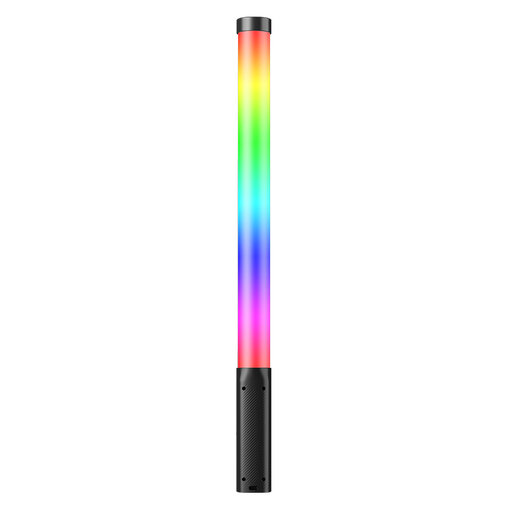
May be useful as an additional light source when you want to position extra lighting alongside window light for a shot.
The product name specifies 10W and RGB.
Start by taking a test shot of the whole sheet. The Canadian Conservation Institute describes lights positioned on either side at around 45 degrees as a starting point for even illumination. Adjust their position to suit your work and check the result.
If needed, take a separate shot using raking light. This type of lighting highlights surface texture, but serves a different purpose from an evenly lit overall shot. Don’t touch powdery charcoal with fabric, a holder or protective film.
Place the work on a clean, supportive surface and move it as little as possible. Don’t leave it by the window unnecessarily: the Canadian Conservation Institute says light can damage paper and some of the materials used. The work’s exact sensitivity will depend on the piece.
According to ACM ConsuWijzer, the statutory guarantee applies when a product doesn’t perform as you could reasonably expect during normal use; the seller must then provide an appropriate solution free of charge. Online purchases often also come with a 14-day cooling-off period from delivery, subject to legal exceptions.
No, not on every product. The European Commission says CE marking is required only for product categories covered by applicable harmonised EU rules that require it. Assess the light and any power supply separately from a non-electrical softbox, and check the documentation for the exact version.