Start with even lighting, a stable camera setup and a test shot to compare with your drawing. A smartphone or compact camera may be all you need if it captures the paper colour and charcoal tones well. A mirrorless camera gives you more choice of lenses if you often want to photograph details or crop your images. When choosing, consider the lens, lighting, support and any post-processing you may need—not just the number of megapixels.
Who is this camera guide for?
Artists who want to publish accurate tones
You want the white paper, subtle charcoal gradients and dark areas to remain true to the original. A manageable lighting setup and a test shot next to the original help you judge whether the image looks right. The Canadian Conservation Institute describes using even lighting, with light sources on either side.
Creators of detailed product photos
You want to show not only the whole drawing, but also the charcoal strokes and paper texture. Your preferred crop, lens and working distance all influence your choice, so test the camera from the distance you’ll actually use.
Online shop owners with a regular photography workflow
You photograph artwork regularly and want to be able to set up the lighting and framing in the same way each time. If you’re creating a permanent setup, allow for the space it will need and consider the camera equipment you already own.
What should you look for when choosing?
First, see whether your existing phone or camera can take a usable test shot. Then consider detail shots, consistency and the cost of a complete, workable setup.
| What to consider |
What should you look for? |
Who is this important for? |
| Paper colour and charcoal tones |
Use even lighting and compare a test shot of both the light and dark areas with the original. |
If you want the paper and tonal transitions to look true to life, colour accuracy should be your first priority. Around 33% of consumers prioritise faithful tones. |
| Full and detail shots |
Check the angle of view and focusing distance at the zoom setting you plan to use. |
If you want to show both the whole sheet and the charcoal strokes, check that the image is sharp from your working distance. Around 27% of consumers put visible detail first. |
| A consistent workflow |
Test whether you can repeat the lighting, camera position and framing for your next shot. |
If you photograph different pieces regularly, a fixed setup helps you follow the same process each time. Around 20% of consumers prioritise consistency. |
| Cost of the complete setup |
Check what’s included in the kit, the lens mount, and what lighting and support equipment you already have. |
If you want to keep your complete photography setup within budget, don’t consider the camera body alone. Around 20% of consumers prioritise the total cost of the kit. |
Common buying mistakes
-
Comparing megapixels alone
A higher megapixel count doesn’t, by itself, tell you whether the paper colour, charcoal tones and details will look right in your online shop photos.
Start by taking a test shot of your own drawing, including its edges and dark areas, then assess it at the size you’ll publish it.
If the kit you choose doesn’t include a suitable lens, you may need to buy one separately.
-
Using the closest focusing distance at every zoom setting
For the Sony RX100 VII, Sony specifies approximately 8 cm at the wide-angle end and approximately 100 cm at the telephoto end, measured from the front of the lens. So the closest distance doesn’t apply at every zoom setting.
Test detail shots at the zoom setting and working distance you’ll actually use.
-
Confusing a creative look with an accurate product photo
A shooting preset can change the look of your image. For an online shop photo, check that the paper colour and charcoal tones still match the artwork you’re selling.
Compare the published photo with the original, and describe the artwork clearly and accurately.
Camera brands to consider
Canon
The Canon EOS R50 is an APS-C mirrorless camera for anyone who wants to choose their own RF or RF-S lens.
- Canon lists 24.2 effective megapixels and support for RF and RF-S lenses.
- Canon doesn’t specify in-body image stabilisation for this camera body. Assess the lens and the stability of your setup separately.
Sony
The Sony RX100 VII is a compact camera with a fixed zoom lens for anyone who doesn’t want to choose a separate lens.
- Sony specifies a 1.0-type sensor of approximately 20.1 megapixels and a fixed zoom lens.
- The stated minimum focusing distance is approximately 8 cm at the wide-angle end and approximately 100 cm at the telephoto end, measured from the front of the lens. So test detail shots at the zoom setting you intend to use.
Nikon
The Nikon Z50II is a mirrorless camera option to consider if you want to explore lens choice and controls for a fixed photography setup.
- Nikon describes a tilting touchscreen and adjustable Picture Controls.
- Presets don’t guarantee that charcoal and paper will look true to life. Compare a test shot with the original.
Panasonic
The Panasonic LUMIX S9 is a full-frame mirrorless camera to consider if you also use your camera for other photography or video work.
- Panasonic specifies a 24.2 MP full-frame sensor and image stabilisation.
- Panasonic offers creative LUT presets. Check whether a picture style changes the paper colour and tones; the specifications alone don’t necessarily justify the extra expense for photographing a single still drawing.
Cameras at Joybuy
These camera options at Joybuy are aimed at photography and content creation. Take a test shot to check whether the camera and any included lighting suit your drawing and the look you’re after.
 No image available
KINSI Mini Vlog Camera 4K, 64 MP
The product title mentions vlogging, travel and sport; take a test shot to see whether the camera also suits your online shop photos.
The title lists a 330° rotating lens, a 1.72-inch touchscreen and an included tripod. The description mentions Wi-Fi for transferring files.
View at Joybuy
 No image available
DJI Osmo Pocket 3 Creator Combo + Ulanzi VL49 RGB LED Video Light
The bundle description lists product photography as a possible use; check whether the camera and light source are suitable for reproducing your drawing as you want it to look.
According to the product description, the bundle includes an Osmo Pocket 3 camera and a Ulanzi VL49 RGB LED light.
View at Joybuy
 No image available
Osmo Pocket 4 Creator Combo
The product title describes this model as a pocket gimbal camera for vlogging; assess separately whether it’s suitable for photographing flat drawings.
The title lists a 1″ CMOS sensor, 4K/240 fps, 3-axis stabilisation, 2× lossless zoom, 14-stop dynamic range and 107 GB of built-in storage.
View at Joybuy
 No image available
Komery W6 digital camera
The product description mentions photography and close-ups. Test the focus from the distance at which you want to photograph your drawing.
The title lists 12× optical zoom and 64 MP; the description mentions 4K video and close-ups.
View at Joybuy
 No image available
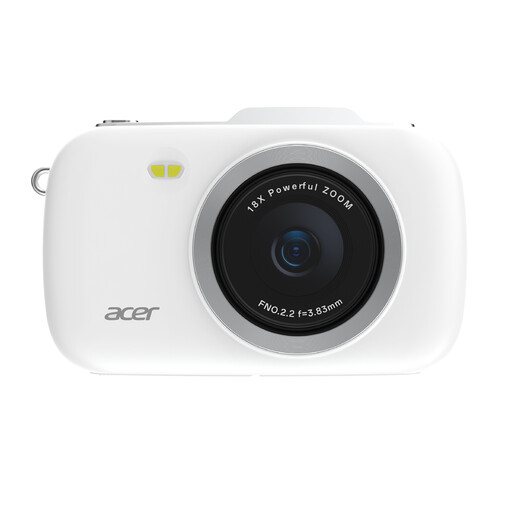
KOMERY G7-A 4K digital camera, white
The product title presents this camera as suitable for photography and beginners; take a test shot to see how it captures your drawing.
The title lists 80 MP and 18× zoom.
View at Joybuy
Frequently asked questions
How should I light a charcoal drawing for the main photo?
Start with even lighting on either side of the drawing. The Canadian Conservation Institute describes using light sources on both sides at a 45-degree angle for even illumination. You could also take a separate detail shot if you want to show the surface texture.
Do I need a tripod if the drawing itself doesn’t move?
A tripod or another stable surface helps reduce camera shake and makes it easier to repeat the same framing. Also check that your chosen position lets you capture the whole sheet.
What costs should I check in addition to the camera?
Check exactly what’s included in the kit and whether you need a suitable lens, memory card, battery, lighting or stable support. If you’re buying the camera mainly for your business, don’t automatically assume consumer rights apply: ACM ConsuWijzer distinguishes between mainly private use and a contract used mainly or exclusively for business. Ask the seller which warranty and service terms apply.
Can I edit an online shop photo to make the drawing look more striking?
Edit the photo so that it remains a faithful representation of the artwork for sale. For online sales to consumers in the Netherlands, product information must be clear and accurate. Don’t show a paper colour, tone or finish that differs significantly from the product being sold.
Do I always have 14 days to change my mind when I buy a camera online?
That depends, among other things, on the circumstances of your purchase. ACM ConsuWijzer says consumers generally have 14 days to change their mind after an online purchase, but a contract used mainly or exclusively for business isn’t covered by consumer protection in the same way. So before you buy, check whether you’re purchasing privately or for business, and which returns terms apply.


