
Listener at the dining table
You want to hear the different instruments in chamber music clearly, and have space to position two speakers either side of your usual listening spot.


If you usually listen from one spot and want to position speakers separately on the left and right, a stereo pair is better suited to your setup. A single Wi-Fi or Bluetooth speaker is more practical if you move around the kitchen-diner while cooking and eating. Choose between active and passive speakers based on your amplifier, then check the source connection, cables you’ll need and a position out of the direct path of water.
You want to hear the different instruments in chamber music clearly, and have space to position two speakers either side of your usual listening spot.
You move around the kitchen-diner and want to control your music easily from your phone or over your home network.
You’re looking for a spot for a speaker where it won’t be directly exposed to splashes, and want to know in advance which cables, sockets and devices you’ll need.
Best for: listening from a fixed spot, with room for two speakers and no separate amplifier.
Bear in mind: you’ll need two positions for the speakers and a cable or power connection between them. Edifier and KEF describe different connection options for each model.
Best for: anyone who listens from different spots while cooking and eating and values easy control.
Bear in mind: you’ll need a second compatible speaker to create a stereo pair later; Wi-Fi playback requires a stable home network.
Best for: anyone who already has a suitable amplifier or wants to choose their amplifier and speakers separately.
Bear in mind: the amplifier, source connection and speaker cables are all part of the complete setup. Q Acoustics recommends an amplifier power of 25–90 W for the 3020c.
Best for: anyone who wants to play music easily from a phone and doesn’t need Wi-Fi or a fixed hi-fi setup.
Bear in mind: stereo requires two compatible speakers and extra space. IKEA describes this option for two identical VAPPEBY speakers.
| What to consider | What should you look for? | Who is this most relevant to? |
|---|---|---|
| Stereo image and listening position | Check whether you’re buying a pair, whether both speakers work together as a stereo pair, and whether there’s a suitable spot for each one on the left and right. | If I usually listen at the table, I want to be able to position the speakers either side of me. Around 36% of consumers say a stereo image is their top buying priority. |
| Controls and source connection | Check that the version you choose is compatible with your source: for example, Wi-Fi, Bluetooth, aux or another physical input. For Wi-Fi, check that the network is stable where you plan to position the speaker. | Anyone who wants to start music from their own device or service while cooking should focus on finding a suitable playback option. Around 29% of consumers put controls and connectivity first. |
| Positioning in the kitchen-diner | Measure the available spaces and check the cables, sockets and model instructions for positioning the speaker out of the direct path of water. | If I have limited free space, I want to know in advance where a speaker or pair can be positioned safely. Around 21% of consumers say positioning is their top priority. |
| Complete setup | Compare one speaker with two, and an active pair with a passive pair, including a suitable amplifier and any cables or adaptors you’ll need. | Anyone who wants to put together a working setup without overlooking any components should consider everything they’ll need. Around 14% of consumers put the total cost of the complete setup first. |
For a setup with a left and right speaker, you’ll need two speakers that can be paired and space for both.
Check what’s included in the box and whether the exact model can play stereo sound when paired with a second one. Sonos, for example, says that only speakers of the same model can be paired for stereo.
You may need a second compatible speaker to complete the setup you want.
A passive pair and an active system differ in how amplification is handled. A passive pair isn’t a complete listening setup without a suitable amplifier and the right cables.
Compare systems that work with your music source. If you choose a passive pair, factor the amplifier and speaker cables into your decision.
If you don’t already have these components, a passive setup will also require a suitable amplifier and speaker cables.
A speaker that isn’t waterproof can be damaged by direct contact with water.
Sonos warns against exposing non-waterproof speakers to water. Check the instructions for the exact model and choose a spot away from direct splashes.
The R1280DBs shows how an active stereo pair with several physical inputs is set up.
The Era 100 is a compact Wi-Fi and Bluetooth speaker that can be set up as a stereo pair with a suitable second Sonos speaker.
The LSX II LT is an active pair with streaming and a connection between the speakers.
The 3020c is a passive bookshelf speaker for anyone using a separate amplifier.
The Home 150 is a compact example of the Wi-Fi, Bluetooth and HEOS multi-room option.
The VAPPEBY Bluetooth Speaker gen 3 offers phone and aux connectivity, with a stereo option for two identical speakers.
This selection of Joybuy products includes everything from soundbars and a passive bookshelf pair to wireless and compact computer speakers. Compare the product type and stated connections with the positioning and listening setup you’re looking for.
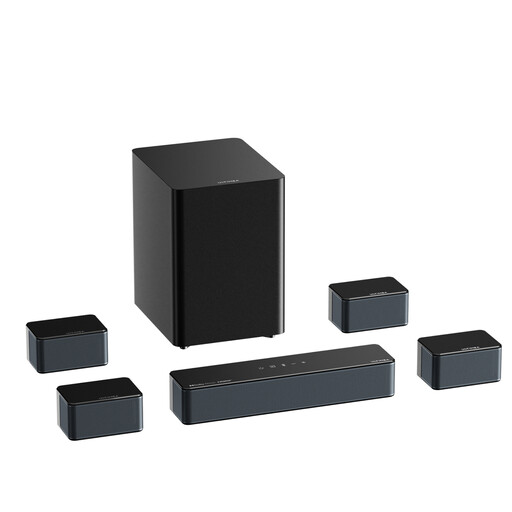 No image available
A soundbar setup to consider if you’re not looking for two separately positioned stereo speakers.
The product name lists 500 W and Bluetooth 5.3.
Check that the soundbar format suits your listening position and the setup you want.
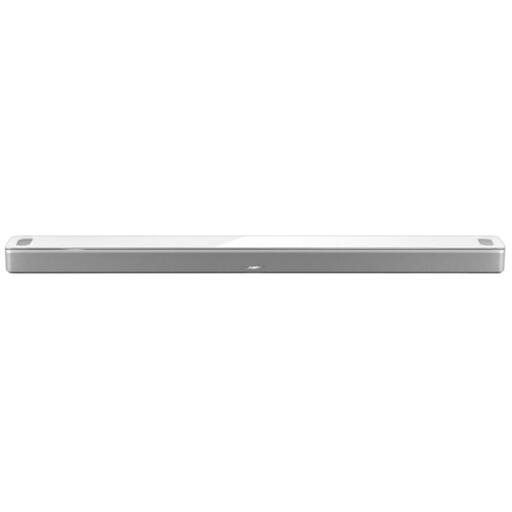 No image available
A soundbar to consider if you’re comparing a single soundbar setup with two separately positioned speakers.
The product name lists the colour as white.
Check in advance that the connections and controls suit your music source.
 No image available
A passive pair to consider if you’re looking for stereo speakers and can factor in an amplifier setup.
The product name lists a pair of 6.5-inch passive bookshelf speakers.
Check which amplifier and cables you’ll need for your complete setup.
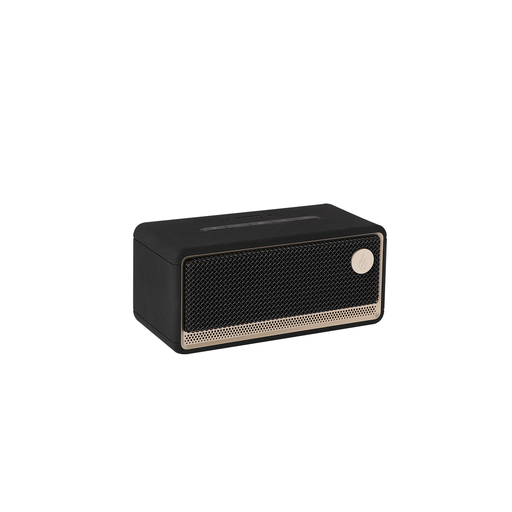 No image available
A wireless speaker to consider if you want to play music from a phone or home network.
The product name lists Wi-Fi, Bluetooth, 60 W, AirPlay 2, LDAC, 12-hour battery life, USB and aux.
Check which of these connections and playback options are compatible with your devices.
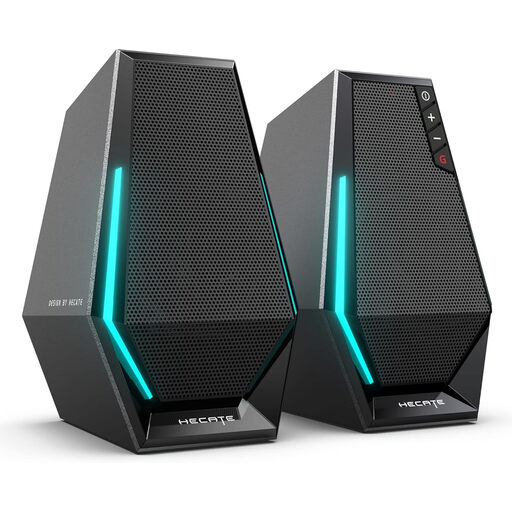 No image available
Computer speakers to consider if you’re looking for a compact setup for a listening position at a computer.
The product name lists Bluetooth 5.3, USB and a 3.5 mm aux input.
Check that this type of speaker suits the sound coverage and positioning you want for chamber music.
It can be a practical choice if you listen from different spots around the kitchen-diner. If you want to position speakers to the left and right of a fixed listening spot, compare stereo pairs and check that two of your chosen model can work together in stereo.
Don’t assume you can unless this is confirmed for the exact model. Sonos warns that non-waterproof speakers can be damaged by direct contact with water. Choose a spot away from direct splashes and follow the model instructions.
No, it depends on whether the speakers are active or passive. KEF lists built-in amplifiers in the LSX II LT, and Edifier describes the R1280DBs as active. A passive speaker such as the Q Acoustics 3020c needs a separate, suitable amplifier and cables.
Radio equipment placed on the market in the Netherlands must meet the applicable European requirements and carry a CE mark. The Dutch Authority for Digital Infrastructure also says that sellers should check the declaration of conformity. This does not confirm that every specific version meets those requirements.
No, pairing depends on the brand and exact model. Sonos says that only speakers of the same model can be paired for stereo, so check the compatibility rules before choosing a second speaker.