
Eating breakfast alone and don’t want to weigh it out
An individual sachet gives you a set amount of dry porridge oats. Still, check how much each sachet contains and what you add to your breakfast.


If you’re having breakfast on your own and want a set dry portion, individually wrapped plain porridge oats may be more practical than weighing them out yourself. Even so, compare the carbohydrate content per 100 g and per portion used, and include milk, yoghurt or toppings in your calculation. A claim about no added sugars doesn’t, by itself, tell you how many carbohydrates your breakfast contains.
An individual sachet gives you a set amount of dry porridge oats. Still, check how much each sachet contains and what you add to your breakfast.
You look beyond claims about added sugars and compare carbohydrates, sugars and fibre per 100 g. Then you calculate the figures for the amount you actually eat.
You want to choose how much muesli or cereal you have. A larger pack may suit you, as long as you’re happy to weigh out the dry portion.
First decide whether you need a pre-measured sachet or would rather portion it yourself. Then compare the nutritional information for the dry product and the amount that goes into your bowl.
| What to consider | What to look for | Most relevant for |
|---|---|---|
| Carbohydrates in your breakfast | Compare carbohydrates per 100 g and calculate the amount in your dry portion. Check the nutritional information for any additions separately. | If I count carbohydrates at breakfast, I want to know how much is in my own bowl; this calculation is the top priority for around 36% of consumers. |
| Sugars and fibre | Check the ingredients list and compare sugars, fibre and carbohydrates on the same per-100 g basis. | I don’t want to confuse a claim about no added sugars with the total carbohydrate content; this is the first consideration for around 29% of consumers. |
| A fixed individual portion | Check the number of sachets, the dry contents of each sachet and the preparation instructions. | When having breakfast on my own, I want a set dry portion without weighing it out; convenience matters most to around 21% of consumers. |
| Allergens and your own circumstances | Read the current ingredients and allergen information on the packaging. | If I need to avoid an allergen, I want to know exactly what the label says; this check comes first for around 14% of consumers. |
A claim about no added sugars doesn’t describe the total carbohydrate content. Diabetes.nl highlights the importance of the amount of carbohydrate if you need to count it as part of your diet.
Check both ‘carbohydrates’ and ‘of which sugars’ in the nutrition table, and calculate the figures for your own portion.
A stated portion of 30 g of flakes isn’t the same amount as 35 g of cereal or 40 g of muesli. According to the Netherlands Nutrition Centre, manufacturers set their own portion sizes.
Compare products per 100 g first, then calculate the figures for the amount you want to eat.
The per-100 g values for a dry product don’t automatically describe your whole breakfast with milk, yoghurt or toppings.
Also check the nutritional information for what you add and take the amounts used into account.
Cereal packaging may list cereals containing gluten and other allergens that are present or may be present. This varies by product.
Check the current ingredients list and allergen information every time you buy, especially if you have an allergy or intolerance.
Quaker Oats Express Original is an option if you’re looking for individually wrapped porridge oats.
Brinta Wholegrain Cereal Breakfast is suited to anyone who wants to weigh out their own dry portion rather than use a sachet.
AH Organic Wholegrain Muesli is a muesli you can measure out yourself for each breakfast.
Kellogg's Special K Original is a flakes option for anyone who likes that texture and wants to measure out their own portion.
These products show two ways to portion breakfast when you’re eating on your own: a pack of individual porridge oat portions, or a larger pack from which you can measure out the amount you need.
 Image unavailable
For anyone who wants to grab an individual dry portion for breakfast on their own. The product information lists 12 portion packs and, per 100 g, 59 g of carbohydrates, 1 g of sugars and 9 g of fibre. Check the contents of one sachet to calculate the amount you actually use; also read the current allergen information.
 Image unavailable
For anyone who would rather choose their own dry portion of porridge oats than use an individual sachet. This is a 600 g pack; weigh out the amount you need for breakfast and use the label to work out the nutritional values for that portion.
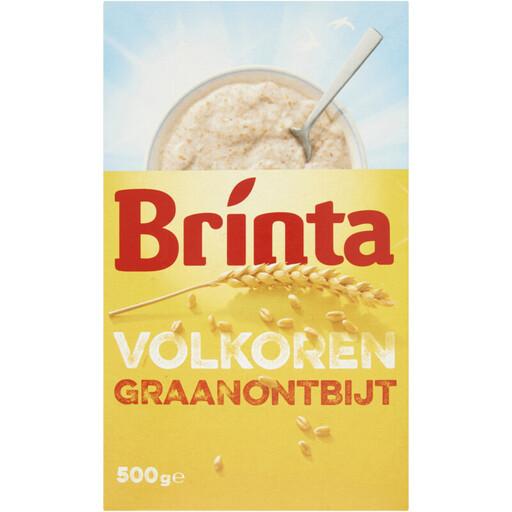 Image unavailable
For anyone who wants to portion out their own cereal rather than use individual sachets. Albert Heijn lists a suggested 35 g portion for Brinta Wholegrain Cereal Breakfast, and, per 100 g, 64 g of carbohydrates, 4.6 g of sugars and 10 g of fibre. Weigh out your own portion and check the current label if you have a wheat allergy or gluten intolerance.
No. That claim doesn’t describe all the carbohydrates in the product. For example, Quaker Express Porridge Oats lists 59 g of carbohydrates per 100 g, so make sure you also calculate the amount you use.
First compare the nutrition tables per 100 g, then calculate the values for the amount you actually eat. According to the Netherlands Nutrition Centre, manufacturers set their own stated portion sizes, so portions on different packs can’t be compared directly.
Not necessarily. Diabetes.nl explains that a suitable diet varies from person to person and depends, among other things, on your preferences, treatment and health. Compare the portion you actually eat within the guidance that applies to you.
Read the ingredients list and allergen information on the current pack. The Netherlands Food and Consumer Product Safety Authority says allergens must be clearly shown on the label; the cereals and other allergens listed vary by product.