
For a light snack
Choose a small, individually wrapped bar that fits easily into a coat pocket or rucksack.


For a light snack, choose a small, individually wrapped bar. If you want something more substantial, compare bars weighing 50–60 g too. Whichever you choose, check the portion size, ingredients, nutritional information and allergens: claims on the front of the pack don’t tell the whole story.
Choose a small, individually wrapped bar that fits easily into a coat pocket or rucksack.
Compare a 50–60 g bar with smaller biscuit or cereal bars, without assuming that size alone determines which one is right for you.
If ingredients, nutritional information or allergens are your main priorities, check the back of the pack too.
Start with the portion size you want to take with you, then compare the nutritional information and ingredients for each bar. Muesli bars, oat bars and protein bars aren’t necessarily the same kind of snack.
| What to consider | What to check when buying | Who it matters to |
|---|---|---|
| Packaging and portion size | Check whether the bars are individually wrapped and how many grams each bar weighs. | If I just want a light snack, I want to take one compact bar without opening the rest of the pack. This convenience is a priority for around 31% of consumers. |
| Size and nutritional information | Compare the weight and nutritional value per portion, including fibre, protein and sugars. | If a small bar won’t satisfy me, I want to know what a larger portion actually contains. This is the first thing an estimated 25% of consumers consider. |
| Ingredients and allergens | Read the ingredients list, allergen information and any warnings about traces. If you’re considering a Zero variant, check the sweeteners too. | If I need to avoid certain ingredients, the label determines whether I can choose that bar. This check is the most important one for around 25% of consumers. |
| Number of bars and availability | Check how many bars are in the pack and whether the variant you want is available where you shop. | If I’m going on several walks, I want to know how many individual portions I can take and whether I’ll be able to find the same variant again. This is the main consideration for an estimated 19% of consumers. |
A claim highlighting fibre or protein doesn’t show you the full nutritional profile. The Netherlands Nutrition Centre recommends checking the ingredients and nutritional information too.
Compare the values per portion and check which ingredients the bar contains.
The bars discussed here include ingredients such as cereals containing gluten, milk, soya, peanuts and nuts. A warning that a product may contain traces can also be relevant to your choice.
Check the current packaging every time you buy, even if you already know the product name.
According to Albert Heijn’s product information, Hero B'tween Zero contains naturally occurring sugars from milk chocolate, as well as sweeteners. The product information also warns that excessive consumption may have a laxative effect.
For this variant, check the ingredients, sugars per portion and any usage warning.
Trek Biscoff is an oat bar with a Biscoff flavour, for anyone comparing a 50 g bar with smaller snacks.
The AH hazelnut muesli bar is individually wrapped and weighs 25 g.
The individually wrapped muesli bars include a 25 g milk chocolate variant and a smaller Zero variant.
Lidl’s Sondey range includes biscuits, cookies and bars, while the Healthy Fit cookies & cream is a protein bar in its own right.
According to ALDI, the Golden Bridge range includes muesli bars, fruit bars, and fruit and nut bars in multi-packs.
This selection includes small muesli bars for on the go and a larger protein bar. For the latter, also check whether the packaging suits your preference for taking a single bar with you.
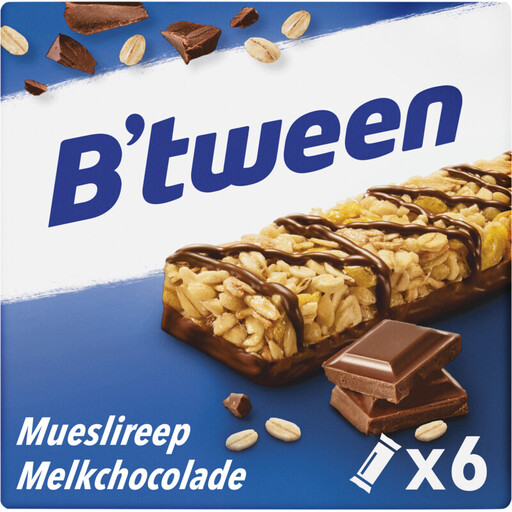 Image unavailable
A small muesli bar to take along on a walk. Albert Heijn describes this milk chocolate variant as six individually wrapped 25 g bars. If you have allergies, check the current packaging.
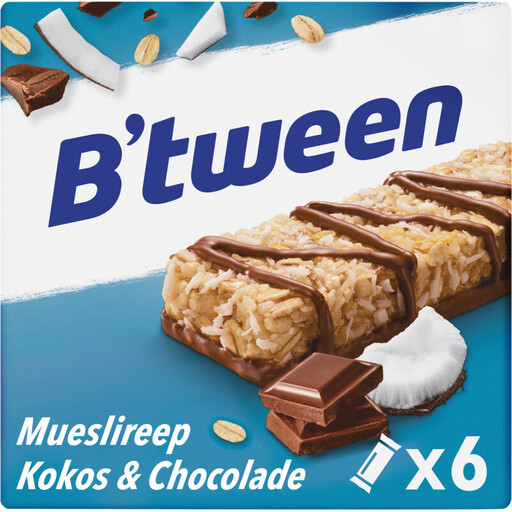 Image unavailable
A coconut variant to compare if you’re looking for a small bar to take with you. Check the weight of each bar and, if you have a peanut or nut allergy, read the allergen information on the current packaging.
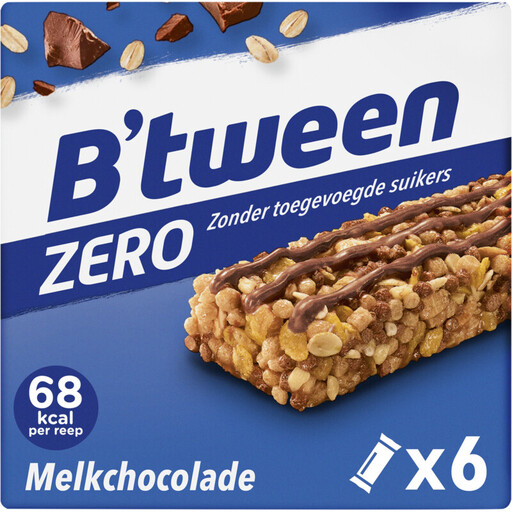 Image unavailable
A variant to compare with a regular muesli bar if you’re interested in the Zero claim and ingredients. Check the packaging for the weight per bar, sugars, sweeteners and allergens.
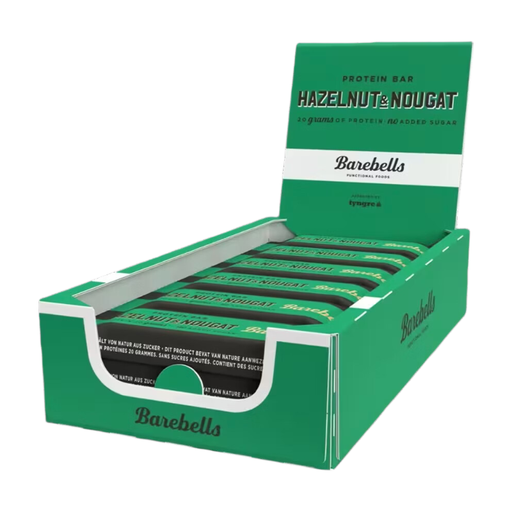 Image unavailable
At 55 g per bar, this is a larger option than the small muesli bars above. If you want to take one bar on its own, check whether they’re individually wrapped. Also read the ingredients and allergen information.
A bar is a snack, not a one-size-fits-all solution for everything you might need on a walk. What you take with you depends on factors such as how long you’ll be walking, what you’ve eaten beforehand and your own circumstances. Remember to take a drink too.
Check the ingredients and allergen information for the specific bar on the current packaging. The Netherlands Food and Consumer Product Safety Authority states that 14 allergens must be declared on the label. For the variants discussed here, these include cereals containing gluten, milk, soya, peanuts and nuts.
No. According to Albert Heijn’s product information, this variant contains naturally occurring sugars and sweeteners. Also read the warning that excessive consumption may have a laxative effect.
Check the bar’s packaging for the best-before date and any storage instructions. The Netherlands Food and Consumer Product Safety Authority explains what label information is required for prepacked foods. Follow the storage instructions for the specific bar.