
Families who keep a regular supply
If you often eat the same breakfast cereal, it’s worth weighing up a large bag or multipack against the price per kilogram, the total quantity and the storage instructions once opened.


A multipack of cereal is a good choice if your household uses it regularly and the format fits your morning routine. Individual portions are handy to grab on the go, while a large bag of porridge oats or cruesli is better suited to portioning or preparing at home. Before buying, compare the price per kilogram, the nutritional information per 100 g and the allergens in your chosen variety.
If you often eat the same breakfast cereal, it’s worth weighing up a large bag or multipack against the price per kilogram, the total quantity and the storage instructions once opened.
Individual portions are easier to grab and divide up than a large bag. Just check whether you’ll also need milk, yoghurt or a bowl for breakfast.
If you need to keep an eye on ingredients or allergens, there’s more to check than the front of the pack. The Netherlands Nutrition Centre advises comparing the nutritional values of similar products per 100 g.
First decide whether you want something to grab and go, or to portion or prepare at home. Then compare the pack size, nutritional information and what everyone in your household can use.
| What to consider | What to check before buying | Who it matters to |
|---|---|---|
| Stocking up and saving | Compare the price per kilogram and the total quantity; check any advertised multipack discount against the same products bought individually. | If my family eats the same cereal every day, I want to know whether buying a larger quantity really works out cheaper. Around 36% of consumers put stocking up and saving first. |
| Easy to take with you | Check whether the pack contains individual portions and what you’ll need to eat them. | On a morning when there’s no time to measure anything out, I want to be able to grab a portion straight away. For around 29% of consumers, convenience on the go matters most. |
| Nutritional information | For similar products, compare sugars, fibre and energy per 100 g; read the ingredients list too. | If the same product is often on the table, I want to compare its ingredients before buying a large quantity. This is the top priority for around 21% of consumers. |
| Allergens and preparation | Read the current allergen declaration and check whether you’ll need to prepare it or use a bowl, milk or water. | If not everyone at home can eat the same ingredients, or there’s no time to prepare breakfast in the morning, the product needs to fit into your daily routine. Around 14% of consumers put suitability first. |
A larger quantity and an advertised bulk discount aren’t the same thing. It also matters whether your household will use the whole pack.
Compare the price per kilogram with the same product sold individually. If it’s a multipack, check exactly what the discount applies to.
Serving sizes can vary between manufacturers, making the figures per serving difficult to compare directly.
First compare similar cereals per 100 g, as the Netherlands Nutrition Centre advises, then decide which serving size works for you.
A claim about fibre or added sugars doesn’t tell you everything about the nutritional information. Nutri-Score isn’t a substitute for reading the pack either.
Check sugars, fibre, energy, saturated fat and salt per 100 g, along with the ingredients list.
A pack won’t be much use if someone in your household needs to avoid its ingredients, or if preparing it doesn’t fit into your morning routine.
Check the current allergen declaration and preparation instructions before buying a large quantity.
Worth considering if you’re choosing between porridge oats as a cupboard staple and a larger pack of crunchy cruesli.
A good option if individual portions or a multipack fit better into your morning routine.
A wholegrain cereal breakfast for anyone who wants to prepare a bowl at home rather than grab a portion straight from the pack.
The own-brand range includes crunchy muesli, which you can compare with other pack formats.
A brand to consider if chocolate-flavoured cereal suits your taste.
These products offer different ways to keep cereal at home: a granola multipack, larger packs of cruesli and porridge oats, and a wholegrain cereal breakfast that you prepare. A larger pack doesn’t automatically mean a lower price per kilogram or a portion you can grab and take with you.
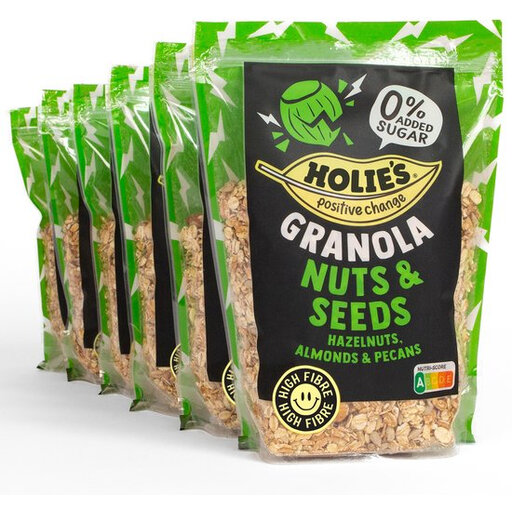 No image available
A multipack for anyone who regularly eats the same granola at home. The title lists six 350 g packs; compare the price per kilogram and check the allergen information before buying if nuts are a concern.
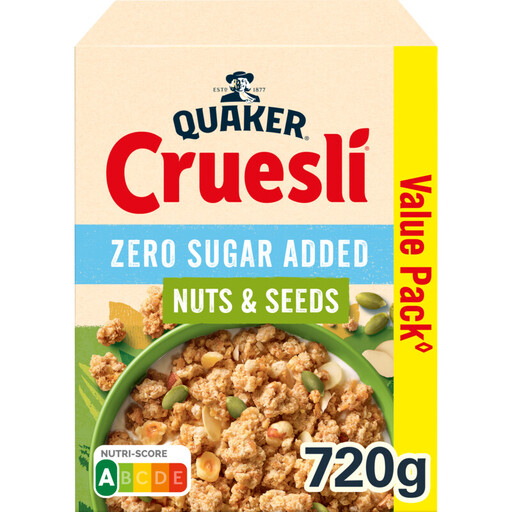 No image available
A 720 g pack of cruesli for anyone who wants to portion out breakfast from a single supply at home. When comparing nutritional values, check the unit shown in the current table, and read the allergen declaration if wheat or nuts are relevant to you.
 No image available
A 600 g pack of porridge oats to portion out at home. Bear in mind that you’ll need to prepare it on the hob or in the microwave, and check the current packaging for possible traces of wheat or barley if that matters to you.
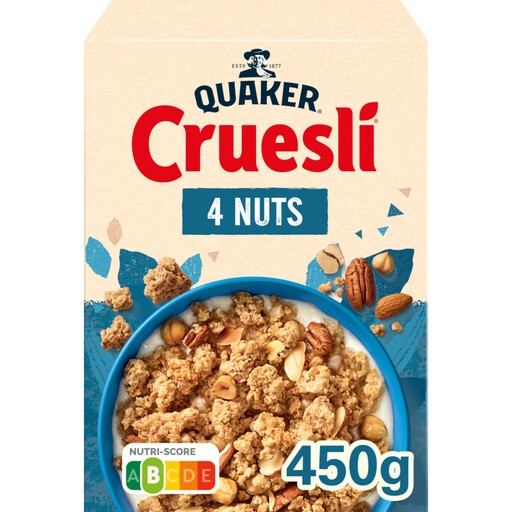 No image available
A 450 g pack of nut cruesli to compare with larger formats. Check the price per kilogram and the current allergen information; the nuts listed include almonds, hazelnuts, pecans and Brazil nuts.
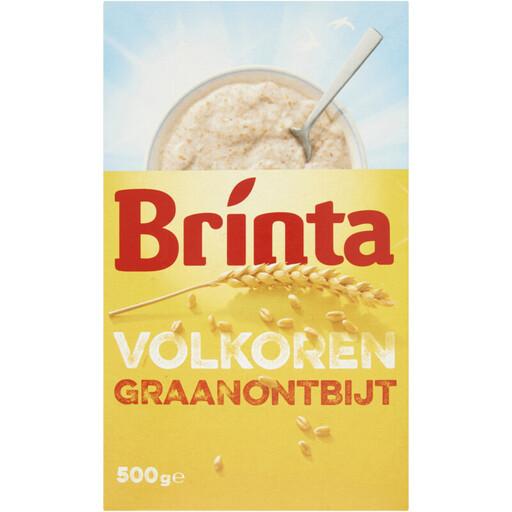 No image available
A 500 g pack of cereal breakfast for anyone who wants to prepare a bowl at home. The product information says to prepare it with water or milk and lists wheat as an ingredient; take the preparation time and current allergen information into account when choosing.
Compare the price per kilogram for the same quantity and check what any bulk discount applies to. Also consider whether your household will use the whole pack before the taste or freshness becomes an issue once it’s opened.
Start by comparing similar cereals per 100 g. The Netherlands Nutrition Centre recommends this basis because manufacturers may use different serving sizes; then consider how much you actually want to portion out.
No, Nutri-Score isn’t a substitute for the nutritional table and ingredients list. The RIVM describes the score as an assessment of a product’s composition within its product group; also check the values and allergens that matter to your choice.
Read the current ingredients and allergen declaration for the exact variety you’re buying. The products discussed include varieties with wheat or nuts; don’t assume that another pack size or flavour has the same ingredients.
That depends on how it needs to be prepared and how you want to carry it. Individual portions are easier to grab, while with a large bag you’ll usually need to portion some out yourself; according to the product information, Brinta is prepared with water or milk.