
Families matching pack sizes to how much they eat
If several bowls of cereal are eaten regularly, pack size and how quickly it will be used up are important when choosing a larger pack.


For a large household, start by choosing a type of cereal that your family will actually eat, then work out what pack size suits your household’s consumption. When choosing between cornflakes and wholegrain cereal, compare the nutritional information per 100 g too. If anyone has an allergy or needs gluten-free food, always check the details on the current packaging.
If several bowls of cereal are eaten regularly, pack size and how quickly it will be used up are important when choosing a larger pack.
For households considering wholegrain cereal as well as cornflakes, and happy to take a different texture or preparation method into account.
If allergens or a gluten-free label are essential, check the specific product before choosing a larger pack.
First, decide which type of cereal your household eats. Then check the pack size, nutritional information and any requirements relating to ingredients or allergens.
| What to consider | What to check when buying | Who is this most important for? |
|---|---|---|
| Pack size and consumption | Check the net weight and consider whether your household can use up the pack after opening, following the storage advice. | If we often eat several bowls, I want to choose a pack that suits how much we eat. For around 36% of consumers, getting that match right is the top priority. |
| Nutritional information | Compare fibre, sugars and salt per 100 g; check whether the specific product is labelled wholegrain if that matters to you. | When weighing up cornflakes against wholegrain cereal, I want to know what each product contains, even if they are prepared differently. This is the top consideration for around 29% of consumers. |
| Taste and how it is used | Distinguish between crunchy cornflakes, muesli, granola and cereal; check how your chosen product should be prepared and stored. | A large pack only makes sense for us if several members of the family want to eat it. That is why around 21% of consumers put taste and ease of use first. |
| Allergens and dietary requirements | Read the current ingredient and allergen information; if needed, look for an explicit gluten-free label on the product. | If someone at home needs to avoid a particular allergen, I need to check that the product is suitable before buying a larger pack. For around 14% of consumers, checking the label is the top priority. |
A large pack is not necessarily right for a household that uses it up slowly once opened.
Compare the net weight with how much your family usually eats, and follow the storage advice on the packaging.
Cornflakes, muesli, granola and wholegrain cereal can differ in texture, preparation and ingredients. An alternative in the same supermarket aisle may not suit the same family preferences.
Choose the type of product you want first, then compare the ingredients and nutritional information of individual products.
Kellogg's lists vitamins and iron for Corn Flakes, but this does not describe the product’s full nutritional profile.
Also check the fibre, sugars and salt per 100 g, and compare products on the same basis.
Ingredients and allergen information can change. The name cornflakes also does not confirm that a specific product is gluten-free.
Check the current label on the specific product every time you buy it, and look for a clear gluten-free label if needed.
Jumbo’s cereal range includes 500 g Cornflakes, Special Flakes and other types of cereal.
ALDI lists 500 g Cornflakes, Special Flakes and muesli among its Golden Bridge products.
Albert Heijn lists 425 g AH Cornflakes alongside other products in its flakes category.
Brinta Whole Wheat Cereal Breakfast 500 g is an option for families considering wholegrain cereal.
Kellogg's is worth considering if your family wants to compare a specific recipe or the ingredients of a branded product such as Corn Flakes.
This wholegrain cereal is an alternative for families considering a different type of cereal as well as regular cornflakes. Compare the preparation method and pack size with what your household eats.
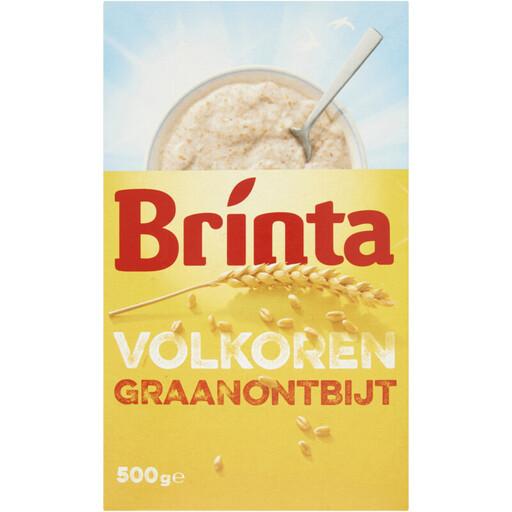 Image unavailable
A wholegrain cereal for households looking for an alternative to crunchy cornflakes. The pack contains 500 g; consider the differences in texture and preparation when choosing.
No, it depends on how much of that specific product your household eats. First choose a type your family wants to eat, then check whether the pack size suits your consumption and the storage advice for after opening.
Compare fibre, sugars and salt per 100 g, and check whether the specific product is wholegrain if that matters to you. Bear in mind that cornflakes and wholegrain cereal also differ in texture and preparation.
Follow the storage advice on the packaging and seal the opened bag securely. For example, Jumbo gives this advice for a large pack of Quaker Cruesli; check the packaging for any other product.
Read the current label on the specific product before buying or using it. The Netherlands Food and Consumer Product Safety Authority states that allergens must be listed on the labels of prepacked foods. Don’t assume a product is gluten-free from the name cornflakes; look for a clear label on the product.
Yes, so check the packaging again each time you buy it. Albert Heijn notes that product ingredients, nutritional values and allergen information can change. This is especially important if someone in your household needs to avoid certain ingredients.