
Vandaag of morgen in huis

Kwaliteit gegarandeerd

Welkomstaanbiedingen ontgrendelen: GRATIS bezorging | Tot 80% korting | Gratis 30 dagen JoyPlus-proefperiode
Download de app
A ceramic frying pan may seem easy to choose at first glance. However, models vary considerably in terms of coating, heat distribution, size and care requirements. A low price may be tempting, but it offers little benefit if the pan is unsuitable for your hob or becomes damaged quickly.
For Dutch households, these are the three main pitfalls to look out for:
A ceramic non-stick frying pan is often made from aluminium with a ceramic layer on the inside. Aluminium conducts heat quickly, while the coating helps ingredients release more easily.
If you are looking for a PFAS-free frying pan, read the product information carefully. Look out for wording such as:
These terms are not always identical. You should therefore not interpret a brand claim as a general guarantee covering every characteristic. According to Redchef’s product information, the 24 and 28cm models are free from PTFE, PFOA and PFAS. For the WMF Durado models, the product information states that the pan is PFAS-free. Always check the current product specifications and instructions for use before buying.
A “healthy frying pan” is not an official product category. For example, a coating that requires little oil says nothing about nutritional value or cooking results. Focus instead on verifiable information about the material, coating and intended use.
Many aluminium pans are suitable for gas, electric and ceramic glass hobs. For induction, you need a magnetisable base. Therefore, look specifically for induction frying pan or “suitable for induction” in the specifications.
Also pay attention to the diameter of the base. A 28cm pan may have a smaller induction base, meaning that heat is concentrated mainly in the centre. The Tefal Renewal 24 cm, for example, is listed with a base diameter of 18 cm. This is relevant if your cooking zone is larger or smaller.
A practical distinction:
A 24 cm frying pan is suitable for one or two portions, eggs, pancakes and smaller meals. A 28 cm frying pan provides more space for meat, vegetables or a meal for several people. For larger families, 32 cm may be worth considering, but check that the pan fits your cooking zone and will not be too heavy.
A deep pan is more practical for stir-frying, sautéing and simmering. A frying pan with lid retains moisture more effectively and is useful for sauces, rice dishes and one-pan meals. Check whether the lid is included, as this is not automatically the case with every model.
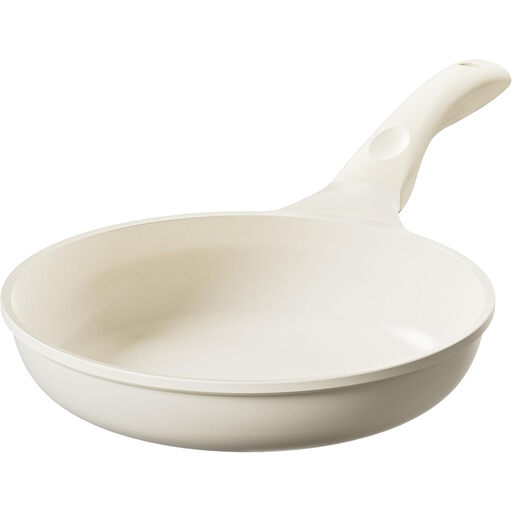
Why it suits this profile: The compact size is ideal for everyday cooking for one or two people. According to the product information, this pan has a ceramic coating and is suitable for induction, gas and electric hobs.
The hob compatibility and size are clearly stated. According to Redchef’s own product information, the coating is free from PTFE, PFOA and PFAS.
24 cm, ergonomic Bakelite handle and dishwasher-safe according to the product description.
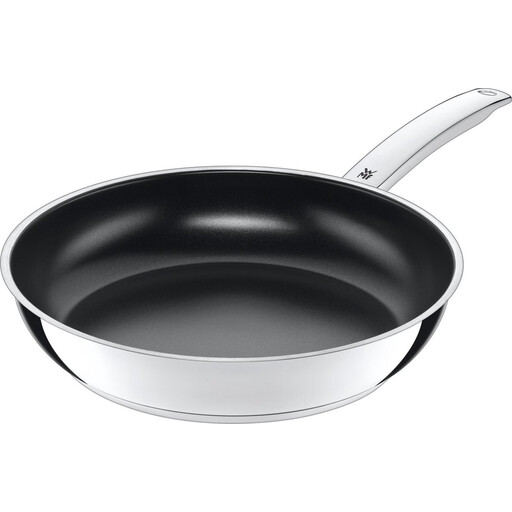
Why it suits this profile: The stainless steel Cromargan 18/10 construction, ceramic coating and induction compatibility are ideal for anyone looking for a sturdy pan for regular use.
The specifications explicitly state induction compatibility, PFAS-free construction and hand washing. This makes important material and care choices clear in advance.
24 cm, suitable for all heat sources and, according to the product information, resistant to high temperatures on the hob.
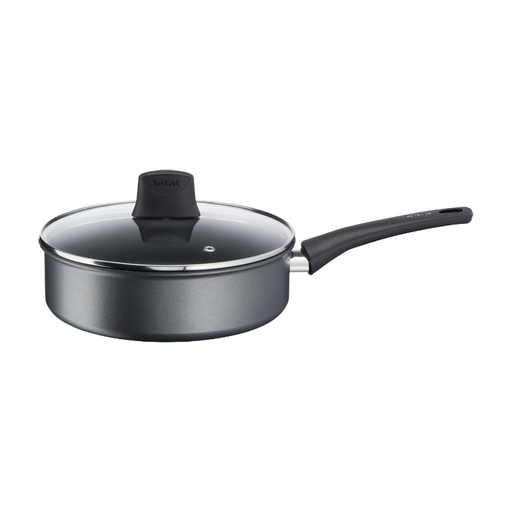
Why it suits this profile: The lid and induction-compatible base are practical for sauces, simmered dishes and everyday one-pan meals.
The pan is suitable for induction, gas, electric, ceramic and halogen hobs. The included glass lid means you do not need to buy this feature separately.
Thermo-Signal temperature indicator, titanium-reinforced non-stick coating and oven resistance up to 175 °C according to the product information.
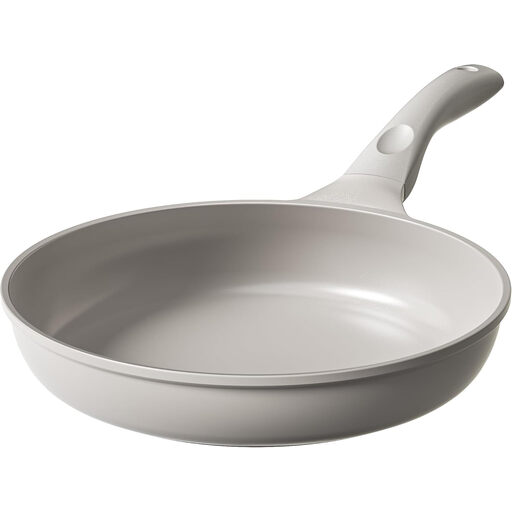
Why it suits this profile: The larger cooking surface is suitable for families, stir-fries and preparing several portions at once.
According to the product information, the pan is suitable for induction, gas and electric hobs. Use wooden or silicone kitchen utensils to help prevent scratches to the ceramic layer.
28 cm, ceramic non-stick coating, ergonomic handle and dishwasher-safe according to the product description.
A ceramic coating does not require complicated care, but it does require consistent use:
A ceramic coating does not have one fixed, universal lifespan. Frequency of use, temperature, kitchen utensils and cleaning all make a difference. Once the coating is visibly damaged or starting to peel, replacing the pan is a sensible choice.
We have put together a complete, up-to-date list of products that fully meet these strict selection criteria and the applicable European safety regulations.
Some models are, while others are not. Always check the product specifications. An aluminium pan without a magnetic base will not work on induction. Look for an explicit statement confirming induction compatibility.
This depends on use and care. Medium temperatures, soft kitchen utensils and hand washing help keep the coating intact for longer. There is no fixed lifespan that applies to every brand and model.
Some models are described by the manufacturer as dishwasher-safe, but hand washing is often the gentler option. Check the product page, as care instructions vary from one pan to another.
