
Vandaag of morgen in huis

Kwaliteit gegarandeerd

Welkomstaanbiedingen ontgrendelen: GRATIS bezorging | Tot 80% korting | Gratis 30 dagen JoyPlus-proefperiode
Download de app
A ceramic frying pan may seem easy to choose at first glance. However, pans vary considerably in terms of coating, base, care requirements and suitability for induction hobs. A low price can be appealing, but choosing the wrong size or unclear material information can quickly lead to frustration.
For environmentally conscious home cooks and families, three pitfalls are particularly relevant:
A PFAS-free frying pan is often chosen by consumers who want to avoid certain substances in their cookware. Pay attention to the exact product description. Some models state that the coating is free from PFAS, PTFE and PFOA. Other products only mention PFOA.
Terms such as “natural”, “non-toxic” or “healthy cooking” are not, in themselves, technical standards. According to Redchef’s own product information, the Starlight pans feature a ceramic coating without PTFE, PFOA or PFAS. According to Brabantia’s own product information, the Onyx and Dusk models are PFAS-free. Use this information as a selection criterion, but always check the specifications of the version you have chosen.
A PFOA-free frying pan is therefore not automatically the same as a completely PFAS-free frying pan. If this is specifically what you are looking for, check both statements.
The diameter determines how much you can cook at once and how much space the pan takes up.
Also consider the difference between the overall diameter and the flat cooking base. This is particularly important on induction hobs, where the base needs to align properly with the cooking zone. A large pan on a small zone may heat less evenly.
An induction frying pan must have a magnetisable base. Aluminium alone is generally not sufficient; a composite or magnetic base is often required. Also check whether the pan is suitable for gas, electric, ceramic and halogen cooking.
Care requirements vary by model:
A ceramic coating is not a reason to preheat the pan empty at a high temperature. Add oil or ingredients according to the manufacturer’s instructions.
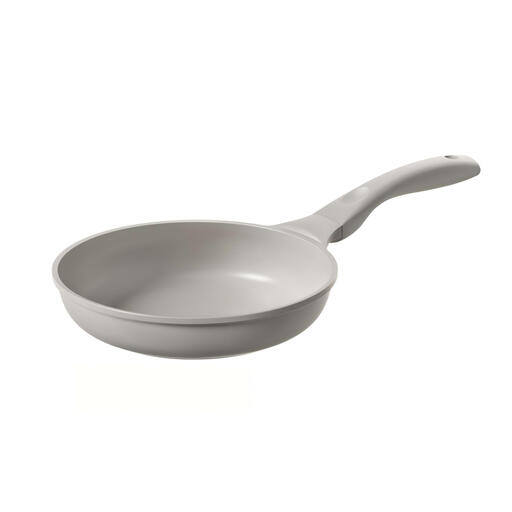
Why it suits this profile: The diameter is suitable for everyday portions, and according to the product information, the pan works on gas, electric and induction hobs.
The product description mentions a ceramic coating without PTFE, PFOA or PFAS and states that it is dishwasher-safe. Do not use metal utensils to help prevent scratches.
24 cm, an ergonomic Bakelite handle and suitability for gas, electric and induction hobs according to the product information.

Why it suits this profile: According to the product information, this pan combines a PFAS-free ceramic coating with 100% recycled forged aluminium and oven use up to 200 °C.
The product details explicitly state that it is PFAS-free, induction suitable and safe for use up to a specified maximum oven temperature. Hand washing is still recommended to protect the coating.
24 cm, two extra-strong coating layers according to the product description, suitable for all the stated heat sources and oven-safe up to 200 °C.
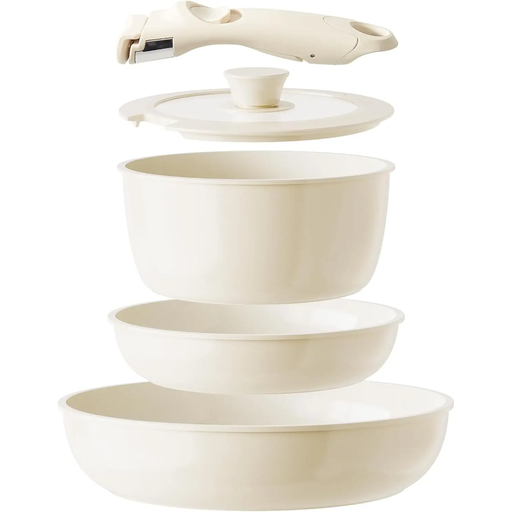
Why it suits this profile: The set includes two frying pans, a saucepan, a lid and a removable handle for flexible cooking, storage and use on the go.
According to Redchef’s own product information, the components are free from PTFE, PFOA and PFAS. The removable handle must be securely attached before lifting.
Stackable design, two frying pan sizes, induction suitability according to the product information and dishwasher-safe components according to the product description.
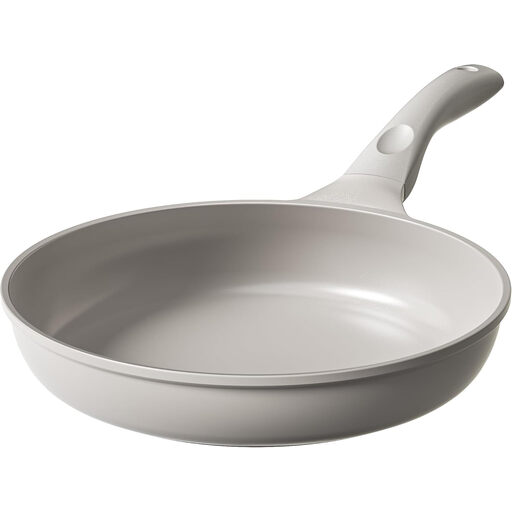
Why it suits this profile: The 28 cm diameter provides more space for stir-fries, meat, vegetables and meals for several people.
The product information states that it has a ceramic coating without PTFE, PFOA or PFAS and is compatible with induction, gas and electric hobs.
28 cm cooking surface, ergonomic handle and dishwasher-safe design according to the product description provided.
We have put together a complete, up-to-date list of products that fully meet these strict selection criteria and the applicable European safety regulations.
A ceramic coating will generally remain usable for longer when you follow the usage instructions. Heat the pan gradually and avoid heating it empty for extended periods. Allow the pan to cool before cleaning it and use a soft sponge. Even when a model is dishwasher-safe, washing by hand can place less strain on the coating and handle.
Check regularly for peeling coating, deep scratches or a loose handle. If there is visible damage, replacing the pan is wiser than continuing to use it. In practice, a healthy frying pan mainly means checking the material claims, cooking safely and replacing damaged cookware in good time.
That depends on the base. Only choose a model that explicitly lists induction as a suitable heat source. Aluminium pans without a magnetic base will not work on every induction hob.
Its service life depends on temperature, utensils, cleaning and frequency of use. Avoid metal spatulas, heating the pan empty and abrasive cleaning products. Even with a dishwasher-safe frying pan, washing it by hand can help preserve the coating for longer.
The pan itself does not use extra energy because of its coating. Energy consumption mainly depends on the size, base and hob. A pan that fits the induction zone well and heats evenly prevents unnecessarily long cooking times. So, alongside the purchase price, consider the size, care requirements and expected frequency of use.
