
Makers showcasing glaze details
You want to show small maker’s marks, relief or glaze texture. Compare the exact lens, its magnification and how much room there is in front of it for lighting.


For overview shots of whole pots on a shared workbench, a mirrorless camera with a versatile standard zoom is a sensible starting point. Compare the complete kit, not just the camera body. If you want to show small maker’s marks or glaze texture, check the magnification and working distance of the exact lens, and bear in mind that you may need a separate macro lens. Image stabilisation won’t correct colour casts or reflections: assess test shots under the fair lighting and adjust the white balance if needed.
You want to show small maker’s marks, relief or glaze texture. Compare the exact lens, its magnification and how much room there is in front of it for lighting.
You mainly take repeatable overview shots of complete pieces without occupying the shared table for too long. In that case, a suitable zoom and compact set-up may matter more than maximum macro magnification.
You want to use the same equipment for short presentations too. Check the exact kit lens and video features, and also consider colour reproduction and the workspace available.
First decide whether you’ll mainly be photographing whole pots or small maker’s marks. Then consider your lighting and space requirements, and only after that look at any video features.
| What to consider | What should you check? | Who should pay particular attention? |
|---|---|---|
| Small details | Compare the maximum magnification and working distance of the exact lens. Also check whether the quoted minimum focusing distance applies to the focusing mode you plan to use. | I want to show small maker’s marks and glaze texture clearly; around 31% of consumers put detail magnification first. |
| Colour and reflections | Take test shots under the fair lighting and check the adjustable white balance. Consider a filter only if reflections make it necessary. | I want to assess glaze colour carefully under changing light; around 25% of consumers put colour and reflections at the top of their list. |
| Space on the table | Compare the size and weight of both the camera body and the included lens. Check whether a tripod or another stable set-up will fit on the workbench. | I want to set up quickly on a shared table without taking up too much workspace; around 25% of consumers prioritise saving space and setting up quickly. |
| Photos and video | Check whether the offer is for a camera body or a kit with a lens. Compare the video features of the exact model and the lens you’ll actually receive. | I want to make short presentations as well as product photos; around 19% of consumers prioritise using their camera for both photos and video. |
Focusing distance, maximum magnification and working distance describe different properties. Sony states that the SEL30M35 offers maximum magnification of 1.0×; at its closest setting, Sony gives the working distance in front of the lens as 2.4 cm.
Check all three properties for the exact lens and compare them with the smallest details you want to photograph.
A separate macro lens may be needed for very small details. A short working distance can also leave less room for lighting.
White balance depends on the light source, and a filter is no substitute for assessing the lighting. Neither guarantees that glaze will look exactly as it does in real life under fair lighting.
Take test shots under the available light and assess the results before basing your choice solely on camera specifications.
What’s included in a kit can vary between offers. For example, Nikon states that the Z50II kit with zoom lens reviewed here does not include a charger.
Before buying, check the camera body, the exact lens and the accessories you need in the full kit description.
If you don’t already have a suitable charger, you’ll need to arrange one separately for this specific Nikon kit.
The EOS R50 with an RF-S zoom is an option for overview shots. For finer details, there’s also a separate compatible RF macro lens.
The Z50II kit with NIKKOR Z DX 16-50mm zoom is designed for overview shots and modest close-ups in a compact set-up.
The X-S20 kit with XF16-50mmF2.8-4.8 R LM WR is an option if you want to combine photography and video.
The ZV-E10 II with the SELP16502 kit zoom is a video-focused option. The separate E 30 mm F3.5 Macro meets a different need for magnification.
The Joybuy options below include a Sony ZV-E10 with 16–50mm zoom for photos and video, and a KINSI mini vlog camera. For the latter, consider in particular whether its set-up suits your needs for lens choice and detailed ceramic shots.
 No image available
The 16–50mm zoom kit is a good option if you want to take different shots of pots and record short product videos too.
24.2 MP APS-C sensor; 4K video; Product Showcase setting.
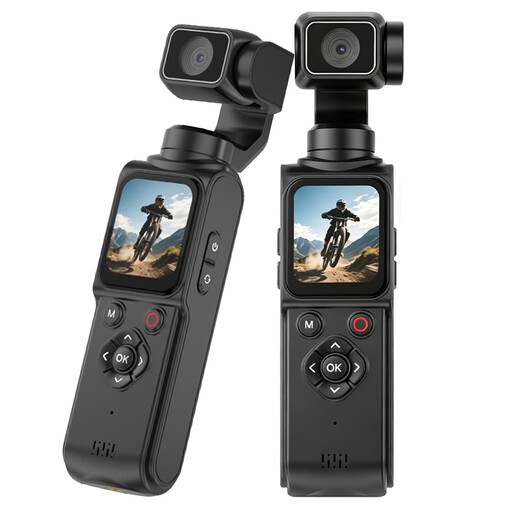 No image available
The mini vlog camera may suit you if you’re looking for a lightweight set-up for different framing options; check whether its lens capabilities meet your needs for photographing ceramic details.
4K video; 330° rotating lens; 150° wide-angle lens; weight: 84 g; mini tripod included.
A standard zoom may be suitable for a whole pot; for a small maker’s mark, check the magnification of the exact lens. Canon quotes maximum magnification of 0.25× and a distance of 15 cm in MF mode for the RF-S 18-45mm, while its separate RF 35mm F1.8 MACRO IS STM offers up to 1:2, according to Canon.
Use a stable set-up to keep the framing consistent, as long as space and the fair’s rules allow. Take test shots under the available light and set the white balance accordingly, as different light sources can cause a colour cast.
Check whether the offer includes the lens you need and any necessary accessories. For example, Nikon states that the Z50II kit reviewed here does not include a charger. In the Netherlands, consumer purchases must meet reasonable expectations. According to the Dutch government, the statutory guarantee has no fixed time limit. Many online consumer purchases also come with a 14-day cooling-off period, subject to exceptions.
Not automatically. According to the Dutch Data Protection Authority, a business or organisation needs a lawful basis to photograph and publish images of identifiable people at an event. Whether this applies depends on the circumstances; if you want to avoid having to make that assessment, photograph the ceramics without identifiable bystanders.