Who is this buying guide for?

Sellers of colourful ceramics

If you photograph glaze colours under artificial light, you’ll want to avoid making the item look a different colour in the photo. Orbitvu Nederland explains how gloss, subtle colours and rounded shapes can affect product photography.

Sellers who need to show small flaws

For chips, crazing, repairs or maker’s marks, it’s important that the exact camera and lens combination can capture those details up close. So check the close-up capabilities of the complete kit.

Sellers with a varied collection

If you photograph different items one after another, using a repeatable set-up helps keep the background and composition consistent. Canon Nederland recommends using a tripod for a fixed product-photography set-up.

What should you look for when choosing?

What to consider What to look for Who will find this most important?
Colour under artificial light Set the white balance for the light you’re using and take a test shot. Canon Nederland notes that uncorrected artificial light can make a white scene appear yellow. If I sell glazed pieces in colour, I want the shade in the photo to match the item; around 33% of consumers put colour reproduction first.
Small signs of wear Check the close-up function or magnification of the exact camera and lens, and test whether the smallest detail you want to show appears large enough in the frame. If you want to show chips, cracks, repairs or maker’s marks individually, suitable close-ups are particularly important; around 27% of consumers give this top priority.
Consistent photos Test soft lighting and a fixed camera set-up. Use test shots to see whether you can reduce reflections without losing the texture and surface detail. If I photograph lots of different items, I want a similar frame and an uncluttered background; around 20% of consumers prioritise consistency.
Kit and extras Read the full model name and check what’s included in the kit. Find out whether you’ll need a separate lens for the close-ups you want, or extra accessories for your set-up. If you’re looking for a complete kit without unnecessary extra lenses or studio equipment, focus on what’s actually included; around 20% of consumers make total costs their top priority.

Buying pitfalls

  • Judging the camera body without checking the lens included

    Magnification depends on the exact lens. Nikon’s quoted 1:1 magnification applies to the separate NIKKOR Z MC 50mm f/2.8, not to the standard Z DX 16-50mm kit lens.

    Check what’s included in the kit and take a test shot of the smallest flaw you want to show before choosing an additional lens.

    A close-up or macro lens may need to be bought separately from the camera and standard kit.

  • Expecting a more expensive camera to eliminate reflections by itself

    Reflections on glossy ceramics also depend on your lighting set-up. A tripod helps keep the framing consistent, but won’t prevent reflections on its own.

    First, test soft lighting and a fixed set-up with the camera you already have. Check that the shape and surface remain clearly visible.

  • Treating a general camera test as an up-to-date ranking for ceramics

    Consumentenbond stated that its camera comparison tool was last updated on 9 October 2025 and that the test was out of date. The order shown is not a ranking for photographing ceramics.

    Compare the features of the exact models on offer with your own needs for colour control, close-ups and a fixed product-photography set-up.

Camera brands to consider

Canon

The EOS R50 is an APS-C mirrorless camera; the white kit mentioned includes an RF-S 18-45mm lens.

  • Canon lists 24,2 effective megapixels for the EOS R50 and 0,25× magnification for the RF-S 18-45mm lens.
  • That magnification applies to the kit lens mentioned. Don’t assume a macro lens is included.

OM SYSTEM

The Tough TG-7 is a compact camera with a fixed lens and built-in close-up options.

  • OM SYSTEM lists a microscope mode, RAW shooting and a 12MP sensor. The brand also describes focus stacking, which combines images taken at different focus points.
  • The lens can’t be changed, and focus stacking requires a stable set-up. These features don’t establish independent image-quality results.

Nikon

The Z50II standard kit mentioned includes a Z DX 16-50mm VR zoom lens; a separate lens is available for macro photography.

  • Nikon specifies 1:1 magnification for the separate NIKKOR Z MC 50mm f/2.8.
  • The 1:1 specification doesn’t apply to the 16-50mm kit lens. Check the lens mount and what’s included in the kit.

Sony

The α6400 is an APS-C mirrorless camera with an E-mount, for those who want to choose a suitable lens themselves.

  • Sony lists approximately 24,2 effective megapixels and RAW shooting for the ILCE-6400.
  • Sony distinguishes the ILCE-6400 body from the ILCE-6400L kit with a 16-50mm zoom lens. Check which version you’re looking at.

Cameras at Joybuy

These cameras are options to consider for product photos of second-hand ceramics. For each model, check whether the lens, framing and close-up distance suit what you want to show.

Komery W6 digital camera, 12× optical zoom, 4K and 64MP

Komery W6 digital camera

The product name lists 12× optical zoom, 4K, WiFi and 64MP; take a test shot to check whether you can achieve the framing and close-up distance you need.

View at Joybuy
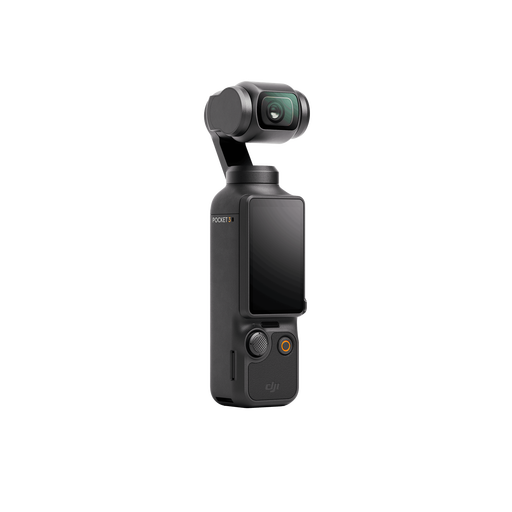
DJI Osmo Pocket 3 Creator Combo with 1-inch CMOS sensor and 4K video

DJI Osmo Pocket 3 Creator Combo

The product name describes a vlogging camera with a 1-inch CMOS sensor, 4K/120fps video, 3-axis stabilisation and a microphone included. Check whether the model and close-up framing you need are suitable for still product photos.

View at Joybuy

DJI Osmo Pocket 3 with 1-inch CMOS sensor and 4K video

DJI Osmo Pocket 3

The product name lists a 1-inch CMOS sensor, 4K/120fps video, 3-axis stabilisation and a 2-inch rotating touchscreen. For ceramic photography, check separately whether you can achieve the distance and framing you need.

View at Joybuy
Sony ZV-E10 with 16–50mm zoom lens

Sony ZV-E10 with 16–50mm zoom lens

The product description lists an APS-C sensor and Product Showcase Setting, which focuses on objects. It also says that an adapter and charger aren’t included; check the full contents of the kit on offer.

View at Joybuy
Sony Alpha A6100 with 16–50mm f/3.5–5.6 OSS II lens

Sony Alpha A6100 with 16–50mm f/3.5–5.6 OSS II

The product name lists a camera with a 16–50mm lens; the product description specifies a 24,2MP APS-C sensor. Check whether this zoom lens offers the framing and close-up distance you need.

View at Joybuy

Frequently asked questions

How can you stop white ceramics looking yellow under artificial light?

Set the white balance to match the light you’re using and check the result with a test shot. Canon Nederland explains that uncorrected artificial light can make a white scene appear yellow; shooting in RAW can give you more scope to review and adjust the white balance afterwards.

What should you do before photographing a range of different items?

Set the camera up securely, keep the framing and background consistent, and check for reflections under your chosen lighting. When photographing second-hand ceramics, take separate shots of relevant details, the underside and any visible signs of wear.

Does a mirrorless camera kit usually include a macro lens?

Not in the Canon EOS R50 kit with the RF-S 18-45mm lens or the Nikon Z50II standard kit with the Z DX 16-50mm mentioned here. Nikon’s 1:1 macro lens is a separate lens; check the exact contents of every kit.

What are the warranty and cancellation rights when buying a camera online in the Netherlands?

When a consumer buys a product, it is covered by the legal guarantee that it must be fit for purpose; according to the Dutch government, there is no fixed statutory warranty period in the Netherlands. For many online distance purchases from a business, you have 14 days to change your mind, including for second-hand goods. According to the Dutch government, online purchases from private sellers are not covered by those distance-selling rules.

What should you do if people are reflected in the ceramics?

A recognisable person in an image may count as personal data. The Dutch Data Protection Authority explains that privacy laws apply to images in which people can be recognised; where possible, photograph the ceramics without recognisable people or their reflections.
