
Seller of glossy ceramics
You photograph a range of second-hand pieces and want the glaze colour, shape and reflections to give an accurate impression of each item.


Start with soft lighting, a neutral background and a fixed shooting position. If your current camera or phone captures both the whole ceramic piece and any relevant signs of wear clearly, a new camera body need not be your first purchase. If you need more control over framing or fine details, choose a lens with magnification and a working distance that suit your workbench: a standard zoom is not automatically a macro lens.
You photograph a range of second-hand pieces and want the glaze colour, shape and reflections to give an accurate impression of each item.
You need overview shots, but also want to capture small chips, maker’s marks or surface textures clearly in their own right. Your choice of lens and working distance matters here.
You need to clear the table regularly and then continue photographing later with similar framing.
Choose this if: you mainly take overview shots and a test with soft lighting, a neutral background and a fixed shooting position already shows enough detail.
The trade-off: RTINGS notes that presentation and lighting play a major part; check for yourself whether small chips and maker’s marks are legible in your photos.
Choose this if: you’d rather use a single camera without interchangeable lenses and its close-up mode captures your key details large enough.
The trade-off: a fixed lens limits your choice of lenses and working distance. Shooting very close can also leave less room for lighting.
Choose this if: you regularly want to frame ceramic pieces of different sizes in their entirety.
The trade-off: check exactly what’s included in the kit and test how it captures the smallest detail. A standard zoom is not automatically a macro lens.
Choose this if: small stamps, damage or glaze details need to be consistently recognisable in separate photos.
The trade-off: check the working distance of the specific lens and whether there’s still enough room to light the ceramics properly.
| What to consider | What should you check? | Who is this important for? |
|---|---|---|
| Colour and reflections | Try soft lighting, a neutral background and adjustable white balance with the pieces you usually photograph. | If I sell glossy ceramics, I want to assess colour casts and reflections in my own set-up. Around 31% of consumers put colour and reflections first when making this choice. |
| Small signs of wear | Compare the magnification and working distance of the specific lens you want to use. | I want to capture a chip or maker’s mark clearly on its own, not just show the whole item. Around 25% of consumers prioritise details like these when making this choice. |
| Repeatable set-up | Check how you can position the camera steadily and recreate the same framing, background and lighting position. | If I need to clear the workbench between sessions, I want to be able to restore my shooting position easily later. Around 25% of consumers prioritise a repeatable routine. |
| Complete kit | Check exactly which camera body and lens are included, then test whether you can capture both the whole piece and the smallest detail you need. | I want to know in advance whether the kit is ready for both overview and detail shots. Around 19% of consumers value a simple, complete purchase above all. |
Reflections and colour in glossy ceramics are also affected by lighting and presentation. A new camera body alone won’t automatically give you a different result.
First, try soft lighting, a neutral background and a fixed shooting position with your current camera.
The Canon and Nikon kits mentioned come with standard zooms. The separate Fujifilm and Sony macro lenses are not automatically included with every camera kit.
Check the full lens name and what’s included in the kit. If needed, take a test detail shot before deciding whether you need a separate macro lens.
The minimum focusing distance and the clear space between the front of the lens and the subject are different measurements. For the Sony E 30 mm F3.5 Macro, Sony specifies a working distance of 2,4 cm at maximum magnification.
Check whether there’s still enough room to light the ceramics with your chosen set-up from that distance.
The EOS R50 with an RF-S standard zoom is an option for overview shots; choosing another RF lens is a separate decision.
The Z50II kit with a Z DX 16-50mm zoom is designed for those who want to frame different ceramic shapes in their entirety.
The X-S20 can be paired with a separate X lens, such as the XF30mmF2.8 R LM WR Macro for detail shots.
The ZV-E10 II is an option for anyone who wants to shoot product videos as well as photograph ceramics.
The Tough TG-7 is a compact alternative with built-in macro modes for anyone who doesn’t want to change lenses.
These Joybuy camera options have different camera and lens configurations. Check whether the framing, close-up capability and lighting suit your ceramic photography for each model.
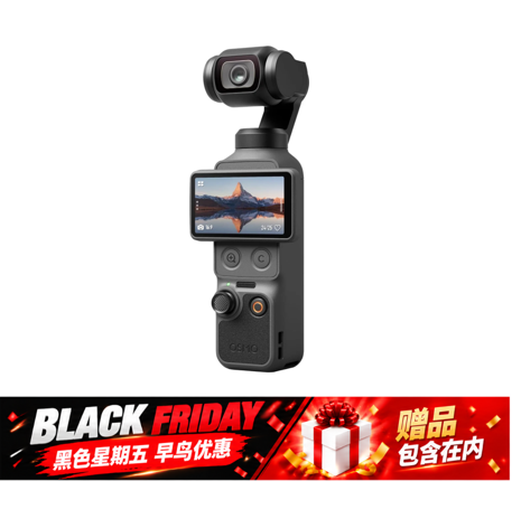 No image available
The product title describes this as a pocket gimbal camera; check with a test shot whether small ceramic details appear large enough in the frame.
The title lists a 1-inch CMOS sensor, 2× lossless zoom, 107 GB of built-in storage and a rotatable 2-inch screen.
It also lists 4K/240fps and 3-axis stabilisation. These specifications alone don’t confirm whether the camera is suitable for macro details.
 No image available
The title describes a digital camera with optical zoom; take a test shot to see whether the details you need are visible on your workbench.
The title lists 12× optical zoom, 4K, 64 MP and Wi-Fi.
The zoom specifications alone don’t indicate how well it can take close-ups of small areas of damage.
 No image available
This title describes a compact camera; take a test shot to see whether the framing and detail reproduction suit your ceramic photography.
The title lists a 1-inch CMOS sensor, 4K/120fps, fast focusing and a rotatable 2-inch touchscreen.
3-axis stabilisation and tracking are also mentioned. The product title doesn’t indicate how well the camera captures small signs of wear.
 No image available
The kit name lists a Sony ZV-E10 with a zoom lens; take a test shot to check whether your chosen framing shows both the whole ceramic piece and the details you want.
The product name lists a 16-50mm zoom lens.
 No image available
The product name describes a Sony Alpha camera with a zoom lens; test whether you can capture the detail you want from the available working distance.
The title lists a 16-50mm lens.
The zoom specification alone doesn’t tell you whether small chips or maker’s marks will appear large enough in the frame.
No. First, take an overview shot and a detail shot with the set-up you already have. If small chips or maker’s marks aren’t recognisable, compare the magnification and working distance of the specific lens. A standard zoom is not automatically a 1:1 macro lens.
Where possible, use the same neutral background, soft lighting and reproducible positions for the camera and subject. MPB’s product photography guide explains how a tripod can help you maintain a stable frame. Recheck the white balance whenever the lighting changes.
Check exactly which camera body and lens are included, and whether that lens can handle both your overview and detail shots. The Canon and Nikon kits mentioned include a standard zoom; don’t assume a separate macro lens is included too.
No, it depends in part on who the seller is. The Dutch government says that you generally have a 14-day cooling-off period when buying remotely from a business, but an online purchase from a private individual does not count as a distance purchase. So check who the seller is and which terms apply to your purchase.