
Vandaag of morgen in huis

Kwaliteit gegarandeerd

Welkomstaanbiedingen ontgrendelen: GRATIS bezorging | Tot 80% korting | Gratis 30 dagen JoyPlus-proefperiode
Download de app
A ceramic pan can be a pleasure to use for everyday cooking, but not every pan featuring the word “ceramic” has the same properties. Sometimes it refers only to a thin coating, while the pan itself is made from aluminium, stainless steel or cast iron. Terms such as “healthy”, “indestructible” and “suitable for all hobs” also need to be checked against the product specifications.
For UK households, three pitfalls are particularly important:
Below, you’ll find the points to check before buying ceramic pans.
A ceramic non-stick pan usually consists of a metal pan with a ceramic coating. Aluminium is known for being lightweight and conducting heat quickly. Stainless steel is strong and hard-wearing, but can be heavier. Cast iron retains heat for a long time, but requires more effort and maintenance.
Check the product information:
A claim about the composition comes from the brand’s product information. According to Redchef’s own information, several models are free from PFAS, PTFE and PFOA. This is a product specification, not a medical claim. If you are specifically looking for a PFAS-free pan, always check the information for the individual model; the brand name alone is not enough.
An induction pan needs a magnetic base. Don’t just look for “suitable for induction”; also check the diameter of the contact area. A large pan with a small base may heat unevenly if it does not sit properly on the cooking zone.
Look out for these combinations:
According to the product specifications, some products in the range are suitable for induction, gas, electric and ceramic hobs. This makes them useful as cookware for all hobs, but always check the current product page and instruction manual before buying.
A 24 cm ceramic frying pan is generally suitable for meals for one to three people. A diameter of 28 cm provides more space for several portions, but also requires a suitably sized cooking zone and more storage space.
For other types of cooking:
Also pay attention to the handle. Removable handles save space, but must be locked securely before lifting a full pan. With a fixed metal handle, bear in mind that it will become hot in the oven.
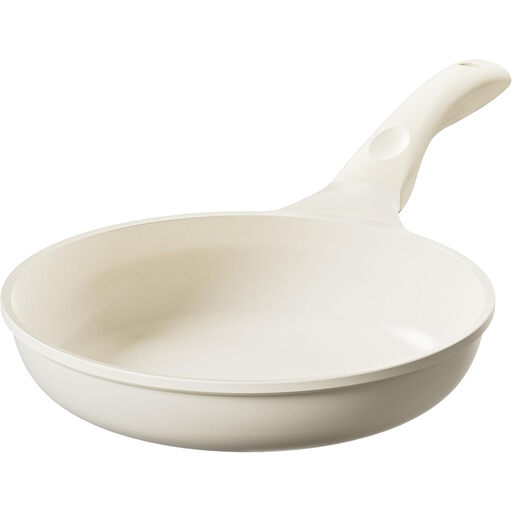
Why it suits this profile: The 24 cm size is easy to handle for everyday cooking and suitable for smaller households. According to the product information, the pan is suitable for induction, gas and electric hobs.
The product page specifies a PTFE-, PFOA- and PFAS-free ceramic coating. Use wooden or silicone utensils to help prevent scratches.
24 cm diameter, aluminium/ceramic/stainless-steel construction and dishwasher-safe according to the specifications.

Why it suits this profile: If you value your choice of materials and a fixed handle, this pan offers recycled, forged aluminium with a riveted stainless-steel handle.
The product specifications list a PFAS-free ceramic coating, induction compatibility and a maximum oven temperature of 200 °C. This makes the usage limits clear.
Suitable for all the listed heat sources, dishwasher-safe according to the product information and fitted with two ceramic non-stick layers.
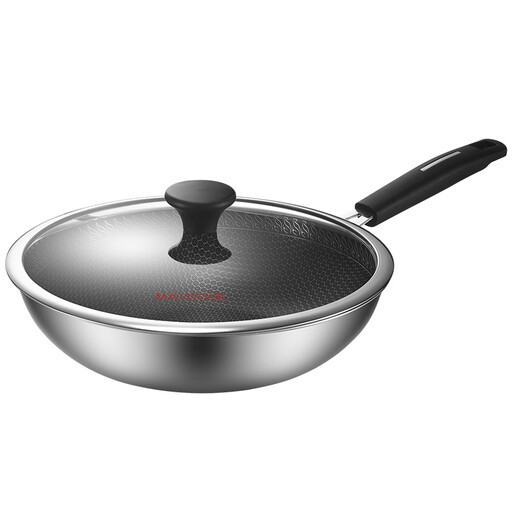
Why it suits this profile: The 30 cm wok offers plenty of room for stir-frying, stewing, boiling and deep-frying. The glass lid is useful when you want to monitor the cooking without opening the pan.
According to the product specifications, the base is suitable for induction, gas, electric and ceramic hobs. The manufacturer also recommends hand-washing, helping you avoid accidentally putting strain on the coating and handle.
30 cm, three-layer stainless-steel construction, ceramic coating, honeycomb structure and glass lid.
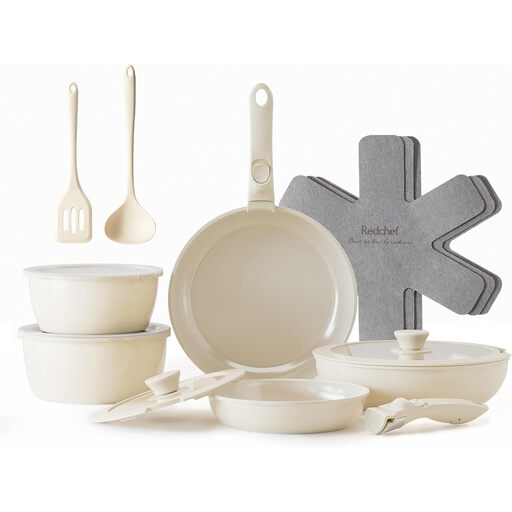
Why it suits this profile: This set combines several sizes with stackable pieces and a detachable handle. That’s practical in a flat, small kitchen or campervan.
The product information lists compatibility with induction, gas, electric and ceramic hobs. The handle must be attached correctly before lifting and must not be exposed to a direct flame.
16 pieces, ceramic coating according to the product description, stackable design and dishwasher-safe once the handle has been removed.
We’ve put together a complete, up-to-date list of products that fully meet these strict selection criteria and the applicable European safety regulations.
Even a dishwasher-safe pan can stay looking its best for longer when washed by hand. Allow the pan to cool first, then use a soft sponge and mild washing-up liquid. Avoid:
According to the product information for several Redchef models, they can be washed in the dishwasher. Brabantia recommends hand-washing to help preserve the ceramic coating for longer. Tefal Renewal is not dishwasher-safe according to the product page and must be cleaned by hand. The right choice therefore depends not only on the material, but also on your cleaning routine.
That varies by model. The ceramic coating itself does not determine whether a pan works on induction; the magnetic base does. Always check that induction is explicitly listed among the compatible hob types.
There is no fixed lifespan. The cooking temperature, utensils, washing method and storage conditions all affect the coating. Ideally, cook over low to medium heat, do not heat the pan while empty and replace it when the coating visibly starts to come away or the handle is no longer securely attached.
“Healthy pans” is not a technical product category. A ceramic coating may be PFAS-, PTFE- or PFOA-free according to the manufacturer, but you should check the specific product specifications. Use the pan according to the instructions and do not treat marketing claims as medical or health evidence.
