What should you look for when choosing?
Mirrorless camera with a standard zoom
Best if: you mainly photograph whole mugs and multiple views for your portfolio.
Bear in mind: maximum magnification varies by lens. Canon Nederland states a maximum of 0.25× for the RF-S 18-45mm in the manual close-up mode described; Sony Nederland states a maximum of 0.215× for the E PZ 16-50mm OSS II.
Mirrorless camera with a separate macro lens
Best if: small crackle, stamp or relief details need to fill the frame.
Bear in mind: the lens is a separate purchase. Nikon Nederland lists 1:1 magnification for the NIKKOR Z MC 50mm f/2.8. At the minimum focusing distance, there is around 5 cm of space in front of the lens, which can limit where you place your lighting.
Adjust your existing camera setup first
Best if: inconsistent shine, shadows or colour are your main problem.
Bear in mind: a fixed position, softer light and controlled white balance won’t change the maximum optical magnification of your current lens.
Whichever option you choose, check exactly which lens comes with the set and whether it can capture the composition you want.
| What to consider |
What should you check? |
Who is this most important for? |
| Glaze colour and reflections |
Check adjustable white balance and RAW support on the exact camera model, then take test shots with your own lighting setup. |
I want glaze colours and shine to look true to life on every mug. Around 31% of consumers prioritise colour reproduction and reflections. |
| Small glaze and relief details |
Compare maximum magnification and check how much space there is in front of the lens for the composition you want. |
If a small maker’s mark or relief needs to fill a detail shot, lens magnification is the deciding factor for me. Around 25% of consumers give magnification for details like these top priority. |
| Consistent focus and framing |
Check whether you can position the camera securely and focus manually; see whether focus bracketing is available on each model. |
I want to display mugs with similar framing and sharpness side by side in my portfolio. Around 25% of consumers prioritise consistent focus and framing. |
| What’s included in the complete set |
Check the exact camera body and lens names in the set, and whether a separate lens or other necessary equipment is included. |
I want to know exactly what I’ll receive before factoring in a lens for my setup. Around 19% of consumers prioritise what’s included in the complete set. |
Camera brands to consider
These brands are worth considering when comparing a camera body with a suitable lens. Lens specifications apply to the lens named, not automatically to every kit.
Canon
The EOS R50 with RF-S 18-45mm is one possible starting point for overview shots. For small details, check separately whether the lens can capture the composition you want.
- Canon Nederland specifies a 24.2-megapixel APS-C sensor, an RF mount and manual focusing for the EOS R50.
- Canon lists a maximum magnification of 0.25× for the RF-S 18-45mm in the manual close-up mode described; this is not the same as 1:1 macro.
Nikon
The Z50II is a DX mirrorless camera. The NIKKOR Z MC 50mm f/2.8 is a separate lens for anyone who needs macro magnification.
- Nikon Nederland specifies 1:1 magnification for the NIKKOR Z MC 50mm f/2.8 and lists a field of view equivalent to 75 mm on DX.
- Nikon states that there is around 5 cm of space in front of the lens at the minimum focusing distance. Check whether you’ll still have room to light the mug for that composition; these lens specifications don’t automatically apply to a Z50II kit.
Sony
The α6400 is an APS-C camera with an E mount, so you can assess the kit zoom and any macro lens you choose later separately.
- Sony Nederland specifies around 24.2 effective megapixels and RAW shooting for the α6400.
- Sony lists a maximum of 0.215× for the E PZ 16-50mm OSS II and 1.0× for the separate SEL30M35 macro lens. These figures apply to the lenses named.
Cameras to explore
Joybuy picks that relate to this topic. Check whether each model’s lens and controls suit the mug photos you want to take.
 No image available
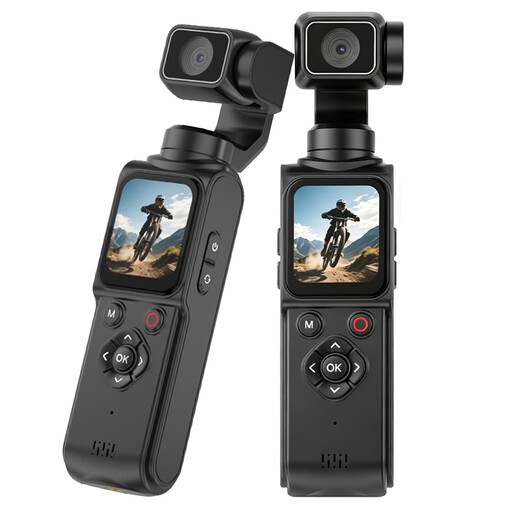
KINSI Mini Vlog Camera 4K
Before choosing it for a portfolio setup, check that the camera can capture the mug composition you want and focus on it.
The product name lists 64 MP, a 330° rotating lens, a 1.72-inch touchscreen and a tripod.
View at Joybuy
 No image available
Komery W6 camera, 12× optical zoom
Try framing the mug details you want; the zoom ratio alone won’t tell you whether the composition will meet your needs.
The product name lists 12× optical zoom, 4K, Wi-Fi and 64 MP.
View at Joybuy
 No image available
DJI Osmo Pocket 3
Check that its controls and framing suit a fixed mug photography setup; video features alone won’t tell you whether small details will fill the frame.
The product name lists a 1-inch CMOS sensor, 4K/120fps video, 3-axis stabilisation and a rotating 2-inch touchscreen.
View at Joybuy
 No image available
Sony ZV-E10 with 16-50mm zoom lens
A kit zoom can be a good starting point for photographing whole mugs. Check whether the lens in this set can also capture the detail you want.
The product name lists the Sony ZV-E10 with a 16-50mm zoom lens.
View at Joybuy
 No image available
Sony Alpha A6100 with 16-50mm f/3.5-5.6 OSS II
Try the lens supplied with this set for the composition you want, and check whether it’s suitable for both your overview and detail shots.
The product name lists the Alpha A6100 with a 16-50mm f/3.5-5.6 OSS II lens.
View at Joybuy
Frequently asked questions
Do I need a 1:1 macro lens for every mug photo?
No. For a whole mug, first check whether the lens in the set can capture the composition you want. Consider a separate macro lens if small details don’t appear large enough in the frame; the 1:1 figures mentioned apply to specific Nikon and Sony lenses.
How can you take a series of photos with consistent colours and angles?
Keep the camera, background and lighting setup as consistent as possible, and set the white balance carefully. A tripod helps you repeat the framing; RAW images can give you more scope to adjust white balance afterwards.
What can you do if only a narrow strip of the relief is in focus?
First check the focus point and aperture. If one close-up doesn’t give you enough depth of field, you can combine several shots taken at different focus distances. Keep the camera steady and check whether focus bracketing or in-camera processing is available on your model.
What warranty applies in the Netherlands if you buy a camera for your creative work?
For a consumer purchase, your statutory rights apply alongside any manufacturer’s warranty. If a product is faulty, the seller is responsible for providing an appropriate solution. ACM ConsuWijzer advises that you shouldn’t assume you have the same consumer protection if you use the contract mainly or exclusively for business. So consider how you buy and use the camera.
Can you always reclaim VAT on a camera for your portfolio?
No. According to the Dutch Tax Administration, reclaiming VAT depends, among other things, on using the camera for VAT-taxable sales and having an invoice that meets VAT requirements. Having a portfolio alone doesn’t prove that these conditions have been met.


