
Vandaag of morgen in huis

Kwaliteit gegarandeerd

Welkomstaanbiedingen ontgrendelen: GRATIS bezorging | Tot 80% korting | Gratis 30 dagen JoyPlus-proefperiode
Download de app
A ceramic frying pan for induction may seem easy to choose at first glance. However, pans vary considerably in coating, size, base, care requirements and operating temperature. An attractive white pan labelled “non-stick” is not automatically suitable for your hob or cooking routine.
The most common poor purchases result from three pitfalls:
An induction frying pan needs a magnetic base that makes good contact with the cooking zone. So do not just look for “suitable for all hobs”; also check whether induction is explicitly mentioned.
A quick test at home: hold a magnet against the underside of the pan. If it stays firmly in place, magnetic material is usually present. Still check the product specifications, particularly with composite bases.
Also consider the diameter. A 28 cm pan may have a smaller effective base. On an induction hob, it is mainly the part positioned directly above the cooking zone that heats up.
A PFAS-free frying pan is sold without intentionally added PFAS, according to the relevant product information. PFOA-free is a more limited description: PFOA is one specific substance within the broader PFAS group. PTFE, often associated with traditional non-stick coatings, is a separate material name.
Therefore, check exactly which claim is made:
Do not present such claims as independent proof of a health benefit. According to the brands’ own product information, some of the coatings mentioned are described as PFAS-free, PFOA-free or PTFE-free. If in doubt, check the packaging, technical documentation and any certification details.
A “Teflon-free frying pan” may appeal to consumers who want a different coating, but its lifespan also depends on temperature, utensils and cleaning.
For one or two people, 20 to 24 cm is often practical for eggs, vegetables or a small portion of potatoes. A 26 to 28 cm pan offers more room for stir-frying, meat or several portions. A deep sauté pan with a lid is more convenient for simmering, pasta and one-pot meals.
Aluminium generally heats up quickly and is relatively light. A thicker or multi-layered base can distribute heat more evenly, but often makes the pan heavier. A stainless-steel pan without a chemical inner coating, such as a tri-ply model, requires a different cooking technique: preheating it properly and using enough fat will help prevent food from sticking.
A ceramic non-stick frying pan also needs proper care. These habits help minimise unnecessary wear:
So, a dishwasher-safe frying pan is not necessarily maintenance-free. With several models, hand washing is recommended to protect the finish and coating.
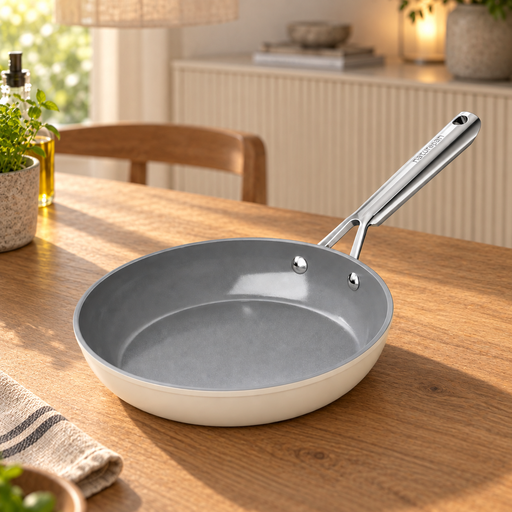
Why it suits this profile: A compact size for everyday portions, with an aluminium body and ceramic coating. According to the product information, this model is suitable for induction, gas, electric and ceramic hobs.
The hob compatibility and oven limit of up to 260 °C are clearly stated. Use wooden or silicone spatulas to help prevent scratches.
24 cm, dishwasher safe according to the product information and suitable for several types of hob.
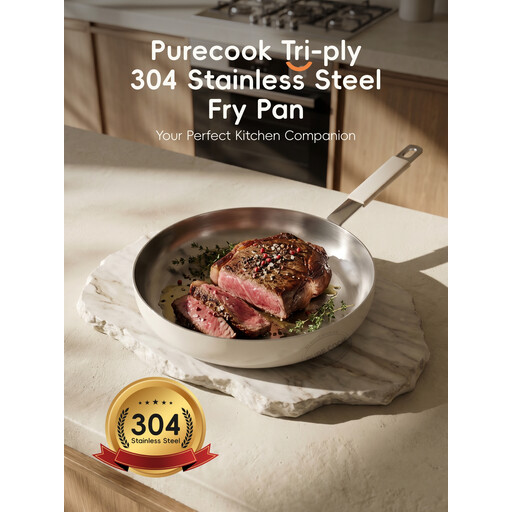
Why it suits this profile: This pan has a three-layer construction, an inner surface without a chemical coating and a ceramic finish on the outside. It is a good choice for anyone looking for a different cooking experience from that of a traditional non-stick pan.
The product information explicitly states that the inner surface has no chemical coating. However, the pan does not come with a lid, so check whether you need a frying pan with a lid.
304 stainless steel, three-layer base and compatibility with induction and gas.
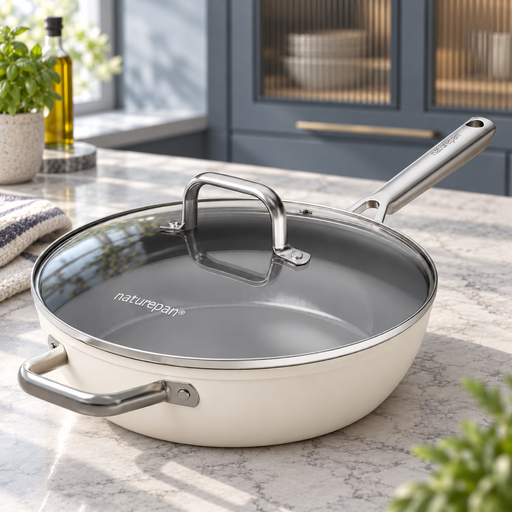
Why it suits this profile: The deep shape and supplied lid are suitable for larger portions, simmering and one-pot meals in a Dutch household.
The pan states that it is induction-compatible and comes with a matching lid. Hand washing is recommended to preserve the coating, despite the pan being dishwasher safe.
28 cm diameter, 7.5 cm-high body and oven use up to 230 °C without the lid.
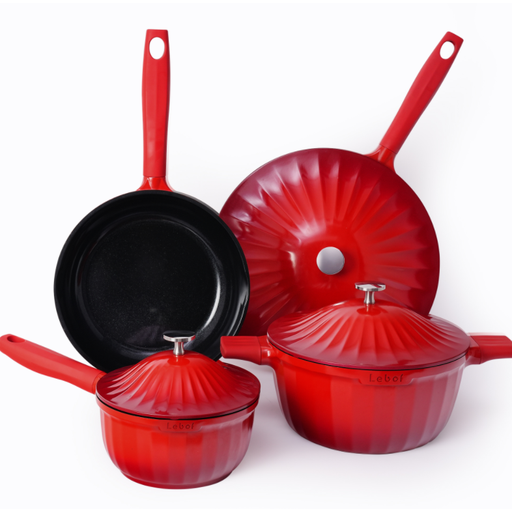
Why it suits this profile: The set combines two frying pans, two saucepans and a sauté pan with lids. According to the product information, it is suitable for all hobs, including induction.
The set’s product information states that it is PFAS-free, PFOA-free and PTFE-free, and specifies the contents of each component. The set is not suitable for oven use.
7 pieces, lids included, dishwasher safe according to the product specifications and suitable for induction.
We have put together a complete, up-to-date list of products that fully meet these strict selection criteria and the applicable European safety regulations.
No. Ceramic is not automatically magnetic. A pan with an aluminium body needs a suitable magnetic base. Always check the stated hob compatibility or use the magnet test as an additional check.
This depends on use and care. High temperatures, heating an empty pan, metal utensils, abrasive products and the dishwasher can accelerate wear. Use low to medium heat and allow the pan to cool down gradually. If you notice blisters, deep scratches or peeling coating, replace the pan.
“Healthy” is not a technical quality measure. A PFAS-free frying pan may suit your material preference, but you should also pay attention to the correct cooking temperature, safe use with food, stability and care. Always check exactly what claim the manufacturer makes and what it is based on.
