
Vandaag of morgen in huis

Kwaliteit gegarandeerd

Welkomstaanbiedingen ontgrendelen: GRATIS bezorging | Tot 80% korting | Gratis 30 dagen JoyPlus-proefperiode
Download de app
A ceramic hob is a good fit for many kitchens, from a small rented flat to a family kitchen where several pans are on the go every day. But choosing the wrong one can mean extra costs, an incompatible worktop cut-out or features that add little in practice.
Watch out for these three common pitfalls:
First, measure the cut-out in your worktop: width, depth and available height. Also check the hob’s external dimensions. A built-in ceramic hob of around 60 cm often needs a cut-out about 56 cm wide, but this varies by model.
Also check:
A hob with a connection rating of 3,000 watts may be easier for some households to install than a 7,400- or 9,300-watt model. Fixed and Perilex connections should be installed in accordance with current regulations.
A 2-zone ceramic hob may be enough for cooking with one pan or as an extra cooking zone. This size is suitable for a student room, office, holiday home or small kitchen. A double hob takes up less space and is often easier to move.
If you prepare several dishes at once, a 4-zone ceramic hob is a better choice. Don’t just check the number of zones; also look at:
A hob with expandable cooking zones can be useful for a roasting pan, griddle or rectangular dish. Check how to activate the zone and what size it can actually accommodate.
A hob with touch controls has a flat surface that’s easy to wipe clean. Knobs, on the other hand, can be handy if you want to adjust a setting quickly while cooking. Check how many heat settings there are and whether each zone can be controlled separately.
Useful features include:
A residual heat indicator doesn’t mean the surface is safe to touch straight away. The ceramic glass can remain hot after the hob is switched off. Treat the indicator as a warning, not as a substitute for taking care.
A ceramic hob is essentially an electric hob with a smooth ceramic glass surface. Heating elements beneath the surface warm the cooking zone. This makes it suitable for many types of pan, as long as the base is flat and makes good contact with the hob.
With an induction hob, the heat is generated mainly in a suitable magnetic pan. This usually makes the hob responsive, but your existing cookware may not be compatible. Test your pans with a magnet or check the manufacturer’s guidance.
For a small kitchen, you could also consider a portable hob. A standalone ceramic hob works with more types of pan than an induction hob, while a portable induction hob is often compact and easy to adjust. The Rommelsbacher models in the range are induction products, despite their ceramic glass finish. So always check the stated type of electric hob.
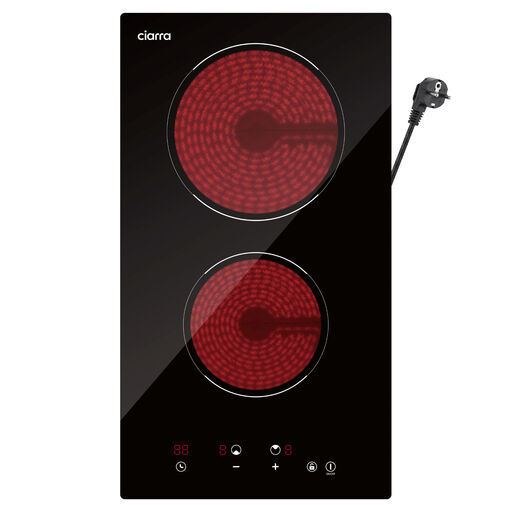
Why it suits this type of buyer: This compact built-in hob is designed for kitchens where space is limited, with two zones for everyday cooking.
The specifications list a rating of 3,000 watts, nine power levels and a cut-out size of 260 × 490 mm. Check these measurements and your electrical connection beforehand.
Two cooking zones, touch controls, individual timer, child lock and residual heat indicator.
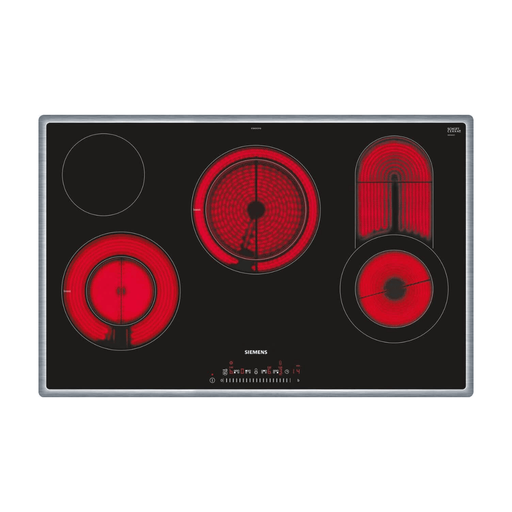
Why it suits this type of buyer: This 80 cm-wide model has five zones, several of which expand to accommodate larger pans and roasting pans.
The stated cut-out size is 78 × 50 cm and the connection rating is 9,300 watts. It’s essential to check your consumer unit and worktop beforehand.
Five cooking zones, 17 power levels, expandable zones and a timer with safety shut-off, according to the product description.
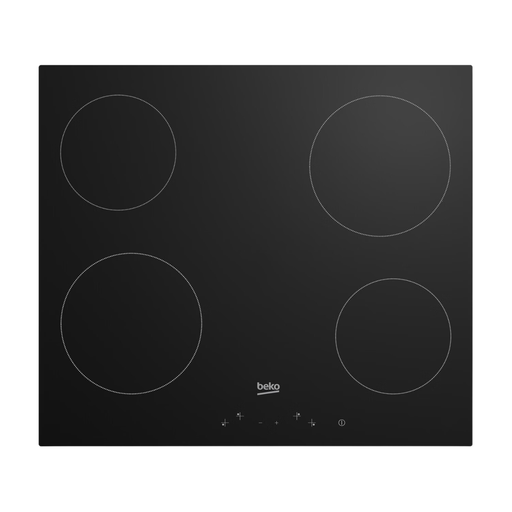
Why it suits this type of buyer: This 60 cm ceramic hob has four zones, making it a practical choice for households that use several pans every day.
The product details specify a cut-out width of 56 cm, a cut-out depth of 49 cm and a connection rating of 6,000 watts. This makes it easier to check that the hob is suitable for your installation.
Four zones, touch controls, timer, child lock, automatic shut-off and a residual heat indicator for each zone.
We’ve put together a complete, up-to-date list of products that meet these strict selection criteria and comply with current European safety regulations.
Usually, yes, as long as the pan has a flat base that fits the cooking zone. Induction hobs require specific magnetic cookware. So check the type of hob before using your existing pans.
Its lifespan depends on how it’s used, installed and maintained. Avoid sliding heavy pans across the surface, don’t use abrasive cleaners, and switch off the hob immediately if it cracks. Always follow the manufacturer’s care instructions.
Energy use depends on the power rating, cooking time and how many zones you use. A timer can help prevent the hob from being left on for longer than necessary. When comparing models, check the connection rating and features such as automatic shut-off, not just the number of cooking zones.
